Web-Based Application Development: Best Practices and Common Mistakes (2026)
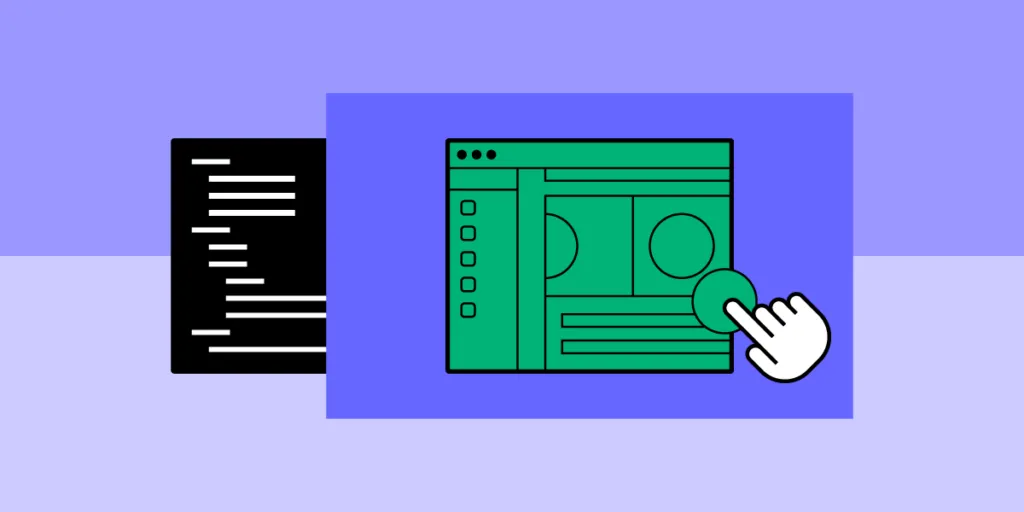
Web-based application development builds software accessed through a browser. Unlike native apps, web apps live on servers and need only a browser and internet — accessible across devices without installation.
This guide covers essential best practices and common mistakes, from planning through deployment.
What Is Web-Based Application Development?
It combines frontend technologies (HTML, CSS, JavaScript), backend services (server-side languages, databases, APIs), and infrastructure (hosting, CI/CD, monitoring) to create interactive browser-based software.
Modern frontends use React, Vue, Angular, or Svelte. Backends use Node.js, Python, Ruby, PHP, or Go with PostgreSQL, MySQL, or MongoDB.
Types of Web Applications
Single-Page Applications (SPAs)
Load one HTML page, dynamically update content. Fast and fluid but require attention to SEO and initial load performance.
Multi-Page Applications (MPAs)
Traditional page-by-page navigation. Simpler for content-heavy sites. Next.js and Nuxt blur the SPA/MPA line with server-side rendering.
Progressive Web Apps (PWAs)
Offline access, push notifications, home screen installation. Web reach with native app quality.
The Development Process
- Discovery: Define problems, user needs, business goals.
- Information architecture: Map structure and user flows.
- Prototyping: Validate design before production code.
- Visual design: Apply branding and layout.
- Frontend development: Component-based UI.
- Backend development: APIs, databases, business logic.
- Testing: Unit, integration, E2E, usability.
- Deployment: CI/CD pipelines.
- Monitoring: Track performance, iterate.
Best Practices (The Do’s)
Follow Responsive Design Principles
Mobile-first approach with fluid grids and min-width media queries. Test on real devices. See our mobile-first design guide.
Adhere to Coding Standards
Style guides, linters (ESLint, Prettier), TypeScript for type safety, code reviews, documented architecture decisions.
Optimise Performance
- Image optimisation: WebP, AVIF,
srcset, lazy loading. - Code splitting: load only what’s needed.
- Caching: browser, CDN, service worker.
- Core Web Vitals: LCP, INP, CLS.
Use Component-Based Architecture
Reusable components with clear interfaces. UXPin Merge brings this into design — designers use the same coded components from production.
Implement CI/CD
Automate testing and deployment. Every change triggers tests; passing code deploys automatically.
Prioritise Security
- Input validation and output encoding to defend against cross-site scripting (XSS) and injection attacks.
- HTTPS everywhere.
- OAuth 2.0, MFA, secure sessions.
- Dependency scanning (npm audit, Snyk).
Prototype Before You Build
UXPin Forge generates interactive prototypes from text prompts using real React components. Output is production-ready JSX.
Common Mistakes (The Don’ts)
Inconsistent UI
Without a shared design system, visual inconsistency erodes trust. With UXPin Merge, the component library is the design tool. Design System Guidelines enforce brand rules.
Ignoring Error Handling
Handle network errors, API failures, and edge cases gracefully. Design empty and loading states.
Skipping Cross-Browser Testing
CSS rendering and JS APIs vary between browsers. Use BrowserStack or Playwright.
Neglecting Accessibility
Semantic HTML, ARIA, keyboard navigation, colour contrast, screen reader testing. Build accessibility into your component library.
No Documentation
Document API contracts, component library, architecture decisions, deployment procedures.
Over-Engineering
Start simple. Refactor as needs evolve.
Prototype Web Apps With UXPin
- Merge — production components on the design canvas. Prototypes behave like the final product.
- Forge — generates interfaces from text or screenshots using your real components.
- Pre-built libraries: MUI, shadcn/ui, Bootstrap, Ant Design.
- Production JSX output: Engineers get real code. Enterprise teams report up to 50% engineering time reduction.
Try UXPin for free and prototype your next web application with production-ready components.
Frequently Asked Questions
What is web-based application development?
Building software accessed through a web browser using HTML, CSS, JavaScript, and server-side languages. No installation required.
What are the main types of web applications?
SPAs (dynamic single-page), MPAs (traditional multi-page), and PWAs (native app-like with offline access and push notifications).
What technologies are used?
Frontend: HTML, CSS, JS, React, Vue, Angular, Svelte. Backend: Node.js, Python, Ruby, PHP, Go. Databases: PostgreSQL, MySQL, MongoDB.
How long does web app development take?
Simple CRUD app: weeks. SaaS product: 3–6 months. Enterprise: a year or more. Good prototyping reduces rework.
Web app vs website?
Websites deliver static content. Web apps enable interactive functionality — users create, edit, manage data. The line has blurred.
How do I prototype a web app?
Wireframe information architecture, then build interactive prototypes. UXPin Merge uses actual coded components so prototypes behave like the final product and output production-ready JSX.