

Designing for Context: How to Adapt UX Patterns to Different Niches ( +Examples)
Investing in user experience design offers tremendous ROI. Data suggest that every dollar spent on UX brings in up to $100 in profit. Furthermore, multiple studies have shown that a website’s UX design directly influences visitors’ brand perception, purchase intent, and even their likelihood of becoming loyal customers.
But while there’s plenty of exceptional UX design advice out there, business owners (and designers alike) regularly overlook the importance of context.
Ultimately, design choices that work in one niche might not be as successful in another. And even more, some settings simply require designers to make unconventional choices to avoid a complete disruption of the sales funnel.
So, what goes into the process of designing for context? And is there a way to adapt typical UX patterns to different niches?
This guide covers some of the most common UX patterns and how they might have to change when targeting different audience segments or attempting to penetrate different industries or markets.
Need a reliable method to test out and verify UX design choices? UXpin allows you to build advanced prototypes, test their effectiveness, and receive production-ready code that you can easily copy into your projects. Try it for free.
Immediate Value Positioning vs. Progressive Disclosure
One of the most common pieces of UX design advice out there is to make your brand’s value immediately clear — even to first-time web visitors. And, at its core, this rule isn’t a bad idea.
After all, web user behavior analyses clearly show that website visitors form brand opinions within 50 milliseconds of landing on a webpage. More importantly, these opinions directly influence purchase intent, price sensitivity, and even brand perception.
Knowing this, it’s only natural that (most) brands should aim to communicate clear and attractive value within as short a timeframe as possible.
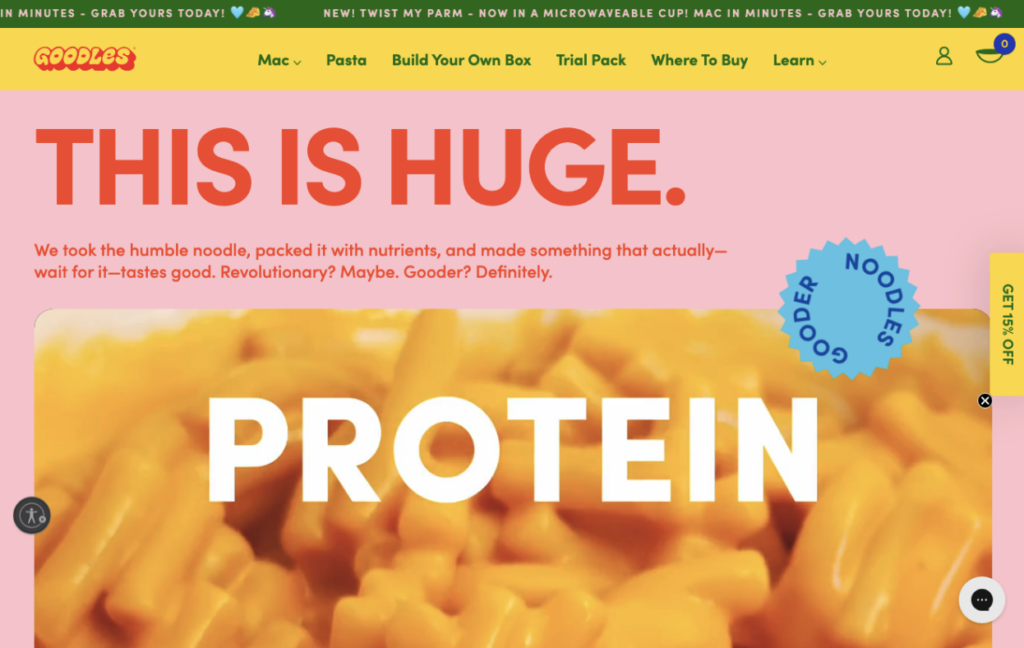
Goodles does it beautifully with the copy at the top of its homepage, where it describes the precise, unique value its product brings to the table (especially compared to more traditional choices in its vertical).
Source:goodles.com
But what happens in complex, highly technical niches? Although a UX design strategy that focuses on immediate value positioning may seem like the right choice, it might just be the wrong step. Why?
Well, in some situations, leading with your solution’s purpose and benefits may not register as relevant to the people you’re trying to convert into customers. And that could cause your audience to ignore your messaging altogether (or, worse yet, conclude that your brand doesn’t offer a solution to their pain points).
Think about the concept from the perspective of a highly complex niche.
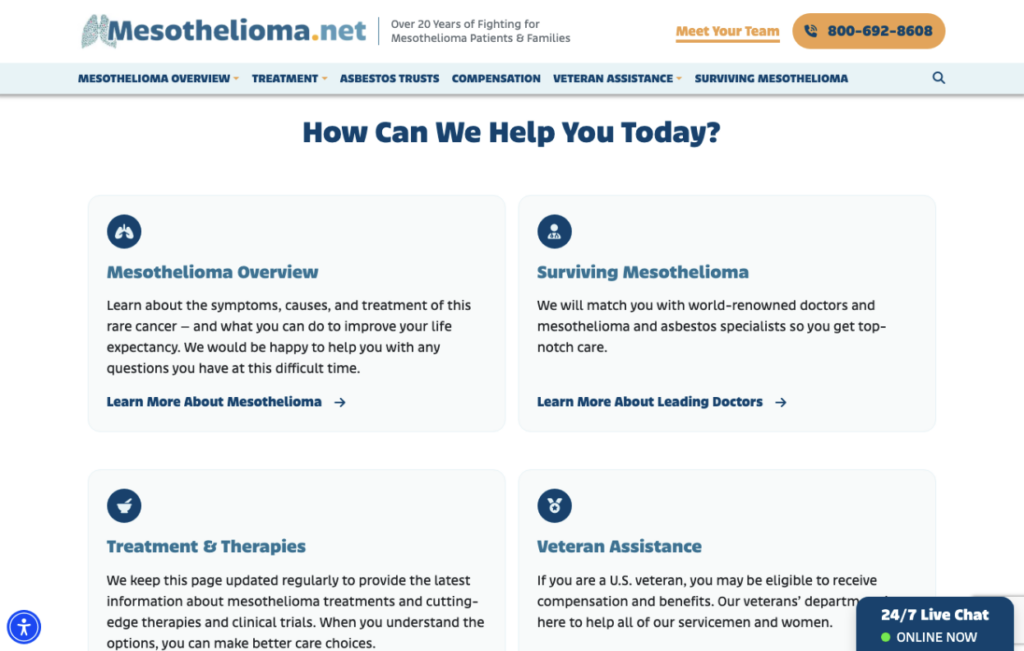
For instance, if you check out Mesothelioma.net, you’ll find that this business offers services that help customers overcome an incredibly intricate pain point.
And, sure, the website’s UX design and layout could lead with the types of services the business offers. But the simple fact is that Mesothelioma.net’s target audience has a wide variety of needs. Some are just looking for health advice. Others need support accessing treatments and therapies. And some are looking to claim compensation or assistance, or even apply for financial aid. So, instead of leading with the types of assistance it provides, Mesothelioma.net uses a website layout that relies on progressive disclosure. This allows visitors to scan the content at their own pace, stopping at sections that are relevant to their needs and skipping the ones that aren’t — all without feeling overwhelmed by a ton of new information about a health issue they’re still trying to come to terms with.
Source: mesothelioma.net
Niche-Specific Trust Signals
Social proof is an irreplaceable element of great UX design. And, considering how important it is to buyers — both B2C and B2B — that’s not much of a surprise. But the one aspect of UX where designers go wrong when incorporating trust-building elements into website design is highlighting the wrong social proof formats for their niche.
Yes, non-complex niches, like ecommerce, will do more than great with standard social proof formats, including user ratings and typical reviews.
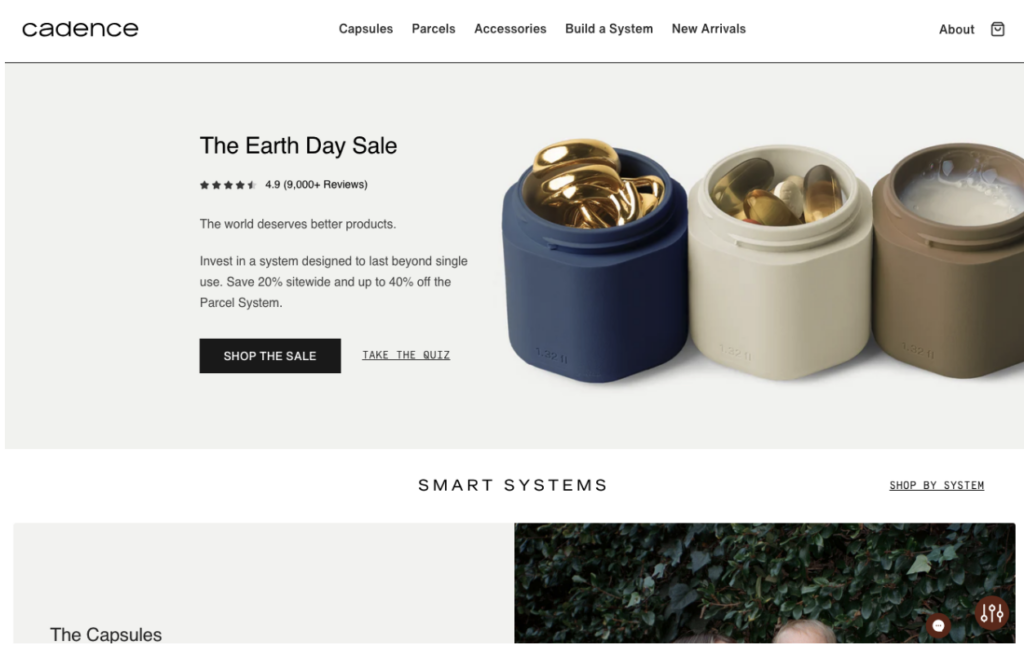
If you check out Cadence, you’ll notice that it is precisely this type of trust signal that it emphasizes in the hero section of its homepage, knowing full well that an average product rating of 4.9 (from more than 9,000 reviews) is more than sufficient to convince its audience about the quality and value of its offer.
Source: keepyourcadence.com
But what about niche businesses? Can they achieve the same positive outcomes from traditional trust signals as mainstream brands?
Not necessarily. Yes, they may somewhat benefit from displaying ratings and reviews. Nevertheless, to convince their ideal customers of the quality and effectiveness of their solutions, they would need to adjust the social proof (and the entire user experience, for that matter) to better align with their prospects’ unique needs.
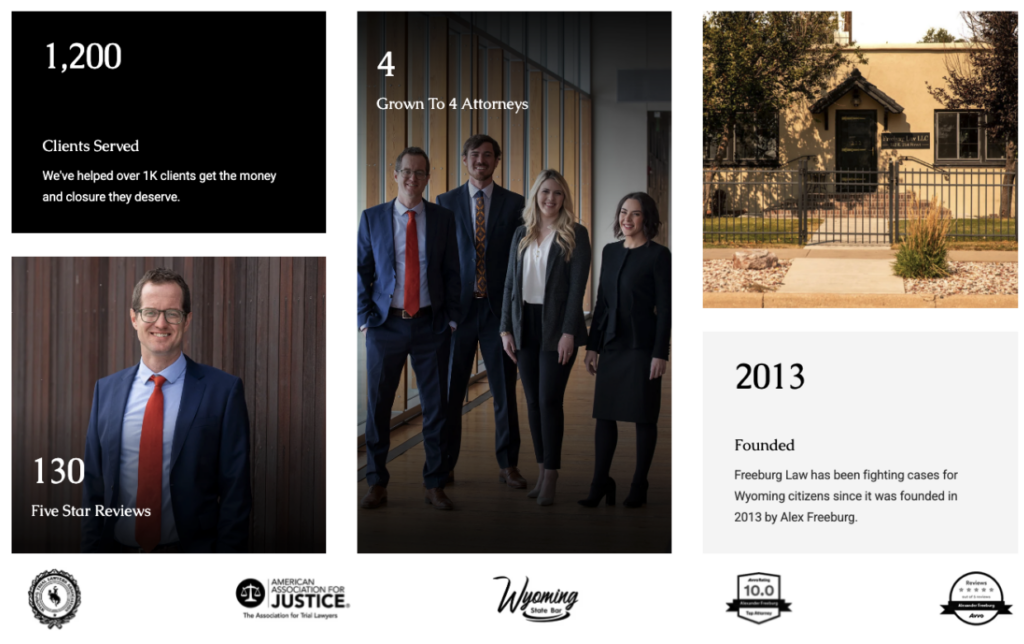
In these cases, certificates, industry-specific quality awards, and niche media mentions could be the key UX design elements that drive trust. Jackson Hole based firm Freeburg Law, for example, operates in a highly sensitive industry, offering its services to highly vulnerable clients. So, instead of just relying on customer feedback to build its credibility, this brand goes into sufficient detail about the number of clients it has served, the sums it managed to claim as damages for its customers, as well as all of the organizations and associations it’s part of.
Yes, at first glance, the number and variety of these trust signals may seem like overkill. But considering that people hiring a lawyer usually want to get the most qualified professional to handle their case, it quickly becomes evident that the UX design is, actually, entirely user-centric.
Source: tetonattorney.com
Minimalism vs. Breadth of Information
UX design advice often emphasizes the benefits of minimalist layouts and design directions. In fact, if you look at web user behavior research, you’ll find that web users prefer simple and familiar designs. It comes as no surprise that many brands prioritize simplicity and negative space in their digital presences.
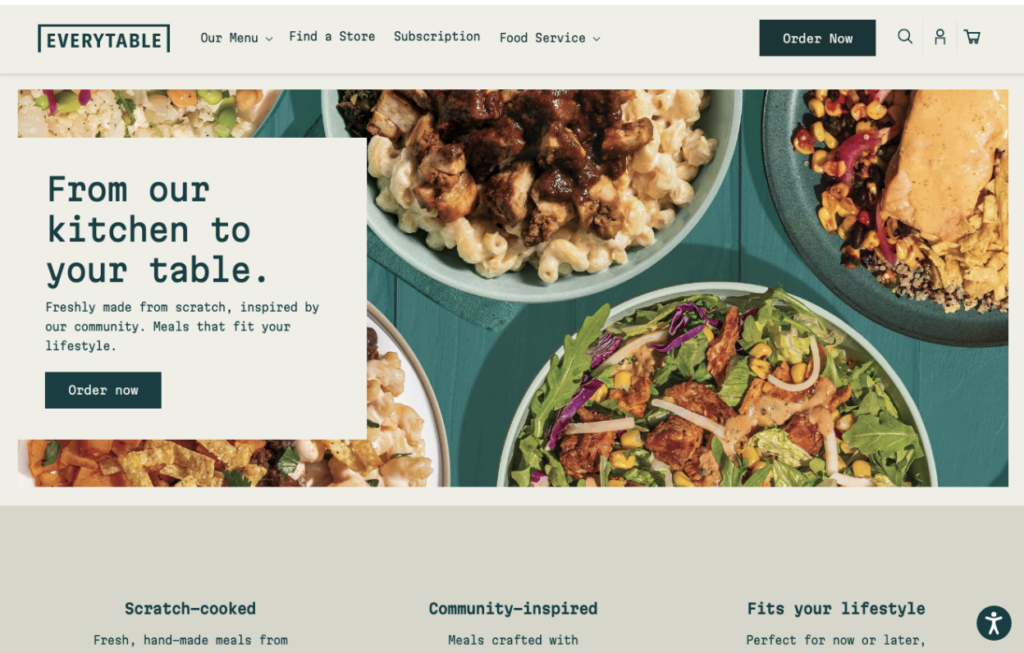
After all, a layout like that used by Everytable is clean, hyper-focused, and visually pleasing. Additionally, it’s more than effective at communicating the value the business offers — even to consumer segments that might not be fully familiar with the benefits of meal delivery services.
Source: everytable.com
But what happens in contexts where generalized marketing messaging simply cannot be sufficient to convince web visitors of the quality or effectiveness of your offer? Should you still prioritize minimalism? Or is it acceptable to go into (much) more detail for the sake of product comprehension?
Well, in many niche industries — especially when selling innovative products or targeting expert consumer segments, the breadth of information is simply a necessary aspect of user-friendliness.
Yes, it may make your website look busy. And it may even seem overwhelming to non-expert web visitors looking for simple solutions to their pain points. But if you’re creating a digital space that appeals to your ideal customers, those details genuinely could make the difference between prospects entering your sales funnel as opposed to leaving your site to search for a better solution to their needs.
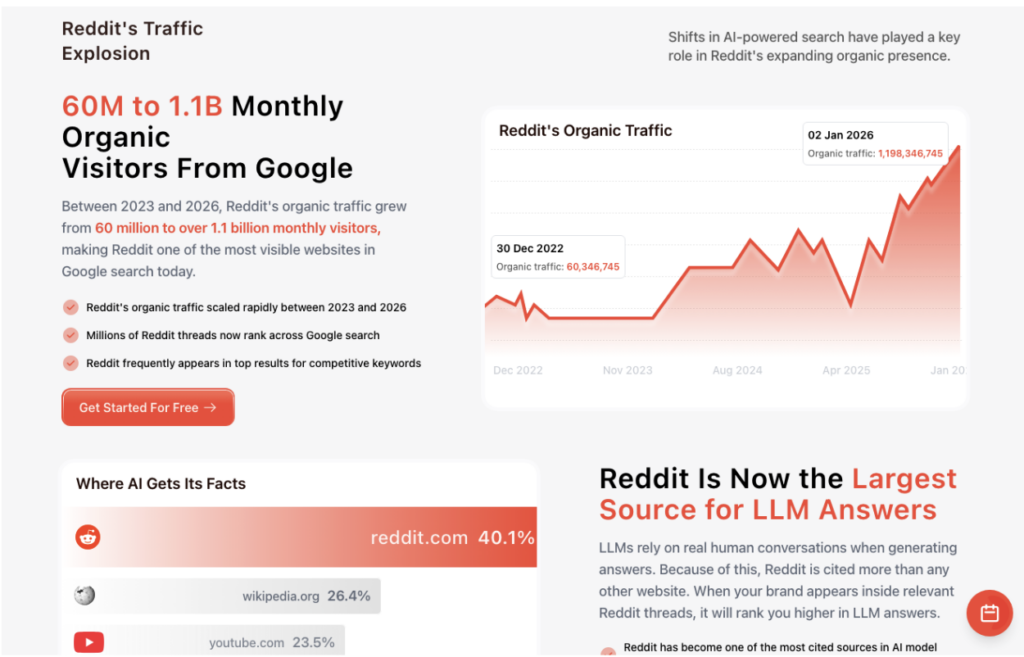
With this in mind, it comes as no surprise that niche businesses — like Engain — permit themselves to err on the side of complexity to ensure they’re supporting product understanding. If you check out this brand’s homepage, you’ll notice that it’s filled with tons of data and information.
And even though that may seem excessive, the reason is actually very simple. Engain offers a highly specialized, unique service that entirely depends on its prospects’ understanding of how Reddit and AI-powered search work together. So, by educating web visitors about how these two channels affect organic web traffic, Engain creates an opportunity to introduce its service as a relevant solution, automatically elevating its target audience’s purchase intent via the mediating power of product understanding.
Source: engain.io
Lead-Generation Principles
When it comes to nudging web visitors toward a conversion, most advice focuses on making the process as appealing, safe, and simple as possible. And if you consider how shoppers decide to go through with their purchases in the first place, this makes perfect sense.
Ultimately, cart abandonment data shows that consumers don’t want to jump through hoops to complete a purchase. Nor are they willing to provide sensitive personal or financial information when shopping with businesses they’re not entirely convinced are 100% trustworthy.
This is one of the reasons UX and UI design advice often emphasizes simplifying lead-generation forms as a way to boost conversion rates.
But is this approach always correct? Even in specific niches? Not necessarily.
Although simplicity in lead-gen forms does offer benefits. For instance, HubSpot found that conversion rates significantly decrease as the number of form fields increases. Nevertheless, some contexts could still benefit from a more detailed approach.
After all, niche industries regularly rely on highly personalized sales cycles to accomplish real conversion results. And the only way to facilitate these is to collect sufficient information about potential customers’ needs and preferences, so that your sales team can provide them with the customer experience and unique approach they seek.
For instance, check out how Braze implements this UX approach in its online presence. Instead of optimizing its lead-generation forms for simplicity and speed, this business opts to go the complex route. Yes, at first glance, it may seem like Braze is asking for too much information. But if you consider that it serves a large user base across a variety of niches, it becomes clear that all additional contextual questions allow the brand to optimize the customer experience through personalized offers, onboarding journeys, retention campaigns, and content marketing efforts.
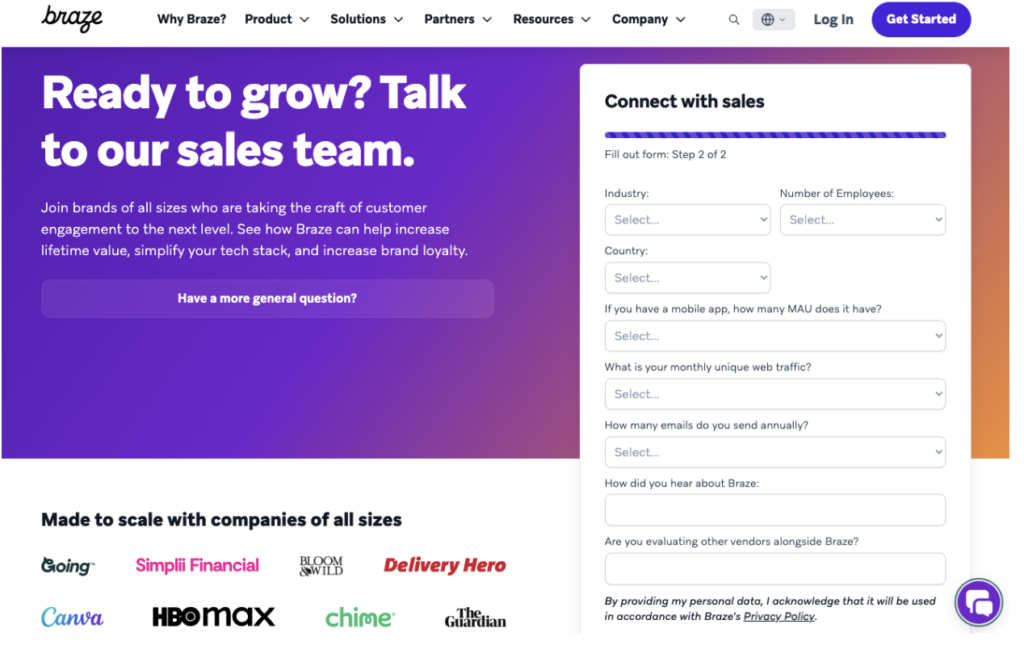
Source: braze.com
UX Principles That Stay the Same, Regardless of Context
As you can see, there are several strategies you can use to adapt common UX patterns to specific niches and customer segments. But what about those user experience principles that remain the same, regardless of context?
Though it may not seem like it, some UX rules are simply not meant to be broken.
Search and Navigation Complexity
Allowing potential customers to quickly find what they need on your website is key to convincing them that your offer aligns with their demands. That’s why navigation menus and search functions are such a crucial element of UX.
Ultimately, these need ot be simple, user-centric, and highly predictable. Breadcrumb navigation, for instance, gives web users the ability to always know where they are on your website (and how to cycle back to a previous page). And detailed search filters — like the ones used by Business for Sale on their Melbourne page — can provide your web visitors with tools, which help them discover viable products faster, shortening the sales cycle and boosting their chances of converting.
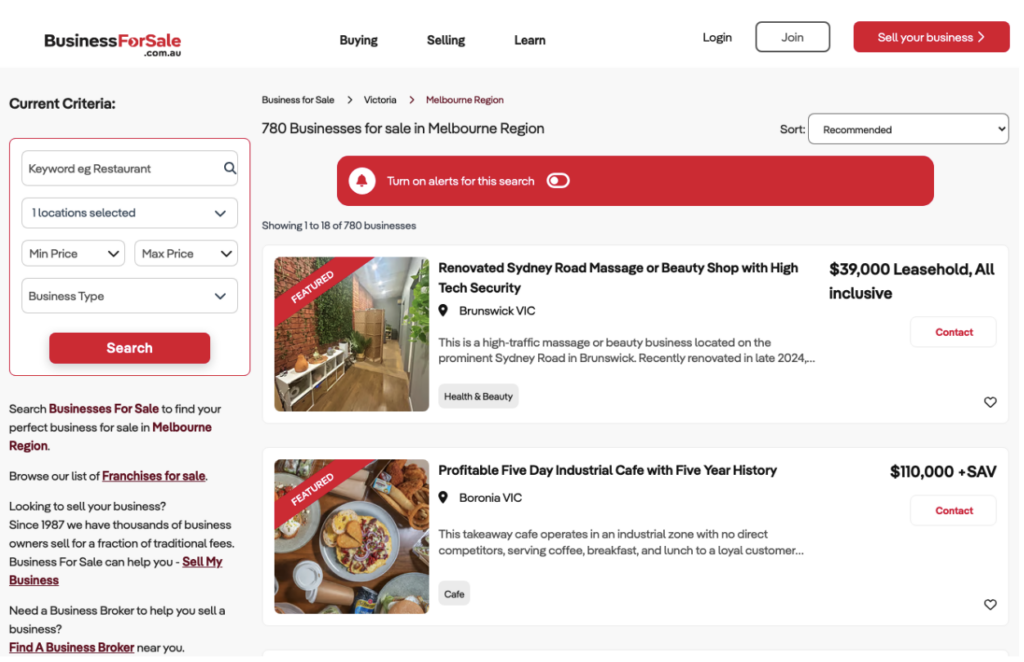
Source: businessforsale.com.au
Emotional Appeal
Emotional decision-making is most commonly associated with B2C contexts. Still, you shouldn’t underestimate the impact of your web visitors’ feelings, even when targeting professional buyers.
In some niches, customer pain points can be a true source of frustration. And it is precisely that negative feeling that will drive your audience toward researching (and investing in) potential solutions.
So, use your site’s design to address these emotions and show that you offer a viable solution. The best way to do this is with high-quality, user-centric content — like SellerMetrics does on their Amazon Advertising Management Services page. That way, you can improve website engagement and conversion rates and make the entire buying process feel more natural and intuitive to your niche audience.
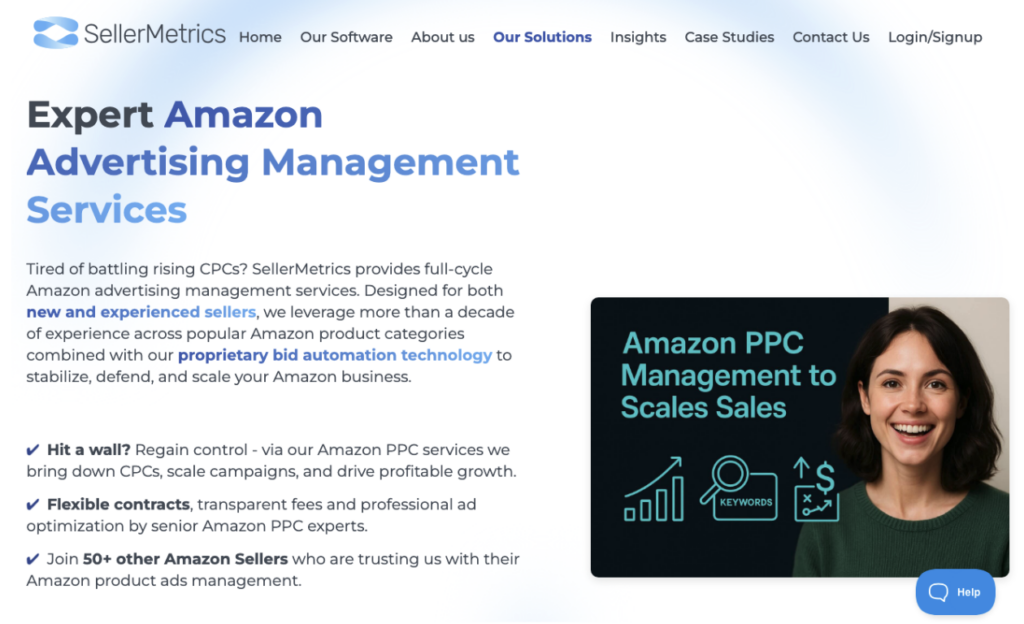
Source: sellermetrics.app
Content Readability and Scannability
Finally, when it comes to UX principles common to all niches, it’s worth mentioning content organization.
Ultimately, most internet users are more likely to scan and skim webpages rather than read them word-for-word. And many people want an easy method to gauge whether a brand’s offer aligns with their needs, which is something that complex language and layouts might prevent.
So, for a user-friendly website that works across multiple niches, always prioritize readability and scannability. Sure, you can employ complex or niche-specific jargon if those match your ideal customers’ expertise levels. But it’s still important to adhere to basic scanning patterns, so that your web visitors have an enjoyable brand experience that can easily translate into product comprehension and conversion.
Final Thoughts
Great UX design is always highly customer-conscious. After all, optimizing user experience is only possible if you have an in-depth understanding of your ideal customers’ wants, needs, and preferences in the first place.
So, as you explore strategies that can help you adapt UX patterns to different niches, always prioritize data-based design decisions. The tips covered in this guide are an excellent starting point to ensure the outcomes you’re after. Nevertheless, don’t underestimate the importance of user testing, especially when building complex applications or systems that need to integrate with backend infrastructure. DreamFactory provides a self-hosted platform that offers governed API access to any data source, allowing teams to test their UX designs with real data integration scenarios in mind.
UXPin can help with the final aspect of UX design by helping you create ready-to-test prototypes, so that you can get reliable user feedback and verify your design choices in whichever context you need.