

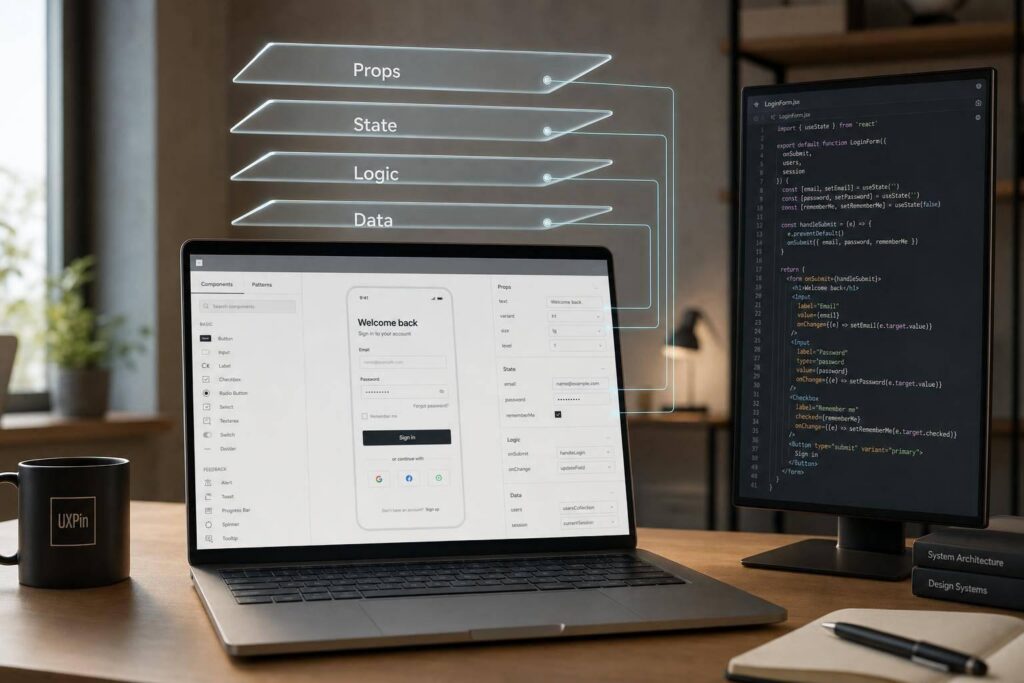
How to Build Production-Ready Prototypes with Code in UXPin
Build production-ready, code-backed prototypes by syncing your design system to UXPin and adding real props, states, logic, and data.
Read the articleBlog
Build production-ready, code-backed prototypes by syncing your design system to UXPin and adding real props, states, logic, and data.
Read the article1,683 articles
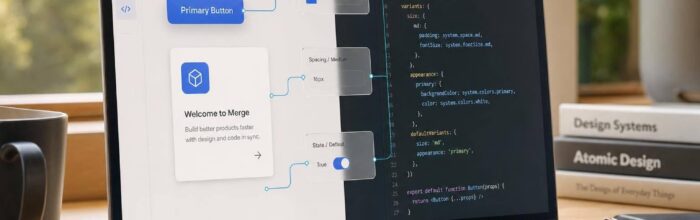
Prototype with real React components via UXPin Merge—sync props, tokens, and interactions to reduce rework and align design with code.
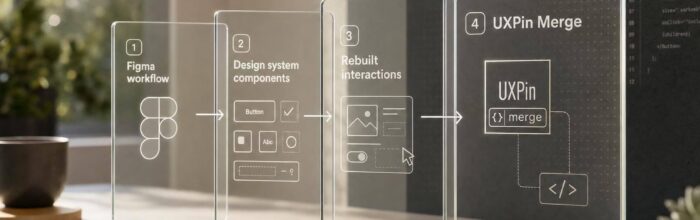
Compare workflows and migration steps when moving from Figma to UXPin, including design systems, Merge, and rebuilding interactions.
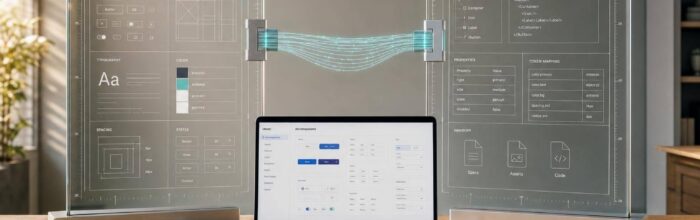
Compare UXPin and Figma on prototyping depth, design-system parity, handoff, and pricing to pick the best fit for your team.
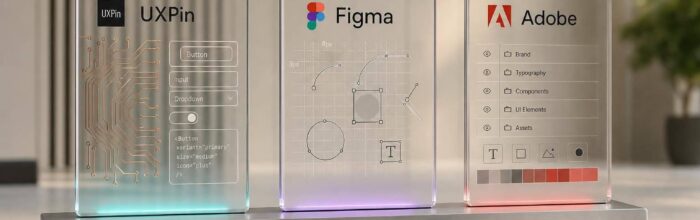
Compare UXPin, Figma, and Adobe for enterprise design systems—code-backed vs design-led workflows, governance, tokens, and delivery speed.
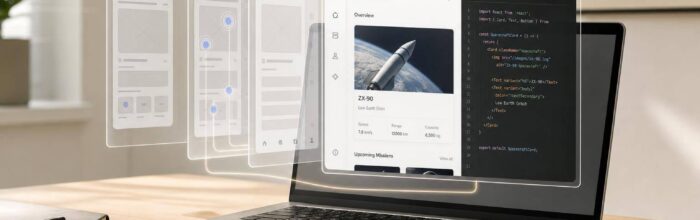
Compare UXPin's production-aligned prototyping with Figma, Sketch, and Adobe XD to choose the right workflow.
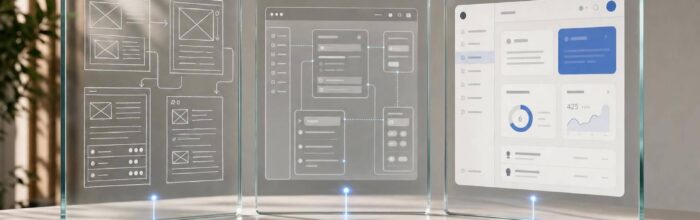
Compare three prototyping tools by fidelity, interaction depth, team workflow, and design-to-dev handoff to pick the right fit.
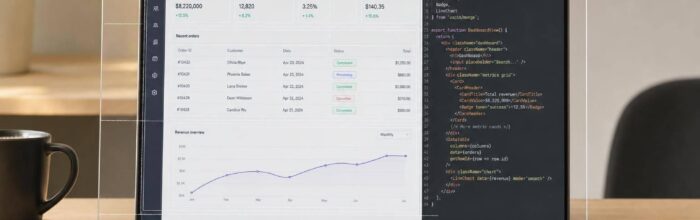
Design with real React components when behavior matters to cut handoff, reduce rework, and align prototypes with production.
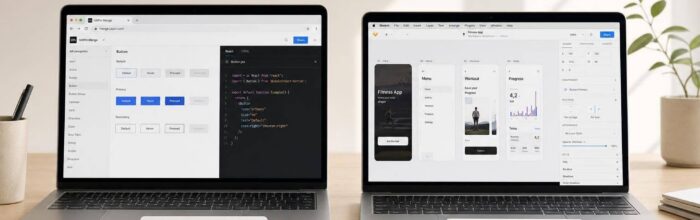
Compare a code-first, browser-based prototyping workflow with a Mac-focused visual editor to weigh features, collaboration, and cost.
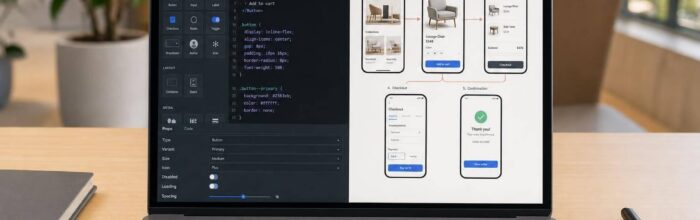
Pick a code-backed prototyping platform for tightly aligned design and development, or a vector-focused tool for fast visual screen flows.
Pick a source of truth: code-backed components to cut rebuilds or visual-first tools for faster mockups and inspection.
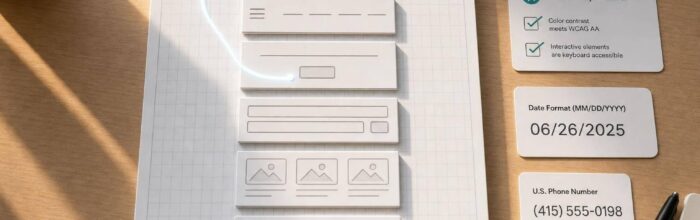
Use AI to draft structure and copy, build with UXPin Merge's code-backed React components, and validate accessibility and U.S. formats.
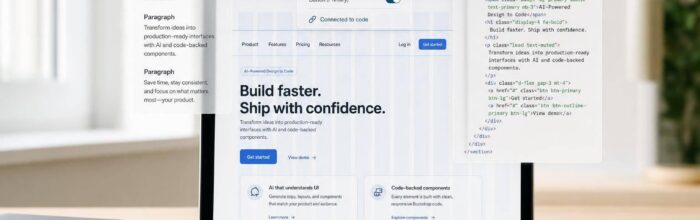
Use AI to draft copy and Bootstrap HTML, then build a responsive landing page and prototype with code-backed components for faster handoff.
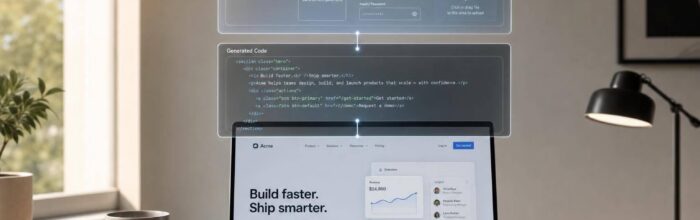
Turn AI prompts into a code-backed landing page using Ant Design and UXPin Merge for fast, production-ready prototypes.
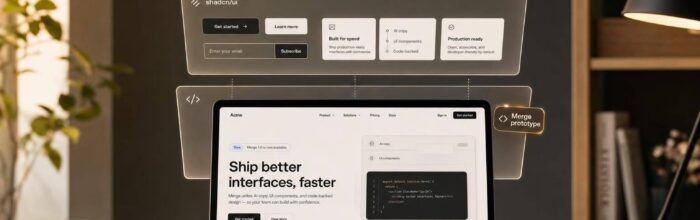
Plan copy with Claude, map sections to shadcn/ui components, and build a testable prototype in UXPin Merge.