

How to Design with Custom Design Components in UXPin Merge

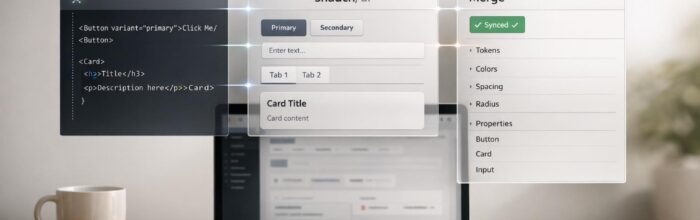
Designing with code-backed components in UXPin Merge simplifies the workflow for product teams, ensuring designs match the final product. Instead of static mockups, you work directly with React components, MUI, Ant Design, or custom libraries used in production. This eliminates the need for developers to translate designs into code, saving time and reducing inconsistencies.

Key takeaways:

  • Custom Components: Use production-ready React components with real behavior and functionality.
  • Streamlined Workflow: Align design and development by tweaking props directly in UXPin’s interface.
  • Advanced Prototyping: Test interactions like sortable tables or form validations with real-world logic.
  • Team Collaboration: Share component libraries, manage versions, and maintain consistency across projects.
  • Code Handoff: Export production-ready JSX code, ensuring a smooth transition from design to development.

This process has helped companies like PayPal and others reduce engineering time by up to 50%, proving its efficiency for enterprise teams. Read on to learn how to set up your library, customize components, and optimize collaboration.

What Are Custom Design Components in UXPin Merge?

UXPin Merge

Custom Components Defined

Custom design components in UXPin Merge are React.js UI elements directly imported from your production repository – whether that’s Git, Storybook, or npm. These components aren’t just placeholders; they’re the exact elements your developers use to build the product. That means they match the final product in appearance, behavior, and functionality.

You can tweak these components using props – the same parameters developers rely on. UXPin conveniently displays these props in the Properties Panel, allowing you to adjust text, switch variants, or apply colors aligned with your design system.

Let’s dive into how these features can enhance your design-to-development workflow.

Why Use Custom Components

Custom components bridge the gap between design and development. Designers don’t have to recreate elements that already exist in code, and developers get access to JSX specs that perfectly align with the production environment. Built-in constraints ensure that only predefined props can be modified, reducing the risk of applying unsupported styles or creating designs that can’t be implemented.

These components also enable advanced prototyping with real-world interactions and data. For example, you can test sortable tables, video players, or complex form validations using the same logic as your production code. This approach minimizes unexpected issues when it’s time to launch.

Custom Components vs Pre-Built Libraries

In UXPin Merge, you can work with both custom components and pre-built libraries like MUI, Ant Design, Bootstrap, and ShadCN – right on the canvas. Custom components from your proprietary library are a perfect match for your production environment. They reflect your brand identity, integrate your specific business logic, and include any unique functionality you’ve developed. This makes them particularly valuable for enterprise teams with well-established design systems and proprietary products.

On the other hand, pre-built libraries are ideal for quick prototyping, MVPs, or teams just starting to develop a design system. With seamless npm integration, you can start designing immediately using reliable components from popular frameworks – no developer assistance required. Many teams begin with pre-built libraries to save time and later replace them with custom components as their design system evolves.

Now that you understand custom components, it’s time to prepare your custom component library.

Design To React Code Components

React

Preparing Your Custom Component Library

UXPin Merge Custom Component Integration Workflow

UXPin Merge Custom Component Integration Workflow

Setting up a well-structured component library is key to ensuring smooth integration with UXPin Merge and enabling effective prototyping. By aligning your library with UXPin Merge, your React components will operate seamlessly with the same props developers use. According to UXPin’s documentation, integrating a complete design system typically takes between 2 hours and 4 days, making the initial setup a worthwhile investment.

Configure Your Setup Files

Begin by adding the UXPin Merge CLI as a development dependency using the following command:
npm install @uxpin/merge-cli --save-dev.
This tool is essential for connecting your component library to UXPin Merge.

Then, create a uxpin.config.js file in your project’s root directory. This file is required to define your library’s name, component categories, and Webpack configuration paths. To simplify the initial setup and debugging process, include just one component at first.

Your Webpack configuration must ensure that all assets – like CSS, fonts, and images – are bundled into JavaScript. Merge requires that no external files are exported. For example, avoid using mini-css-extract-plugin; instead, rely on style-loader and css-loader to load CSS directly into the JavaScript bundle. As UXPin notes:
"Your Webpack config has to be built in a way that does not export any external files.".
If your production Webpack setup is complex, consider creating a separate configuration file, such as uxpin.webpack.config.js, specifically for Merge.

To let designers apply custom CSS directly in the editor, include the following setting in your uxpin.config.js file:
settings: { useUXPinProps: true }.

Organize Component Directories

Merge enforces a specific naming convention: each component must reside in its own directory, and the filename must match the component name. For instance, a Button component should follow this structure:
src/components/Button/Button.js, and the component must use export default.

To streamline managing multiple components, use glob patterns in your configuration file. For example:
src/components/*/*.{js,jsx,ts,tsx}. This approach makes scaling your library easier over time.

The IBM Carbon integration offers a great example of how to structure your uxpin.config.js file. They grouped components into functional categories such as "Navigation" (e.g., src/Breadcrumb/Breadcrumb.js), "Form" (e.g., src/TextInput/TextInput.js), and "Table" (e.g., src/Table/Table.js). This logical organization helps designers quickly locate components in the UXPin Editor.

If your production code doesn’t fully meet Merge’s requirements, you can create a "Wrapped Integration." Store these wrappers in a subdirectory, such as ./src/components/Button/Merge/Button/Button.js, to keep them isolated from your production logic.

With these file structures and naming conventions in place, you can move on to defining clear component behaviors through Prop Types.

Define Prop Types

Well-defined props are essential for providing designers with in-editor documentation. UXPin automatically generates a Properties Panel from your React PropTypes, TypeScript interfaces, or Flow types. When prop types are properly defined, designers can see descriptions directly in the editor, reducing the need to refer to external documentation.

You can enhance the Properties Panel with JSDoc annotations. For example:

  • Use @uxpinignoreprop to hide technical props.
  • Use @uxpincontroltype to define specific UI controls.
  • Use @uxpinpropname to rename technical prop names to more user-friendly ones. For instance, changing iconEnd to "Right Icon" makes the interface easier for non-developers to understand.
Control Type Description
switcher Displays a checkbox
color Displays a color picker
select Displays a dropdown list
number Input that accepts numbers

As one UXPin Merge user explains:

"These props are what changes the look and feel of this particular card component… UXPin Merge, when you hover over the prop, it will actually give you the short description".

These small but impactful details significantly improve the designer experience, cutting down on unnecessary back-and-forth communication.

Adding Custom Components to the UXPin Merge Canvas

UXPin

Once you’ve configured your library, the next steps are to register your components, test them, and ensure they render properly on the UXPin canvas.

Register Components in UXPin Merge

The uxpin.config.js file is the bridge between your component library and UXPin Merge. It specifies where your components are located and organizes them within the editor. This file must export a JavaScript object containing a components object with a categories array.

Here’s an example of how it might look:

module.exports = {   components: {     categories: [{       name: 'General',       include: ['src/Button/Merge/Button/Button.js'],       wrapper: 'src/Wrapper/UXPinWrapper.js'     }]   } }; 

The wrapper property is optional but can be incredibly helpful. It lets you load global styles or context before rendering components. For instance, your UXPinWrapper.js file might include:

import React from "react"; import '../index.css';  export default function UXPinWrapper({ children }) {    return children;  } 

To test your components locally, use the command uxpin-merge --disable-tunneling. This launches an experimental mode where you can confirm that components render as expected and respond correctly to prop changes.

Place Components on the Canvas

Once registered, your components will show up in the UXPin library panel. Designers can drag and drop components directly onto the canvas, where they will function with production-level behavior.

For components that support children, nesting is straightforward. Designers can drag child components into parent containers on the canvas or use the Layers Panel to adjust the hierarchy. If your parent container uses Flexbox, child components will automatically follow the Flexbox rules on the canvas.

To give designers even more control, you can enhance your configuration file by adding the following:

settings: { useUXPinProps: true } 

This enables custom CSS controls, allowing designers to adjust properties like colors and margins directly in the editor – no need to dive into the source code.

Fix Common Integration Problems

Sometimes, integration issues can crop up. Common problems include styling conflicts, rendering failures, and cluttered Properties Panels.

  • Style conflicts: These occur when your component’s CSS interferes with UXPin’s interface. To avoid this, ensure your styles are scoped locally. If resizing issues arise, check whether width or height values are hardcoded in the CSS – use React props for dimensions instead.
  • Rendering failures: These are often linked to webpack configuration issues. If your production webpack setup is complex, consider creating a simpler, dedicated configuration specifically for Merge.
  • Overloaded Properties Panels: If the Properties Panel displays too many technical details, you can clean it up using JSDoc annotations. Use @uxpinignoreprop to hide developer-only props or @uxpinpropname to rename props for better clarity. For npm integration, ensure the status reaches 100% and displays "Update Success" before refreshing your browser to see changes.

Start small – add one component to your uxpin.config.js file and test it thoroughly before moving on to others. This step-by-step approach makes debugging easier and lets you address issues before they spread across your library. It also lays the groundwork for more advanced customizations later on.

Customizing Components While Designing

Once you’ve successfully integrated components, the next step is tailoring them to fit your design needs. With your custom components on the canvas, designers can make adjustments through the Properties Panel, which showcases all the props from your React code. This is where UXPin Merge stands out – designers interact with the same properties developers use, ensuring a seamless handoff from design to development.

Change Variants and States

Component variants like size, color, or type are mapped to dropdown menus in the Properties Panel when developers define them using oneOf prop types. For instance, a Button component offering size options (small, medium, large) will display these choices in a select list. Designers can simply pick the desired variant from the dropdown.

Designers also have the flexibility to use either visual controls or edit JSX directly. To make the process even more designer-friendly, developers can leverage JSDoc annotations such as @uxpinpropname to rename technical props into clearer, more intuitive labels. For components without predefined styling props, the CSS control offers an easy-to-use interface for adjusting colors, padding, margins, and borders visually.

Bind Data and Variables

Props are the gateway for data to flow into components, and UXPin Merge recognizes these props through PropTypes, TypeScript, or Flow. For simple text or numeric inputs, designers can directly enter values into input fields. When dealing with more complex data types like arrays or objects – think tables, charts, or lists – the @uxpincontroltype codeeditor annotation opens up a JSON editor. This allows designers to paste real data into components without causing any disruptions.

This approach ensures functional fidelity, meaning components behave as they would with real-world data. For example, designers can test scenarios like sortable tables that dynamically re-render when the data changes. As UX Architect and Design Leader Erica Rider explained:

"We synced our Microsoft Fluent design system with UXPin’s design editor via Merge technology. It was so efficient that our 3 designers were able to support 60 internal products and over 1,000 developers."

Apply Themes and Styles

Themes can be switched effortlessly using wrapper components. By including a theme provider in UXPinWrapper.js, you can load global styles or context. For more granular, component-level styling, the Custom CSS control – enabled via the useUXPinProps setting – gives designers a visual interface to tweak properties like colors, spacing, and borders without needing to write code.

To maintain a clean and focused Properties Panel, developers can use @uxpinignoreprop to hide technical properties that designers don’t need to see. These techniques ensure designs remain polished and ready for collaboration as the project progresses.

Control Type Best For Enables
Select Variants (size, color) Dropdown menus for predefined options
Code Editor Complex data (arrays) JSON input for tables, charts, and lists
CSS Control Visual styling Adjustments for colors, spacing, and borders
Custom Props Root element attributes IDs, slots, and additional custom attributes

Sharing Custom Component Libraries with Your Team

Once you’ve tested your custom components, the next step is sharing them with your team. This ensures everyone stays on the same page, speeds up collaboration, and keeps your design and production code aligned.

Set Up a Shared Merge Library

In the UXPin Editor or Dashboard, you can create a new library by choosing either "Import react.js components" or "npm integration," depending on your setup. Make sure to define permissions in the UXPin Editor to control who has access. For security, use an authentication token stored safely in your CI/CD pipeline to handle code updates – never include this token in public Git repositories.

For production environments, automate updates with Continuous Integration tools like CircleCI or Travis. Use the uxpin-merge push command to streamline this process and keep everything up to date.

Manage Component Versions

Once your shared library is in place, managing versions is critical. Version control helps avoid disruptions in ongoing projects while allowing teams to experiment with new features. UXPin Merge makes this easy with Tags and Branches. Tags lock a prototype to a specific version, ensuring stability, while Branches allow automatic syncing for prototypes that are still in development.

To switch versions for a prototype, click the gear icon in the Merge library panel, select "Manage Version in project," and pick the version you need. You can also set a default version in "Library settings" so that all new projects start with the same components. For stable releases, use the CLI command npx uxpin-merge push --tag VERSION. For ongoing development versions, use npx uxpin-merge push --branch branch.

With version control in place, your team will have a seamless experience accessing the right components for their projects.

Enable Team Access

Once the library is shared, team members can access components directly from the Library panel. Metadata for each component will appear in the Properties Panel, giving them all the details they need. To maintain security, store the authentication token as an environment variable (UXPIN_AUTH_TOKEN) in your CI system.

If your team is juggling multiple projects, you can assign different component versions to separate prototypes. This flexibility allows ongoing work to remain stable while testing new features in parallel. As Erica Rider, UX Architect and Design Leader, explained:

"It used to take us two to three months just to do the design. Now, with UXPin Merge, teams can design, test, and deliver products in the same timeframe. Faster time to market is one of the most significant changes we’ve experienced using Merge."

Handing Off Code to Development

Traditional handoffs often lead to discrepancies between design and the final code. UXPin Merge bridges this gap by allowing designers to work with the same React components used in production. This approach eliminates misunderstandings and reduces redundant tasks.

Let’s break down how each step of this process improves your development workflow.

Preview Prototypes with Real Component Behavior

With UXPin Merge, when you preview a prototype, stakeholders don’t just see static images or approximations. Instead, they interact with fully compiled JavaScript and CSS. For example, if your prototype includes a sortable table or a functional video player, those components behave exactly as they would in the final product. Since Merge uses real code, you can validate interactions, states (like hover, active, or disabled), and logic before writing any production code.

Next, let’s see how Spec Mode turns prototypes into actionable, production-ready code.

View and Export JSX Code in Spec Mode

In Spec Mode – also called Get Code Mode – developers can directly view and copy production-ready JSX code. This includes all the necessary CSS, spacing, color codes, and configurations, making the code ready for immediate use and edits. You can even open projects in StackBlitz for instant code editing, streamlining the transition from design to development.

Align Design and Development

By combining real-code previews with editable JSX, UXPin Merge ensures that your design is the single source of truth. Traditional handoff methods often result in "design drift", where designers and developers work with separate versions of components. Merge eliminates this issue by syncing directly with your Git repository, ensuring the same code powers both design and production. Any updates in the repository are automatically reflected in the UXPin Editor, keeping teams aligned.

Additionally, prop-based customization ensures that designers work within the same constraints as developers. This means designers can’t create elements that are impossible to build because they’re working with the actual production code. This seamless process reduces back-and-forth revisions and accelerates deployment. In fact, using code-backed components can make product development up to 8.6x faster compared to traditional image-based design tools.

Conclusion

UXPin Merge transforms the way teams approach product development by enabling designers to work directly with production-ready React components. This seamless integration bridges the traditional gap between design and development, leading to noticeable improvements in workflow efficiency.

Real-world case studies highlight impressive outcomes, such as cutting engineering time by 50% and empowering thousands of developers with the support of a small design team. By using code-backed components, teams establish a single source of truth, maintain design consistency, and accelerate deployment – all while reducing costs.

With UXPin Merge, your design system can scale effortlessly, generating production-ready JSX code that developers can use right away. This process ensures that what you design is exactly what gets built, streamlining collaboration and eliminating unnecessary revisions.

Want to prevent design drift and speed up your product development process? Check out UXPin’s pricing plans or reach out to sales@uxpin.com for enterprise solutions tailored to your needs.

FAQs

How does UXPin Merge help designers and developers work better together?

UXPin Merge creates a seamless connection between designers and developers by enabling both teams to work with the exact same code-backed components. With Merge, designers can incorporate live React components directly into their prototypes, ensuring designs are not only visually accurate but also functional and aligned with the end product.

By providing a single source of truth for components, this approach eliminates the usual handoff headaches. Developers supply components that designers can instantly integrate, leading to better communication, a quicker design process, and a smoother transition from prototype to production. Merge streamlines collaboration, helping teams deliver products faster and with precision.

What are the advantages of using custom components in UXPin Merge instead of pre-built libraries?

Using custom components in UXPin Merge offers several advantages compared to relying on pre-built libraries. These components are crafted specifically to match your team’s unique needs, ensuring they align seamlessly with your product’s design and functional goals. This tailored approach helps maintain consistency throughout your designs and removes the restrictions that come with generic, one-size-fits-all elements.

Custom components also provide greater flexibility and scalability. They can be centrally updated, versioned, and managed, which simplifies maintaining a cohesive design system and minimizes discrepancies between design and development. By streamlining workflows and encouraging smoother collaboration across teams, custom components not only speed up deployment but also enhance the entire design process.

How do I set up my component library to work with UXPin Merge?

To prepare your component library for UXPin Merge, start by ensuring your React.js components are compatible with the required framework version (16.0.0 or higher). Organize your files properly, making sure each component includes an export default statement and uses supported JavaScript dialects like PropTypes, Flow, or TypeScript.

Next, host your components in a repository that UXPin Merge can access. Follow the naming conventions and directory structures specified in the documentation, and bundle your components correctly using tools like webpack. Once everything is set up, your library will be ready to integrate seamlessly, allowing for consistent, code-based designs throughout your workflows.

A well-prepared setup ensures your components work efficiently within Merge, streamlining collaboration between design and development, maintaining uniformity, and accelerating deployment.

Related Blog Posts

Responsive Design for Touch Devices: Key Considerations

Touchscreens have changed how we interact with digital content. Designing for touch requires larger, finger-friendly targets, avoiding hover states, and focusing on thumb-friendly zones. Here’s what you need to know:

  • Finger Size Matters: Average fingertips are 0.6–0.8 inches wide, so touch targets should be at least 48 pixels with 8 pixels of spacing.
  • Thumb Zones: Place key actions in the bottom third of screens for one-handed ease.
  • No Hover States: Ensure all functionality is accessible via taps, not mouse hovers.
  • Mobile-First Design: Start with mobile layouts to ensure usability on small touchscreens.
  • Testing Is Key: Test designs on real devices to catch issues like small buttons or awkward layouts.

Mobile-First and Touch-First Design Principles

Why Mobile-First Works for Touch Devices

Mobile-first design emphasizes streamlining content and focusing on what truly matters. With limited screen space, it forces designers to create cleaner, more intuitive interfaces that highlight essential interactions.

One of the major benefits of this approach is its scalability. Interfaces designed for mobile – featuring larger buttons and ample spacing – translate smoothly to other devices. On the other hand, interfaces built for desktops often include small, tightly packed elements that can be frustrating to use on touchscreens.

Take the BBC‘s design philosophy as an example. Their Global Experience Language (GEL) team champions the idea of designing for touch-first:

"We should design for ‘touch-first’, and only when device detection can be guaranteed, make exceptions for people using non-touch where appropriate."

With hybrid devices like touchscreen laptops and tablets becoming more common, assuming users will stick to a single input method is no longer practical. A user might start navigating with a mouse and switch to touch moments later. By adopting a touch-first approach, you ensure the interface adapts seamlessly to these varied interaction modes.

This mobile-first mindset naturally leads to rethinking traditional interaction patterns to better suit touchscreens.

Touch-First Interaction Design Basics

Designing for touch-first requires challenging old habits. One of the most critical adjustments is moving away from hover-based interactions. On touchscreens, there’s no way to preview functionality before committing to a tap, so every action must be designed for direct interaction.

As the BBC GEL team advises:

"Avoid relying on hover states."

This doesn’t mean hover effects should be abandoned entirely – they can still enhance desktop experiences. However, they shouldn’t be the only way users access important functionality. Instead, focus on gestures that feel intuitive on touch devices: swiping to navigate, pulling down to refresh, or tapping to expand sections. Use media queries to optimize button sizes and padding for touchscreens, ensuring interactive elements meet the recommended minimum size of 48 pixels.

A great example comes from Target’s app redesign in 2019. They reworked their primary "Search" and "Scan" buttons to measure roughly 0.8 inches by 0.8 inches (about 2 cm by 2 cm). This change made the app easier to use with one hand, reducing user frustration and improving functionality in everyday scenarios.

Luke Wroblewski – Designing for Touch

Touch Targets and Layout Optimization

Touch Target Size Guidelines by Platform and Organization

Touch Target Size Guidelines by Platform and Organization

When designing for mobile devices, refining touch targets and layouts is key to ensuring usability on touchscreens. Let’s dive into how proper sizing, spacing, and thoughtful layouts can make all the difference.

Touch Target Size and Spacing Guidelines

Target

Unlike the pinpoint accuracy of a mouse, human fingers are far less precise. The average fingertip is around 0.6–0.8 inches (1.6–2 cm) wide, while thumbs measure about 1 inch (2.5 cm). This means finger taps cover a much larger area than a mouse click.

To address this, various platforms and organizations have established minimum size guidelines for touch targets. Here’s a quick comparison:

Organization / Platform Min. Target Size Spacing Requirement Applicability
Apple (iOS) 44 x 44 pt 1 px minimum iOS Apps / Safari
Google (Android) 48 x 48 dp 8 dp minimum Android / Material Design
NN/g 1 x 1 cm (0.4 x 0.4 in) 2 mm minimum General Touch Interfaces
WCAG 2.1 (AAA) 44 x 44 CSS px N/A (included in size) Web Accessibility
WCAG 2.2 (AA) 24 x 24 CSS px Sufficient spacing required Web Accessibility

Aurora Harley, a Senior User Experience Specialist at NN/g, emphasizes:

"Interactive elements must be at least 1cm × 1cm (0.4in × 0.4in) to support adequate selection time and prevent fat-finger errors."

Interestingly, touch targets don’t have to look large to perform well. For example, you can keep a sleek 24px icon while expanding its tappable area to 48px using padding. This approach maintains a clean design while meeting the roughly 9mm size of a typical fingertip. CSS media queries like @media (any-pointer: coarse) can help detect touchscreen users and dynamically adjust padding for buttons and links.

Spacing also matters. Keep at least an 8px gap between interactive elements. For smaller targets, surround them with an "exclusion zone" – a buffer area about 0.28 x 0.28 inches (7mm x 7mm) free of other interactive elements. For critical actions like "Submit" or "Checkout", go beyond the minimum size, especially since users might interact with your design while walking or multitasking.

Once touch targets and spacing are optimized, the next step is to ensure the layout aligns with these principles.

Designing Touch-Friendly Layouts

Creating layouts for touch devices starts with understanding thumb zones – the natural reach of your thumb during one-handed use. The bottom third of the screen is the most accessible area, making it the ideal spot for primary actions like navigation tabs or confirmation buttons. The center is generally comfortable, while the top corners require awkward stretching, especially on larger devices.

To maximize usability:

  • Place frequently used controls in thumb-friendly zones.
  • Reserve harder-to-reach areas for secondary actions.
  • Avoid positioning critical buttons at the screen’s edges, as phone cases or bezels can make these spots tricky to tap.

Support gestures like swiping for navigation or pull-to-refresh, but always provide a tappable alternative. Gestures can be challenging for users with motor impairments, so direct button interactions are essential.

Additionally, use HTML5 input types like type="tel" or type="email" to bring up the appropriate virtual keyboard. This small detail saves users from the hassle of switching keyboard layouts manually.

Finally, test your design on real devices. Factors like screen protectors, hand size, and even the angle at which users hold their phones can all influence how they interact with your interface. Testing ensures your layout works in real-world conditions and provides the best possible experience.

Typography and Content Scaling for Touch Devices

When designing for touch devices, typography plays a crucial role in ensuring clarity and usability on smaller screens.

Start with a base text size of 16px (1rem) for better readability. Secondary text can go down to 14px, but avoid anything smaller, as it may strain the eyes. To make text flexible and responsive, use relative units like rem, em, or ch. For dynamic scaling, the CSS clamp() function is a great tool. For example, font-size: clamp(1rem, 0.75rem + 1.5vw, 2rem); adjusts text size seamlessly across devices, from smartphones to tablets. Pair this with a unitless line-height (e.g., 1.5) to maintain proportional spacing. This combination ensures that typography remains clear and adaptable, complementing touch-friendly layouts.

For readability, aim for a line length of about 66 characters (with an acceptable range of 45–75). You can use the ch unit to control text container width, such as max-inline-size: 66ch;, to maintain this ideal line length. Avoid using all-caps for body text, as it can slow down reading speeds by 13% to 20%.

To meet accessibility standards like WCAG 2.1 Level AA, ensure text contrast ratios are at least 4.5:1 for normal text and 3:1 for larger text. Additionally, line spacing should be at least 1.5, and letter spacing should measure 0.12 times the font size.

Interactive text, such as links, should be large enough for easy tapping – at least 44px in height. Use media queries like @media (pointer: coarse) to detect touchscreens and add extra padding around clickable elements. For images, applying max-width: 100% and height: auto ensures they scale fluidly without distortion.

Feedback and Interaction States

Why Feedback Matters in Touch Interactions

When using touch interfaces, a finger often blocks the target, making it crucial to provide feedback that confirms an element has been selected. Immediate visual or tactile responses – triggered on touchstart – can significantly boost user confidence, especially when loading times are unpredictable.

"Adding ‘touch states’ can help an interface feel more responsive to someone’s actions. They give you a confirmation that something will happen, which is very important for when you have unpredictable loading times." – BBC GEL

Triggering feedback on the touchstart event, rather than waiting for the finger to lift, makes the interface feel much more responsive. This approach also addresses the historical 300ms delay some touch-optimized browsers introduced to differentiate single taps from double-taps or gestures.

Once feedback reassures users, the next step is designing interaction states that align with the unique characteristics of touch inputs.

Designing Interaction States for Touch Inputs

Effective interaction states for touch inputs should focus on immediate feedback and account for the distinct nature of touch-based interactions.

Unlike mouse and keyboard inputs, which typically operate with three states (up, down, and hover), touch inputs rely on a simpler two-state model: touched or not touched. This difference means that interactive elements must be designed to suit touch-specific behaviors.

Using the @media (hover: hover) CSS feature, you can apply hover styles exclusively to devices with hover-capable inputs. For touch devices, prioritizing clear visual changes for states like pressed or disabled ensures users can easily identify interactive elements.

For draggable elements, consider enlarging or slightly rotating them when active to keep them visible despite finger occlusion. Adding haptic feedback can also provide a tactile confirmation that an object has been engaged or moved. These adjustments create a more intuitive and accessible experience for touch users.

Feature Touch Interactions Mouse/Keyboard Interactions
Precision Low – interaction occurs over a fingertip High – precise x-y coordinates provided
State Model Two-state (on/off) Three-state (up/down/hover)
Occlusion High – fingers cover UI elements None – cursor doesn’t obscure target
Hover Generally unavailable Standard – used for exploration

Testing and Iteration for Touch Interfaces

Testing on Real Devices

To truly refine touch interfaces, testing on actual devices is a must. Simulators just don’t cut it when it comes to replicating real-world touch interactions. They miss critical details like how users grip their devices, the impact of protective cases, or how non-dominant hand usage affects interactions.

Physical testing reveals issues that desktop browsers can’t detect. For example, Safari on iOS requires a touchstart listener on the body to properly activate the :active state. Similarly, performance hiccups during touch events often arise only on real devices when code runs on the main thread.

It’s also essential to test in realistic scenarios. Consider how users interact with devices in one-handed mode, while walking, or using a tablet in "clipboard mode". Pay attention to subtle cues like a "focus face", which signals that users are struggling to tap accurately. Watch for "rage taps" – multiple quick taps in frustration – often caused by unresponsive or undersized buttons.

"The fat fingers are not the real culprit; the blame should lie on the tiny targets." – Aurora Harley, Senior User Experience Specialist, Nielsen Norman Group

These real-world observations are invaluable for making meaningful refinements.

Iterating Based on User Feedback

Testing on real devices provides the insights needed for precise adjustments. Heat maps can highlight where users intend to tap versus where they actually do, exposing issues like view-tap asymmetry – when elements are easy to read but too small or crowded to tap reliably.

To improve touch targets, expand them beyond their visible size using CSS padding or ::before pseudo-elements. Media queries like @media (any-pointer: coarse) can automatically scale up touch targets for touchscreen users. Tools like Chrome DevTools’ "Computed" pane or Firefox’s "Layout" panel can help you confirm the actual pixel dimensions of your adjustments.

Mark Figueiredo, Sr. UX Team Lead at T. Rowe Price, shared how faster feedback loops have transformed their process:

"What used to take days to gather feedback now takes hours. Add in the time we’ve saved from not emailing back-and-forth and manually redlining, and we’ve probably shaved months off timelines".

Conclusion

Creating responsive interfaces for touch devices means prioritizing a touch-first mindset. This approach should influence your design choices across all screen sizes, not just mobile. With touchscreens now a regular feature on laptops and hybrid devices, designing with touch as the default ensures a better experience for all users.

The cornerstone of effective touch design lies in physical dimensions. Touch targets should meet the appropriate size and spacing guidelines, as discussed earlier. Rory Pickering from BBC emphasizes this point: "Interfaces should be accessible for touch, by default, across all screen sizes from mobile to desktop". Proper sizing lays the groundwork for designs that offer immediate feedback and smooth interactions.

In addition to sizing, ditch reliance on hover effects and focus on delivering instant touch feedback. Incorporating natural gestures like swiping and pinching makes interactions feel intuitive and fluid. This aligns with the principles of Natural User Interfaces (NUI), where users interact directly with content instead of navigating through indirect controls.

Testing is vital – don’t rely solely on simulators. Real-world testing on actual devices ensures your touch interface performs as expected. Pair this with CSS media queries to fine-tune touch targets for different screen sizes. These steps help create a cohesive design that works seamlessly across devices.

Larger touch targets improve usability for everyone, regardless of whether they’re using a finger, thumb, or stylus. By embracing a touch-first approach, ensuring adequate spacing, using scalable typography, and thoroughly testing in real-world conditions, you can deliver interfaces that feel natural and reliable for all users. Focus on these touch-first principles to craft a user experience that truly works.

FAQs

What makes designing for touch devices different from desktop interfaces?

When designing for touch devices, it’s important to account for the way users interact – using their fingers instead of a mouse. Unlike the precision of a cursor, fingers require larger touch targets, ideally around 48 pixels wide, to make tapping easier and reduce mistakes. This is a noticeable shift from desktop design, where smaller, more precise clickable elements are the norm.

Another key consideration is creating spacious layouts. Touch interfaces need extra room between interactive elements to prevent accidental taps. This is where responsive design becomes essential. By using flexible grids and media queries, content can adapt seamlessly to different screen sizes and orientations. Touch devices also often incorporate intuitive gestures and simplified navigation, so prioritizing usability and clarity is critical for a smooth user experience.

How can I make my touch interface more accessible for users with motor impairments?

When designing a touch interface for users with motor impairments, prioritize larger and well-spaced touch targets. Buttons, links, and other interactive features should be easy to tap without triggering accidental presses. A practical guideline is to make touch targets at least 48 by 48 pixels, or about 7 x 7 mm, ensuring they’re comfortably sized.

It’s also crucial to provide adequate spacing between touch elements to prevent overlapping hit areas, which can cause unnecessary frustration. Extending the tappable area beyond the visible boundaries of an element can further assist users with limited motor control, making interactions smoother and more accessible. These small but thoughtful adjustments can significantly enhance usability and create a more inclusive experience for all users.

What are the best practices for testing touch interfaces on physical devices?

When working with touch interfaces on physical devices, keeping a few essential practices in mind can make a big difference:

  • Design touch-friendly targets: Make sure buttons, links, or other interactive elements are big enough to tap easily. A minimum size of 44×44 pixels is recommended to reduce accidental taps and improve usability.
  • Test across multiple devices: Try your interface on both iOS and Android devices with various screen sizes and resolutions. This helps you catch compatibility and responsiveness issues that might otherwise go unnoticed.
  • Evaluate spacing and layout: Proper spacing between touch elements is key. Crowded layouts can lead to mis-taps, so testing on actual devices can highlight spacing problems that simulations might miss.

Thorough testing on real devices ensures your touch interface feels intuitive and user-friendly.

Related Blog Posts

Managing Teams for Large-Scale Design Systems

Scaling design systems is challenging, especially as organizations grow and team structures evolve. Success often hinges on how teams are organized. This article explores three effective models for managing large-scale design systems: Centralized, Decentralized, and Hybrid. Each model offers unique strengths and weaknesses, depending on your organization’s size, goals, and maturity.

Key Takeaways:

  • Centralized Model: A dedicated team maintains consistency across products but may struggle with scalability and staying connected to user needs.
  • Decentralized Model: Designers within product teams contribute to the system, ensuring relevance but facing coordination challenges.
  • Hybrid Model: Combines a core team with embedded contributors, balancing consistency and flexibility, though it requires strong governance.

Quick Stats:

  • 63% of enterprises have mature UI libraries, but many face collaboration gaps.
  • 21% of companies remain in the setup phase for over three years due to buy-in and time constraints.

Choosing the right model depends on your organization’s needs and priorities. Below, we break down each model’s pros, cons, and practical considerations.

A Business-Centric Approach to Design System Strategy

1. Centralized Team Model

A centralized team takes charge of managing the design system for the entire organization. Nathan Curtis, Founder of EightShapes, describes it this way:

“A centralized team supports the system with a dedicated group that creates and distributes standardized components for other teams to use but may not design any actual products”.

This model stands apart from a solitary approach, where one team creates tools exclusively for its own use. Instead, it provides a unified framework that introduces unique challenges in scalability, governance, and maintenance.

Scalability

The centralized model shines in its ability to support a broad range of products. A focused team can ensure that UI kits and code libraries remain consistent and up-to-date across multiple projects – sometimes spanning dozens of products. By stepping away from the immediate demands of individual products, this team can concentrate on creating a system that serves the organization as a whole.

Governance

One of the risks of a centralized approach is the potential for a “top-down” system that doesn’t align with actual user needs. To avoid this pitfall, centralized teams must actively participate in product design critiques and collaborative sessions. This involvement allows them to gather feedback on how components perform in real-world scenarios. Without this connection, design systems can stagnate; in fact, 21% of efforts fail to move beyond the setup phase even after three years.

Maintenance Burden

Centralized teams carry the full weight of maintaining the design system. They’re responsible for updating components, documenting changes, and ensuring the system evolves to meet organizational demands. While this centralized control ensures consistency, it also requires careful prioritization between system updates and the development of new features. Balancing these tasks is critical for long-term success. Some teams also rely on a virtual assistant to handle documentation updates, backlog triage, and coordination tasks, freeing designers to focus on higher-impact system work.

2. Decentralized Team Model

In a decentralized setup, designers remain embedded within their respective product teams while also contributing to the broader design system. As Nathan Curtis explains, this approach shifts away from a rigid top-down structure and instead fosters a shared decision-making environment where both practitioners and leaders collaborate.

Scalability

This model thrives on scalability by involving designers across multiple platforms – web, iOS, Android, and native apps – ensuring the design system serves the entire organization, not just a single product. Take Google during the early days of Material Design as an example. They implemented a “committee-by-design” strategy, where a small group of designers from various teams worked together to shape the system’s direction. This kind of structure is particularly well-suited for large organizations managing hundreds of designers across numerous products.

Governance

For a decentralized model to function effectively, governance is key. A well-defined charter outlining roles, responsibilities, and decision-making processes – whether decisions are made by majority vote or through consensus – is essential to prevent bottlenecks. A dedicated Design System Manager can play a critical role here, steering discussions toward actionable outcomes and ensuring alignment across teams.

This governance structure allows the design system to evolve responsively, keeping components relevant and functional.

Flexibility

One of the standout benefits of decentralization is its flexibility. Components are developed based on real-world product needs rather than theoretical assumptions. Designers use their hands-on experience with actual constraints to fine-tune components for production.

Maintenance Burden

However, decentralization comes with its challenges. Coordination becomes more complex, and designers often prioritize immediate product work over updating the design system. Nathan Curtis highlights this issue:

“A federated team needs a centralized component of staff dedicated enough to the cause… Without that fine work, that living style guide can seem quite dead.”

To address this, it’s common for federated team members to allocate about 25% of their time to design system-related work. This commitment requires leadership support to ensure the system doesn’t lose momentum or become fragmented.

Tools like UXPin Merge can also be a game-changer for decentralized teams. By allowing designers to work directly with production-ready components within their design tools, platforms like this help maintain a cohesive and scalable design system, even in a decentralized structure.

3. Hybrid Team Model

The hybrid team model takes the best of both centralized and decentralized systems, blending structured governance with practical insights from those working directly on products. It pairs a dedicated core team with contributors embedded in product teams. This setup ensures a stable foundation while benefiting from the firsthand experience of designers actively involved in product development. As Nathan Curtis explains:

“We need our best designers on our most important products to work out what the system is and spread it out to everyone else. Without quitting their day jobs on product teams.”

This model addresses the challenges of purely federated systems, where too many contributors can slow decision-making and lead to inconsistent results.

Scalability

For large organizations, the hybrid approach strikes a balance between speed and efficiency. The central team handles documentation, governance, and maintains a single source of truth. Meanwhile, product team contributors bring in practical insights from their day-to-day work. This setup avoids the bottlenecks of a centralized system and the fragmentation often seen in federated models. It’s particularly effective for organizations with established UI libraries, bridging the gap between maintaining system consistency and adapting to real-world needs.

Governance

Strong governance is crucial for hybrid teams to maintain consistency across the system. A clear team charter is essential, outlining how decisions are made – whether by consensus or majority vote. This structured approach ensures clarity in decision-making while fostering creative input from various teams.

Flexibility

The hybrid model promotes flexibility by incorporating product team insights while adhering to a unified design vision. This balance allows for innovation without compromising overall consistency. Tools like UXPin Merge enhance this flexibility by enabling both core and product team members to work with production-ready components directly in their workflow, reducing the risk of misalignment.

Maintenance Challenges

One of the main hurdles in this model is managing the workload between the core team and product teams. Contributors often juggle their primary product responsibilities with design system tasks, which can lead to conflicting priorities. To avoid fragmentation, it’s crucial for the central team to consistently manage documentation and communication. Additionally, allocating dedicated engineering resources – such as rotating engineers from product sprints to focus on system maintenance – can help ensure the design vision aligns with its implementation in code.

Comparing the Three Models

Comparison of Centralized, Decentralized, and Hybrid Design System Team Models

Comparison of Centralized, Decentralized, and Hybrid Design System Team Models

When it comes to scalability and operations, each model has its own strengths and challenges. The centralized model stands out for its ability to maintain consistency and enforce clear governance. However, as Nathan Curtis aptly puts it, “Overlords don’t scale”. This limitation makes it harder for centralized teams to handle rapid growth effectively.

On the other hand, the decentralized (federated) model spreads the workload across various product teams, which can accelerate scaling efforts. But there’s a downside: having too many contributors can lead to slower decision-making processes. The hybrid model aims to strike a balance between these two extremes by combining a dedicated core team with embedded contributors. This blend helps manage the trade-offs between scalability and efficiency, offering a middle ground.

Maintenance and Governance

Maintenance responsibilities vary significantly across the models. Centralized teams handle all upkeep themselves, while decentralized teams juggle system work alongside product-specific demands. Hybrid models share the load, dividing maintenance tasks between the core team and individual product teams.

Governance also plays a crucial role. Centralized teams maintain strict control, but they risk becoming disconnected from the evolving needs of product teams. As Nathan Curtis points out, this detachment can hinder adaptability. Federated teams, meanwhile, need well-defined structures to avoid bottlenecks in coordination.

Flexibility and Real-World Examples

Flexibility depends on how well each model addresses the unique needs of different products. A great example is Google’s Material Design, which emerged from a federated approach before its 2015 launch. Designers from various product teams worked together to shape the system, ensuring it met the demands of multiple platforms. This highlights the ongoing challenge of balancing consistency with the autonomy of individual product teams.

The Evolution of Models

Many organizations evolve through these models as their systems mature. They often start with a decentralized approach, move to a centralized model, and eventually adopt a hybrid framework. This progression reflects growing integration and sophistication. For instance, 63% of enterprise organizations have reached “Stage 3” maturity, where designers use UI libraries that mirror production code components. This evolution underscores how organizations adapt their models to meet increasing demands for scalability and efficiency.

Conclusion

When it comes to team structures, the centralized, decentralized, and hybrid models each bring their own strengths to the table. For smaller organizations, a centralized model often works well, offering clear ownership and a strong sense of consistency. On the other hand, companies managing a wide range of products may find a decentralized model better suited to address diverse, real-world needs.

For large enterprises with more mature systems, the hybrid model strikes a balance. It pairs a dedicated core team with embedded contributors, ensuring consistency while allowing the flexibility needed to adapt to unique product requirements.

It’s important to remember that team structures aren’t set in stone. As your organization grows and systems become more complex, a hybrid approach might offer the best mix of structure and adaptability. The key is to align your model with your current needs while staying open to adjustments as your organization evolves.

FAQs

What’s the best team structure for managing a large-scale design system?

Choosing how to structure your team for managing a large-scale design system hinges on factors like your organization’s size, the complexity of your product, and how teams collaborate. For smaller companies, a centralized team can work well. In this setup, a small group of designers takes charge of maintaining the system, ensuring consistency without needing extensive coordination.

In contrast, larger organizations often find federated or multidisciplinary models more effective. These involve cross-functional teams that can tackle the challenges of scale and complexity more efficiently.

Some companies opt for a hybrid model, blending centralized oversight with contributions from teams across departments. This approach works particularly well for businesses aiming for scalability and fast growth. However, no matter the structure, having clear governance and contribution guidelines is key to maintaining quality and consistency as the system evolves. The right choice ultimately depends on your company’s resources, culture, and goals for the future.

What are the main challenges of managing a hybrid design system?

Managing a hybrid design system isn’t without its hurdles, especially when it comes to maintaining consistency, fostering collaboration, and streamlining decision-making. One of the biggest challenges is keeping everything uniform across teams and components. To achieve this, clear governance policies are a must – they need to strike the right balance between allowing flexibility and maintaining control. Without proper oversight, you risk inconsistencies creeping in, which can lead to fragmentation and make the system harder to use.

Another tricky area is coordination among diverse teams, like designers, developers, and product managers. Smooth collaboration hinges on clear communication, well-defined roles, and structured decision-making processes – whether those processes are centralized or more distributed. It’s also crucial to find a middle ground between encouraging creativity and sticking to established standards. This balance ensures innovation thrives without weakening the system’s overall integrity. With thoughtful planning and the right tools in place, these challenges can be tackled head-on.

Why is governance important for the success of a design system?

Governance plays a key role in the success of a design system by establishing clear processes, decision-making frameworks, and accountability. These elements ensure consistency and scalability while keeping contributions and updates organized. Without proper governance, a growing system can quickly become chaotic or misaligned.

Strong governance also encourages teamwork by clarifying roles, reducing uncertainty, and simplifying workflows. Whether your organization opts for a centralized, federated, or hybrid governance model, having a structured approach is essential. It helps maintain quality, aligns the system with broader organizational objectives, and supports its growth and efficiency over time.

Related Blog Posts

Best Practices for Real-Time Feedback in Prototyping

Want to improve your prototyping process? Real-time feedback is the game changer. Here’s why:

  • Save time and money: Early feedback catches issues before they snowball into costly problems.
  • Boost user satisfaction: Products shaped by consistent feedback see up to 75% higher satisfaction rates.
  • Increase team productivity: Collaborative tools and live commenting cut delays, improving task completion by 25-30%.

To make it work:

  1. Define clear goals for feedback (e.g., usability, design, or functionality).
  2. Use tools like UXPin for live collaboration and in-context comments.
  3. Set short feedback cycles (1-2 weeks) and test prototypes regularly with real users.
  4. Combine direct feedback with behavioral analytics to prioritize changes effectively.
Real-Time Feedback in Prototyping: Key Statistics and Benefits

Real-Time Feedback in Prototyping: Key Statistics and Benefits

How to Get Feedback on a Product Idea or Prototype

Requirements for Effective Real-Time Feedback

To make the most of real-time feedback, it’s crucial to start with a solid foundation. Without clear goals, the right tools, and a structured approach, feedback can quickly turn into unhelpful noise instead of actionable insights. Before jumping into prototyping or testing, teams need to establish a framework that ensures feedback is purposeful and drives meaningful improvements. Let’s break this down into three key areas: defining goals, selecting tools, and structuring feedback cycles.

Define Your Feedback Goals

The first step is identifying what exactly you’re trying to evaluate. Are you testing a specific feature, gauging overall usability, or gathering impressions on visual design? Each of these objectives requires a tailored approach. For instance, focusing on functionality might involve different testing methods than assessing user flow or aesthetic appeal. Having a clear goal upfront ensures that feedback sessions address the most critical questions and don’t waste time on irrelevant details.

Wafaa Maresh, a UX/UI Designer, highlights the role of early validation in the design process:

"Prototyping is an essential part of the product development process. It allows you to test your ideas early and often, and to get feedback from users before you invest a lot of time and money into development."

This underscores the importance of being intentional about what you’re testing right from the start.

Choose the Right Tools

The tools you use can make or break your feedback process. Interactive prototyping platforms like UXPin are great for capturing feedback directly within the design itself, cutting down on scattered email threads or manual notes. Look for features like in-context commenting, version control, and seamless collaboration between team members. These capabilities make it easier to gather, organize, and act on feedback without unnecessary friction.

When tools are intuitive and easy to use, more people are likely to participate. On the flip side, if the process feels clunky, engagement drops – and so does the quality of the feedback. Once you’ve chosen a tool that fits your needs, focus on structuring sessions in a way that encourages meaningful input.

Set Up Feedback Cycles

Effective feedback cycles move from broad to specific. Start with low-fidelity prototypes to test big-picture ideas and concepts, then gradually refine these into high-fidelity versions for more detailed evaluations. This approach helps catch major issues early, avoiding expensive fixes down the line.

Keep feedback sessions short – 30 to 60 minutes is usually enough to stay focused. Testing with just 5 to 10 users is often sufficient to uncover most major usability problems. To make the feedback actionable, categorize it into buckets like usability issues, feature requests, and positive experiences. This organization helps teams prioritize changes based on their impact and urgency.

Best Practices for Real-Time Feedback in Prototyping

Once you’ve set clear goals, chosen the right tools, and established feedback cycles, it’s time to put theory into practice. These actionable methods help transform feedback into meaningful design improvements. From capturing stakeholder insights to analyzing user behavior, each approach plays a unique role in refining your prototype.

Use Built-In Commenting Features

On-screen commenting keeps feedback organized and directly linked to specific design elements. Instead of juggling endless email threads, stakeholders can leave comments right on the prototype screens. This eliminates confusion and ensures everyone knows exactly what needs attention.

Platforms like UXPin make this process seamless with real-time collaboration tools, including built-in commenting and version control. These features keep teams aligned and can increase productivity by as much as 30%. When stakeholders can pinpoint issues – whether it’s a button, form field, or navigation element – they provide more actionable feedback. This reduces unnecessary back-and-forth and speeds up revisions.

To maximize these tools, involve all key stakeholders early in the process. Encourage frequent interactions with the prototype and prioritize feedback based on how often an issue is flagged and its impact on the user experience. This approach is particularly valuable for teams working on tight deadlines. By addressing these comments early, you’ll set the stage for validating fixes during live testing.

Conduct Live Usability Testing

Live usability testing with real users uncovers issues that internal teams may overlook. Watching users interact with your prototype in real-time can highlight both pain points and features that work well, offering immediate insights without waiting for delayed feedback.

Start by recruiting participants who reflect your target audience. Design realistic scenarios that mimic how users would engage with your product, providing clear but unbiased instructions. During these sessions, observe closely and ask open-ended questions to understand the reasoning behind their actions. High-fidelity prototypes used in live sessions can uncover up to 85% of usability issues before launch, saving both time and resources.

Here’s a quick breakdown of testing types:

Testing Type Role Pros Cons
Moderated Active Guide Offers real-time support and deeper insights Can be time-intensive and prone to facilitator bias
Unmoderated Silent Observer Cost-effective with larger sample sizes No chance to clarify user confusion
Remote Virtual Presence Geographically flexible and convenient Limited control over user environments

After testing, review findings as a team and brainstorm solutions. Techniques like "I Like, I Wish, What If" encourage open dialogue and help participants go beyond identifying problems to suggesting improvements. Plan to test interactive prototypes every two to three weeks, incorporating feedback into each new version. Once you’ve gathered qualitative insights, move on to analyzing behavioral data for a more complete picture.

Track Behavioral Analytics

While direct feedback is valuable, quantitative data adds another layer of insight to your design process. Tracking user behavior – like clicks, navigation paths, session recordings, and event interactions – can reveal patterns that users might not articulate during testing.

For example, users might say they like a feature, but analytics could show they rarely use it. Or, they might struggle with a component without mentioning it during live sessions. Products that consistently incorporate analytics into their feedback loops report up to 75% higher user satisfaction and a 50% boost in retention. Tools that prompt immediate feedback often see response rates 70% higher than delayed surveys.

Analyze navigation paths to identify where users drop off or encounter friction, then prioritize fixes that have the greatest impact on usability. Teams that use short sprints of one to two weeks, combined with analytics, complete 25% more tasks. This data-driven approach ensures your decisions are based on actual user behavior – not assumptions – making your prototype stronger with every iteration.

How UXPin Merge Supports Real-Time Feedback

UXPin Merge

Design with Production-Ready Components

UXPin Merge bridges the gap between design and development by allowing teams to prototype using production-ready components. Instead of creating static mockups that developers need to rebuild, designers can pull components directly from established repositories into the UXPin editor. These components are identical to those used in production, ensuring that behavior, interactions, and constraints remain consistent.

This method changes how feedback is gathered. When stakeholders interact with a prototype built using real components, they’re engaging with elements that mirror the final product. Features like sortable tables, date pickers, or form validations work exactly as they would in production. This eliminates the guesswork often associated with static designs, ensuring that feedback focuses on genuine usability issues.

Take Microsoft as an example: a team of just three designers managed to support 60 internal products and over 1,000 developers by syncing their Fluent design system with UXPin Merge. Larry Sawyer, Lead UX Designer, shared:

"When I used UXPin Merge, our engineering time was reduced by around 50%."

By using real components, teams not only improve the quality of feedback but also foster smoother collaboration between design and development.

Collaborate with Built-In Tools

UXPin’s collaboration tools take this production-level accuracy even further, making feedback sessions more efficient. Stakeholders can leave comments directly on specific elements – like buttons, forms, or navigation menus – without needing to jump between emails or external project management platforms. This ensures that feedback is clear, actionable, and tied to the exact design element in question.

Spec Mode adds another layer of efficiency by generating production-ready JSX and CSS for every design component. Developers can inspect these elements during reviews and copy the code directly, reducing handoff challenges and ensuring the final product matches the prototype. Features like version control and real-time multiplayer editing also allow teams to address feedback immediately. These tools have been shown to boost productivity by up to 30% and increase task completion rates by 25% during short 1- to 2-week sprints.

Conclusion

Key Takeaways

Incorporating real-time feedback into your prototyping process transforms it into a more efficient and data-driven effort. High-fidelity prototypes are particularly effective, identifying up to 85% of usability issues before launch. Products developed with consistent user input see a 75% increase in satisfaction, while organizations that prioritize user-driven updates enjoy 50% better retention rates. Teams adopting shorter sprints also experience a 30% boost in productivity.

Features like built-in commenting, live testing, behavioral analytics, and structured feedback cycles streamline workflows by reducing rework, speeding up iterations, and enhancing team collaboration. These strategies not only save time but also lead to better design outcomes. Consider these insights as you refine your processes moving forward.

Next Steps for Teams

Take these lessons and apply them to your design process. Start by setting clear feedback goals for your next sprint and identifying key usability questions and feature validations. Plan for 1–2 week cycles that end with structured feedback reviews. Methods like the Feedback Capture Grid or "I Like, I Wish, What If" can help prioritize changes effectively.

Choose tools that enhance collaboration and provide features like production-ready components and analytics tracking. Platforms like UXPin offer a comprehensive solution, with real React components that mimic production behavior and integrated commenting tools that connect feedback directly to specific design elements. This approach ensures smoother handoffs, fewer revisions, and prototypes that stakeholders can confidently engage with.

Within 2–3 weeks, aim to launch an interactive prototype. Test it with representative users and iterate based on their behaviors. Interestingly, 70% of startups using minimum viable prototypes report higher customer satisfaction. Testing early and often not only aligns your prototypes with user needs but also keeps them in sync with your business goals. This agile, real-time approach ensures your designs stay relevant and impactful.

FAQs

What are the benefits of using real-time feedback during prototyping?

Real-time feedback transforms the prototyping process by helping teams spot and fix issues on the spot. This means faster adjustments and smoother iterations, without the need to wait for scheduled reviews or delayed email responses. The result? Projects stay on track, and unnecessary delays are avoided.

It also boosts teamwork by giving everyone involved – designers, developers, and stakeholders – a clear, updated view of the prototype. This shared perspective reduces confusion and keeps everyone aligned on the same goals. Plus, real-time feedback supports continuous testing and fine-tuning, which leads to designs that better meet user needs and deliver stronger results. In short, it simplifies workflows and speeds up product development.

What are the best ways to gather real-time feedback during prototyping?

Collecting real-time feedback during prototyping plays a key role in refining designs. A highly effective way to gather input is by using in-app feedback tools like embedded widgets, pop-ups, or screenshot annotation features. These tools let users provide quick, contextual feedback while interacting with the prototype, keeping the process smooth and non-intrusive.

Another method worth considering is remote user testing, where participants explore prototypes on their own. This approach allows designers to observe user behavior, gather large-scale feedback, and uncover usability issues. By combining these techniques, you can make informed, user-centered improvements that elevate the design’s quality.

How can teams structure feedback cycles to improve prototyping outcomes?

To get better results from prototyping, teams should organize feedback cycles into clear, step-by-step stages that promote ongoing improvement. A straightforward approach involves focusing on three key elements: action, effect, and feedback. This method helps teams test their ideas, gauge user reactions, and fine-tune designs in a more efficient way. Holding frequent, smaller feedback sessions can help identify problems early, make quick adjustments, and prevent expensive redesigns later on.

Leveraging tools that enable real-time collaboration can centralize feedback, simplify communication, and eliminate delays caused by scattered input or manual workflows. It’s also crucial to focus on feedback that is specific, actionable, and aligned with both user needs and project goals. Avoid vague or unhelpful comments that don’t add value. By gathering feedback at critical points – like early feature testing or detailed user evaluations – teams can turn insights into meaningful design improvements and speed up the development process.

Related Blog Posts

How AI Generates React Components

AI tools are transforming how React components are built by converting design files into functional code. This process eliminates repetitive tasks, bridges the gap between design and development, and speeds up UI creation by up to 70%. Here’s what you need to know:

  • What it does: AI generates React components directly from design tools like Figma, creating JSX, CSS, and layouts.
  • Who benefits: Designers can create interactive prototypes faster, developers save time on UI coding, and teams reduce errors and costs.
  • How it works: By organizing design files with clear naming conventions, aligning with design systems, and refining AI-generated outputs, teams can ensure high-quality results.
  • Limitations: AI handles structure and styling but requires manual input for logic, state management, and accessibility.

This hybrid approach of AI and manual refinement enables faster, more efficient workflows while maintaining quality.

AI-Powered React Component Generation Workflow: From Design to Production

AI-Powered React Component Generation Workflow: From Design to Production

Generate cool React components using AI! Trying out v0 by Vercel!

React

Preparing Design Files for AI Generation

The quality of AI-generated React components hinges on how well you organize your design files. AI uses the details you provide to interpret and generate code, so clear and thoughtful structuring is key to producing clean, reusable components. By focusing on precise naming and modular organization, you can significantly improve the efficiency and accuracy of AI-driven code generation.

Using Semantic Layer Naming

The names you assign to layers in your design files play a crucial role in how AI understands and generates code. Avoid generic names like “Rectangle 1” or “Frame 12.” Instead, use descriptive and functional names that clearly indicate the purpose of each element. For instance, name a button layer “Primary-CTA-Button” instead of something vague like “Button Copy 3.”

“Using semantic layer names in Figma will help the AI model to know the use for a given layer. These names will inform how the figma design gets imported… which will in turn be used to inform the generation of the component code.” – Tim Garibaldi, Writer, Builder.io

AI doesn’t have the intuition that humans rely on, so it depends on explicit cues to interpret your design intent. Functional names reduce ambiguity and guide the AI in generating accurate code. These layer names often carry over into the resulting React component code, influencing variable names, class names, and the overall component structure.

“AI doesn’t share our intuition or historical context. It is now a first-class consumer of the codebase. Unclear structure misleads the AI, causing inaccurate component generation.” – Nelson Michael, Author, LogRocket

Organizing Components for Reusability

Once you’ve established clear naming conventions, the next step is to group elements into reusable modules. This approach ensures consistency and makes it easier for AI to recognize patterns across your designs. Think of your design files as a collection of modular, reusable building blocks rather than isolated screens.

For example, you can follow the atomic design methodology by creating reusable elements like buttons, input fields, or cards. These smaller components can then be assembled into larger structures. Grouping related elements together and defining clear parent-child relationships also helps. If you’re designing a product card, for instance, group all its parts – image, title, description, and price – within a single, well-named group. This organization provides the AI with the context it needs to understand component boundaries and generate React code that reflects the intended hierarchy.

Logical grouping allows the AI to identify which elements belong together, resulting in React components that are easier to reuse and maintain.

Aligning with Your Design System

After naming and organizing your components, the final step is to align them with your design system. This ensures seamless code generation and avoids inconsistencies. Incorporating a three-level token hierarchy in your design files can optimize this process:

  • Primitive tokens: Base values like color codes (#000000).
  • Semantic tokens: Purpose-driven names like --color-brand-primary.
  • Component-specific tokens: Tailored for individual UI elements.

Store these tokens in machine-readable formats so AI tools can apply them automatically during code generation.

If you’re using tools like UXPin, you can link directly to React libraries such as MUI, Ant Design, or Bootstrap, or even connect to your custom Git repository. This integration allows the AI to generate code based on the exact components used in production, eliminating the need to rebuild interfaces. When your design files share the same tokens and structure as your development environment, the AI produces code that’s not only consistent with your brand but also ready for production with minimal manual adjustments.

Generating Initial React Component Code

Starting with well-structured design files, you can use AI to generate initial React components efficiently. This process not only speeds up development but also helps catch early errors, giving you a solid foundation to build on.

Uploading Design Files to AI Tools

AI-powered tools, often integrated into design workflows via Figma plugins like Builder.io or Locofy, make it easy to generate code. Simply select the desired component in your design tool and click “Generate Code” in the plugin. Additional options, such as Figma’s MCP or IDE extensions like Rode for VS Code, allow you to insert code directly into your development environment.

During this step, you’ll define key parameters: the target framework (e.g., React or Next.js) and your preferred styling method (like Tailwind CSS, CSS Modules, or Styled Components). You can also choose export modes – “Precise” for pixel-perfect accuracy or “Easy” for faster results – based on your project goals. For larger pages, exporting individual sections or components is a smart way to create reusable pieces and keep the initial code manageable.

“These AI tools… aren’t meant to replace you. They are meant to take the tedious jobs, like converting a Figma mock into some reasonable HTML, and do those for you so that as a developer, you can focus on what you do best.” – Jack Herrington, Principal Full Stack Engineer

Understanding the First-Pass Output

The code generated by AI serves as a starting point, often covering around 80% of the required HTML and CSS. Tools like Locofy claim to help developers create responsive, component-based React code up to 10x faster. However, it’s important to have realistic expectations – this initial output typically focuses on the UI structure and visual styling, including layout, spacing, typography, and the basic hierarchy of components.

While the AI-generated code provides a strong visual framework, it won’t include complex logic, state management, or accessibility features. You’ll need to manually add functionality, such as event handling and data integration. The quality of the output also depends on the AI model and the fidelity of your design files. High-fidelity mockups usually result in more accurate code, whereas low-fidelity wireframes may require additional input to fill in details like colors and interactive states.

Reviewing and Debugging Generated Code

Once the code is generated, compare it to your original design to ensure accuracy. Use features like “Spec Mode” to inspect the JSX or HTML for details, including dependencies and property settings. Confirm that the generated code aligns with your chosen design system library (e.g., MUI, Ant Design, or Bootstrap) instead of defaulting to generic inline styles.

Test interactive elements to verify they behave as expected, including hover, focus, and active states. Built-in components like tabs, calendars, or sortable tables should also be reviewed. If adjustments are needed, you can refine the output using natural language prompts (e.g., “make this button primary” or “replace with Next.js Image tags”) rather than rewriting code from scratch. For more complex components, breaking them into smaller, simpler pieces can improve accuracy.

Finally, ensure the code uses semantic HTML and includes ARIA labels for accessibility. Since AI tools may not automatically handle these aspects, a manual review or targeted prompts are essential. Some tools, like Builder.io, even let you sync the generated code directly with your IDE using an npx command, streamlining the integration process. Once reviewed and debugged, you can refine and customize the components to meet your project’s design and functional needs fully.

Refining and Customizing Generated Components

Transform inline styles into more maintainable formats like Tailwind CSS, CSS Modules, or Styled Components. This approach not only improves readability but also helps reduce the overall bundle size. Break down large components into smaller, manageable sub-components that are easier to test and maintain. Since AI might overlook certain cross-browser quirks, manually verify the responsive behavior of your components to ensure consistency across different devices and browsers.

Focus on accessibility by incorporating ARIA labels, ensuring proper focus states, and using accurate input labels. Eliminate any unused CSS and consolidate repetitive styles into shared utility classes or design tokens for better organization. Keep a detailed record of your refinements, including the original AI prompt, the generated code, and any manual adjustments you made. This documentation will serve as a valuable reference for improving future prompts and achieving better initial outcomes.

Testing Components Against Design Specifications

Once your components are refined, test them rigorously to ensure they align with your design requirements. Tools like Storybook are invaluable for this process, allowing you to evaluate AI-generated components in various states – hover, active, disabled, and focused. This ensures their behavior matches the intended design across all interactive scenarios. Compare the rendered components side-by-side with your original design files to verify visual details like spacing, typography, and color accuracy.

Don’t overlook accessibility testing. Check keyboard navigation to confirm that all interactive elements can be accessed without a mouse. Use browser developer tools or specialized accessibility checkers to ensure color contrast complies with WCAG standards. To maintain consistency, develop a standardized review checklist that addresses common AI-related issues, such as missing focus states, improper color contrast, non-semantic markup, and uneven spacing. By following this systematic approach, you can ensure every component meets production standards before it’s integrated into your codebase.

Integrating Components into Development Workflows

Once your AI-generated components are polished and tested, the next step is bringing them into your development environment. Moving these components into production requires careful integration and a solid infrastructure. Here’s how to make sure everything fits smoothly into your existing codebase.

Syncing AI-Generated Code with Your Codebase

You can connect AI-generated components directly to your Git repository. This allows real-time syncing, so any updates made by developers are instantly reflected in the design environment.

Another option is importing components through tools like npm packages or Storybook. These tools act as a single source of truth for designers and developers, ensuring everyone is on the same page. Before merging, use Spec Mode to inspect JSX/HTML and catch any issues early.

To manage updates without disrupting production, adopt a clear branching strategy:

Branch Type Purpose Best Used For
Main/Production Stable, production-ready code Live projects and official releases
Development Staging and active updates Testing new features and library updates
Feature Isolated changes Modifications to individual components

This structure ensures untested AI-generated code doesn’t accidentally make its way into production, keeping your workflow safe and efficient.

Maintaining Consistency Across Iterations

Consistency is key when integrating AI-generated components. Use rigorous versioning and automated checks to maintain alignment between design and code. Two-way synchronization ensures that any updates made in the codebase are immediately reflected in the design environment, and vice versa. Versioning allows you to track changes easily and roll back if needed.

Automated quality checks can also play a big role. AI tools can flag issues like accessibility concerns, spacing problems, or deviations from design tokens early in the process. This saves time and keeps your components in line with your design standards.

To keep everything running smoothly, establish change approval workflows. Designated stakeholders should review and sign off on updates before they’re merged into the main design system. This step ensures both technical and brand consistency across your product.

Scaling AI Generation Across Teams

When design and production code are aligned, discrepancies shrink – and scaling these practices across teams can significantly boost productivity. To make this work, standardize property controls, document approved state options, and enforce role-based access. This prevents designers from accidentally breaking functionality while customizing components.

Role-based access controls help manage who can modify core design system elements. On top of that, set up automated testing frameworks to validate components before deployment. These tests should cover:

  • Unit tests for component props and state
  • Integration tests for data flow
  • Visual tests for layout and responsiveness

Studies suggest that integrated AI component workflows can make product development up to 8.6 times faster than traditional methods. But to achieve this, teams need the right infrastructure to support collaboration at scale.

Best Practices for AI-Generated React Components

To make the most of AI-generated React components, you need a strategy that balances speed, quality, and maintainability. The following practices can help you streamline your workflow while keeping your codebase clean and efficient.

Using Your Design System to Guide AI

Your design system acts as the blueprint for accurate AI outputs. By connecting AI tools to your production component library through Git, you can ensure that generated components align with your brand’s standards. Define clear design tokens – covering primitive, semantic, and component-specific elements – and map Figma components (like “Button/Primary”) to their corresponding React components in your codebase.

This method can cut down manual adjustments by up to 50% when working on complex user interfaces.

“We synced our Microsoft Fluent design system with UXPin’s design editor via Merge technology. It was so efficient that our 3 designers were able to support 60 internal products and over 1000 developers.” – Erica Rider, UX Architect and Design Leader

By setting up component mappings between Figma elements and your codebase, you maintain consistency between design and development. This ensures that AI-generated components fit seamlessly into your architecture, reducing friction during iterations.

Combining AI and Manual Coding

Once your design system is integrated, the key to success lies in balancing AI’s speed with the precision of manual coding.

AI excels at generating the initial structure and boilerplate code, but custom logic, performance optimizations, and complex state management still benefit from a human touch. For projects requiring specialized React expertise, partnering with a React Native development company can provide the technical depth needed to handle complex implementations and ensure production-ready code.

Aspect AI Role Manual Coding Role
Scaffolding Generates initial JSX and layouts Refines structure for logic and clarity
Styling Applies design tokens and utility classes Fine-tunes for performance and readability
Accessibility Suggests basic ARIA labels and contrast Ensures ADA compliance and screen reader flow
Testing Creates initial test cases Conducts UX and cross-browser validations

For larger updates, such as “Add props for text inputs” or “Make this form responsive”, AI prompts can save time. However, smaller changes are often faster to handle directly in your IDE. If the AI output doesn’t meet your needs, refine your prompts instead of over-editing. Incorporating design system mappings into prompts can lead to better results. This hybrid approach can reduce development time by up to 70% while maintaining high-quality output.

Iterating for Continuous Improvement

Once you’ve established an AI-manual workflow, it’s crucial to keep refining both your processes and the tools you use.

AI-generated components improve as you iterate. Regularly review outputs against your specifications and adjust prompts to address any gaps. For example, if a generated button lacks hover states, update the prompt to include them using your design system tokens. Similarly, refine component mappings to better align with common use cases. Measure key metrics like code review time, pixel-perfect accuracy, and bundle size to track progress.

Teams have reported a 30-40% improvement in accuracy after 5-10 iterations. To scale this process, centralize custom instructions within your AI tools so that designers, developers, and QA teams can work cohesively. For example, designers can prepare semantic Figma files, developers can refine codebase mappings and prompts, and QA can validate outputs. Sharing prompt libraries and regeneration cycles fosters team-wide consistency and reduces unnecessary handoffs.

“When I used UXPin Merge, our engineering time was reduced by around 50%. Imagine how much money that saves across an enterprise-level organization with dozens of designers and hundreds of engineers.” – Larry Sawyer, Lead UX Designer

Finally, validate AI-generated components using automated frameworks. Include unit tests for props and state, integration tests for data flow, and visual tests for layout responsiveness. Early testing catches issues before they escalate, building confidence in your AI-driven workflow. Over time, this iterative process strengthens the connection between design and development, enhancing both efficiency and quality.

Conclusion

AI is reshaping how React components are generated, cutting down the process from days to just a few hours. By preparing design files with meaningful, semantic naming conventions, linking AI tools to your design system, and refining outputs with natural language prompts, you can dramatically speed up development.

The real magic happens when you combine AI’s ability to generate initial structures with the precision of manual refinement. AI does a great job creating the foundation – like applying design tokens and setting up layouts – but developers step in to fine-tune logic, ensure accessibility, and optimize performance. This blend of automation and human expertise slashes engineering time while maintaining quality.

Integration is where the biggest time savings occur. Syncing AI-generated components directly with your codebase through tools like Git removes the need for manual handoffs, ensuring your design and development teams stay aligned and consistent.

As you iterate on prompts, update component mappings, and validate outputs with automated testing, the AI-generated components become more precise and better aligned with your design specifications. Over time, this process creates a seamless pipeline from design to production.

This unified workflow allows designers and developers to collaborate more effectively by working from a single source of truth – code-backed components that reflect the final product. It’s a time-saver and a collaboration booster, especially when using tools like UXPin Merge to bridge the gap between design and development. Together, these strategies can revolutionize and accelerate your entire product development process.

FAQs

How does AI make generating React components faster and easier?

AI makes creating React components faster and easier by converting design inputs – like wireframes, images, or design systems – into fully coded, ready-to-use components. This eliminates much of the manual coding effort and helps close the gap between design and development.

By taking over repetitive tasks and fitting smoothly into existing workflows, AI allows teams to spend more time improving user experiences and delivering finished products more quickly. It’s a game-changer for simplifying the design-to-code process while ensuring top-notch results.

What challenges come with using AI to create React components?

AI can certainly help speed up the process of creating React components, but it’s not without its hurdles. One major concern is that code generated by AI might include hidden bugs or even security issues. This means developers still need to carefully review and, in many cases, manually fix the code. Another potential downside is that the generated code might be inefficient or overly complicated, which could lead to larger bundle sizes – something that can seriously affect performance in bigger applications.

Another challenge is that AI often struggles with tasks requiring a deeper grasp of design intent or more intricate integrations. For example, managing state or following specific project standards can trip up AI, resulting in inconsistent or less-than-ideal code. These shortcomings often require developers to step in and make adjustments to ensure the final output is both high-quality and maintainable. While AI is a powerful tool, it’s clear that human oversight remains essential to meet the unique needs of each project.

How do I make sure AI-generated React components match my design system?

To make sure AI-generated React components fit seamlessly into your design system, rely on tools that stick to your design rules – things like color palettes, typography, and component layouts. Platforms like UXPin offer AI features that can create components based on your predefined design tokens, cutting down on the need for tedious manual tweaks.

Another option is syncing components directly from your existing codebase. This approach ensures your components remain visually and functionally consistent. By using shared libraries or frameworks such as MUI or Bootstrap within UXPin, AI-generated components can align with your design standards. This not only keeps your brand identity intact but also simplifies your workflow.

Related Blog Posts

Ultimate Guide to Automating Design System Updates

Manual design system updates waste time and create inconsistencies. Automating these processes can save hours, reduce errors, and improve workflows. Here’s how automation solves key problems:

  • Token Syncing: Automates updates across tools like Figma and GitHub, avoiding misalignment.
  • Documentation: Automatically generates and updates specs to match code changes, cutting update time from hours to minutes.
  • Component Drift: Prevents inconsistencies by syncing design components directly with production code.

Key Tools:

  • UXPin Merge: Links design tools to live React components, ensuring real-time updates and eliminating “snowflake” components.
  • Cursor: AI-powered code editor that predicts changes and prevents token inconsistencies.
  • Mintlify: Automates documentation updates directly from source code, with AI-powered search for quick access.

Steps to Automate:

  1. Connect tools like Figma to Git repositories for seamless updates.
  2. Use AI for real-time compliance checks and error detection.
  3. Automate documentation with tools like Mintlify for instant updates.

Results: Automation reduces redundant tasks by 50%, improves consistency, and ensures teams can focus on creating better products instead of fixing errors.

How to Automate your Design System with AI

Problems with Manual Design System Updates

Manual vs Automated Design System Updates: Time Savings and Impact Comparison

Manual vs Automated Design System Updates: Time Savings and Impact Comparison

Relying on manual processes to maintain a design system can quickly turn what should be a strategic advantage into a source of inefficiency and technical debt. These bottlenecks make it harder to scale and keep teams aligned.

Token and Component Sync Problems

Updating design tokens manually is a time-consuming process that creates a ripple effect of inefficiencies. For example, when a single token changes, designers must comb through multiple Figma files to apply updates, while developers dig through GitHub to adjust matching code values. This piecemeal approach often leads to teams working out of sync, especially as updates occur sporadically and in silos.

The problem only grows with scale. A single token change might require updates across dozens of components and files, making manual processes unmanageable for modern UI/UX design services. Teams are left constantly double-checking whether updates were applied correctly, and miscommunications can result in inconsistencies – sometimes changes are implemented in one product weeks or even months before others catch up. On top of this, outdated documentation adds yet another layer of disruption to the workflow.

Outdated Documentation and Tracking

Documentation is another area where manual processes fall short. Updating documentation can take an entire day. Because documentation updates are often handled separately from code changes, it’s common for specifications to become outdated and misaligned with actual implementations. Developers end up wasting time trying to trace decisions across fragmented dashboards, which not only slows them down but also makes it harder for design system teams to track component adoption or measure return on investment (ROI).

This lack of visibility creates additional challenges. Without clear data on how components are being used, teams struggle to make informed decisions or justify their work to stakeholders. At the same time, manual governance leaves room for components to drift away from established standards, which brings us to the next issue.

Component Drift and Governance Issues

When governance relies on manual checks, inconsistencies inevitably creep in. Teams often create “snowflake” components – elements that look similar but differ in their technical implementation. This happens because there’s no immediate feedback to alert designers or developers when they deviate from system standards while working in Figma or writing code.

These issues typically surface only after the work is done, requiring costly rework and causing delays. Worse, each variant of a drifted component demands its own documentation, maintenance, and bug fixes, adding hidden costs that erode the value of the design system. At scale, manual audits simply can’t keep up with the volume of design and code changes across multiple products. This allows violations to pile up unnoticed until they become widespread problems.

The cumulative delays and inefficiencies highlight the need for automation to ensure consistency and streamline updates.

Challenge Time Impact Consistency Risk
Token Synchronization Hours per update Misalignment across teams
Documentation Maintenance Full day to publish updates Specs lag behind implementations
Component Governance Reactive audits after completion Snowflake variants proliferate undetected

Tools for Automating Design System Updates

Automation tools can take the headache out of keeping design systems up to date. By connecting design work directly to production code, auto-generating documentation, and leveraging AI for consistency, these tools simplify what would otherwise be a tedious, manual process. They address common challenges like syncing, documentation, and governance, ensuring design systems stay efficient and reliable.

UXPin Merge for Code-Component Sync

UXPin Merge

UXPin Merge integrates React components from Git repositories (like GitHub, Bitbucket, and GitLab), Storybook, or npm packages directly into the design workspace. This means designers can work with production-ready components instead of static mockups that need to be rebuilt later.

This approach eliminates the issue of “component drift.” When developers update a component in the repository, those changes automatically sync to the design environment. UXPin Merge also recognizes React props – whether defined with prop-types or TypeScript interfaces – and converts them into UI controls in the Properties Panel. This ensures designers can modify components only within the parameters set by developers.

Microsoft’s Fluent design team shared that using UXPin Merge cut engineering time by 50% and allowed them to scale effectively, with fewer designers supporting over 1,000 developers.

Another standout feature is its automated documentation. UXPin Merge pulls component versions, properties, and descriptions directly from the source code, keeping documentation current as the codebase evolves.

AI-Assisted Code Editors

AI-powered code editors further enhance the process by making code updates faster and more precise.

Take Cursor, for example. This AI-driven editor, built on VS Code, learns your component patterns and offers tailored autocomplete suggestions to ensure updates align with your design system. Its Composer mode provides a clear view of every file impacted by a change before it’s applied, helping developers anticipate the ripple effects of their modifications. This is especially helpful for maintaining consistency when updating design tokens or components across multiple files.

Cursor also supports multiple AI models and lets teams integrate their own, offering flexibility for various workflows. Plus, tools like Figma MCP can be integrated to connect design files directly to development processes.

Automated Documentation Platforms

For documentation, tools like Mintlify make life easier by automating the process entirely. Mintlify deploys documentation from markdown files and updates automatically with GitHub merges. It also includes AI-powered search, which understands natural language queries, making it easier for developers to find what they need compared to traditional keyword searches.

On top of that, Mintlify auto-generates API documentation by reading OpenAPI specs, eliminating the need for manual input. The platform’s built-in analytics highlight which documentation pages are most used, helping teams identify gaps and prioritize updates.

Teams using Mintlify have seen support questions drop by about 40% and have reduced documentation publishing time from an entire day to just minutes. This shift allows design system teams to focus on strategy and governance rather than routine tasks.

How to Automate Design System Updates

Automation simplifies the process of keeping design systems in sync with code, eliminating manual errors and speeding up workflows. By bridging design and development, updates become seamless and efficient.

Connecting Design Systems to Code Repositories

The first step in automating updates is linking your design system directly to your code repository. This connection establishes a single source of truth, where changes flow smoothly between design and development teams.

Tools like Figma MCP make this possible by syncing design files with GitHub, enabling automatic token updates without manual exports. For instance, when a designer modifies a color token in Figma, the update is pushed directly to the repository through webhooks, ensuring the entire codebase reflects the change. Similarly, UXPin Merge allows designers to work with live, production-ready components. Updates made by developers in the repository automatically sync back into the design workspace, enabling designers to always work with the latest components.

This approach eliminates the need for manual handoffs. By incorporating live components and Git-based semantic versioning, updates remain consistent and reliable throughout the system.

Such integration also paves the way for AI-powered compliance and real-time error detection.

Using AI for Real-Time Compliance Checks

AI takes automation a step further by actively monitoring designs and code for adherence to established rules. Instead of waiting for inconsistencies to surface during code reviews, AI flags them as soon as they occur.

For example, Cursor’s Composer mode provides a preview of affected files before changes are applied, illustrating how a token update will impact various components. AI tools also compare designs against system tokens, suggesting immediate corrections to maintain consistency.

Another benefit of AI is identifying “snowflakes” – unique components that deviate slightly from standard design elements. These variations can clutter your codebase, but AI can scan for them and recommend automated refactoring to align them with standardized components.

Tools like PostHog MCP further enhance governance by enabling natural language queries for compliance metrics. For instance, you can ask, “Which components have adoption rates below 20%?” and instantly get actionable insights, helping you focus on areas that need attention.

With design and code consistently synced and monitored, automation can also ensure documentation stays up to date.

Automating Documentation and Deployment

Writing and updating documentation manually can be a time-consuming bottleneck. Automation solves this by pulling information directly from the source code, ensuring documentation reflects the latest updates.

AI tools like Claude Code can generate markdown documentation from component specs, props, and tokens. Once pushed to GitHub, platforms like Mintlify automatically deploy these docs with built-in AI search capabilities. This means that when developers merge changes, the documentation updates automatically, keeping everything aligned.

To streamline deployment, tools like GitHub Actions or n8n can trigger updates whenever changes are merged. For teams that need different scalability models, hosted options, or simpler setup, n8n alternatives can also provide flexible automation workflows while maintaining strong integration and customization capabilities. For design systems, this ensures that Figma variables sync with code via MCP, while documentation updates occur without extra effort. Built-in analytics on these platforms also provide insights into which documentation pages receive the most traffic, helping teams identify gaps and focus on areas that need improvement. Teams using these methods have reported a 40% reduction in support questions.

Automation Best Practices for 2026

As we look ahead to 2026, automation strategies are becoming more refined, focusing on smarter governance and AI-enhanced updates to design systems. With tools evolving rapidly, the emphasis now is on ensuring these systems operate seamlessly and efficiently.

Real-Time Linting and Governance

Gone are the days of waiting until code reviews to spot issues. AI agents now monitor workflows in real time, stepping in to suggest the correct design tokens when non-system colors are chosen in Figma or when spacing inconsistencies arise in code. This level of proactive oversight helps stop design drift before it even begins. On top of that, real-time linting uses advanced pattern recognition to detect subtle component inconsistencies across codebases, prompting immediate refactoring when needed.

These instant corrections are laying the groundwork for even more advanced component creation processes.

AI-Driven Component Generation

Design systems have taken a leap forward with platforms that automatically generate production-ready components. For instance, UXPin Merge ensures every component it generates meets system standards and is ready for immediate use – no additional tweaking required. By 2026, effective strategies combine these specialized tools for governance and component creation with general-purpose AI to handle tasks like research, documentation, and strategic planning.

Measuring Automation ROI

To gauge the impact of automation, track metrics like a 50% reduction in redundant tasks, faster time-to-market, and a 40% decrease in support queries. Beyond these numbers, dive deeper by monitoring system usage rates (the percentage of UI surfaces using approved components), override rates (how often tokens or properties deviate from guidelines), and variant sprawl rates (the monthly increase in new variants). These metrics offer a clearer picture of whether automation is truly improving governance and efficiency.

Conclusion

Automating updates to your design system can completely change how your design and development teams work together. By cutting out tedious tasks like manual token syncing, dealing with outdated documentation, or fixing component drift, your team can shift its focus to creating better products instead of constantly chasing consistency. The result? Clear, measurable improvements in your workflow.

Features like real-time linting help catch problems early, preventing them from becoming bigger issues. Automated documentation ensures everything stays up-to-date without adding extra work. Tools like UXPin Merge take it a step further by seamlessly syncing production-ready components into your design process, closing the gap between design and code.

To get started, focus on small, manageable integrations that deliver proven results. Use AI-powered editors and direct repository connections to handle repetitive tasks automatically. Keep an eye on metrics like how often components are adopted, how frequently overrides occur, and how much variant sprawl exists. These insights will help you track progress and fine-tune your approach as you go.

FAQs

How can automating design system updates boost team productivity?

Automating updates within a design system can significantly boost team efficiency by cutting down on tedious manual tasks and simplifying workflows. Tasks like versioning, syncing design tokens, and maintaining components become quicker and more precise with automation, reducing the chances of errors or inconsistencies.

By eliminating repetitive updates, teams can dedicate more energy to creative and strategic efforts, which not only accelerates product development but also strengthens collaboration between designers and developers. Plus, automation helps maintain consistency across projects, making it easier to scale and deliver polished, high-quality digital experiences.

What tools can help automate updates to a design system?

Automating updates to design systems is all about efficiency and consistency, and having the right tools makes all the difference. UXPin stands out as a go-to platform for this task, offering capabilities like design system management, interactive components backed by code, and smooth workflows that bridge the gap between design and development. One of its standout features, UXPin Merge, allows teams to sync design and development seamlessly, ensuring that components are always current.

Other helpful features include centralized libraries, automated version control to track changes, and AI-assisted updates that minimize manual work and reduce errors. By integrating automation into their workflow, teams can keep their design systems consistent, adaptable, and aligned with the demands of development.

How does AI help maintain consistency in design systems?

AI plays a key role in keeping design systems consistent by automating tasks like spotting inconsistencies, auditing designs, and checking for accessibility compliance. This not only cuts down on manual effort but also reduces the chance of errors, helping ensure that designs stay in sync with the underlying code.

Using structured data such as design tokens and metadata, AI applies design rules across user interface elements to maintain uniformity. It also simplifies workflows by automating updates and syncing changes, which is crucial for building scalable and well-organized design systems. With these capabilities, AI boosts efficiency and dependability, freeing teams to concentrate on crafting smooth and engaging user experiences.

Related Blog Posts

How Semantic HTML Improves Screen Reader Navigation

Semantic HTML makes websites easier to use for screen reader users by providing structure and meaning to web content. Instead of relying on visual design alone, semantic elements like <nav>, <main>, and <button> communicate their purpose directly to assistive technologies. This improves navigation, accessibility, and usability for users who depend on screen readers.

Key Points:

  • Semantic Elements: Tags like <header>, <footer>, <button>, and <nav> are designed to convey meaning and functionality.
  • Screen Reader Benefits: Semantic HTML ensures proper roles, labels, and states are communicated, making navigation smoother.
  • Landmarks and Headings: Elements like <nav> and <main> act as landmarks, while proper heading structure aids in content scanning.
  • Avoid Common Mistakes: Use semantic tags instead of <div> or <span> to maintain accessibility. Ensure logical heading order to avoid confusion.

By using semantic HTML, developers can create web experiences that are not only functional but also accessible to all users, including those relying on assistive technologies.

What is Semantic HTML and How Does it Work?

Defining Semantic HTML

Semantic HTML is all about choosing elements that match their intended meaning and purpose, rather than just focusing on how they look. As web.dev puts it:

"Writing semantic HTML means using HTML elements to structure your content based on each element’s meaning, not its appearance."

For instance, a <button> is inherently interactive – it signals to users (and assistive technologies) that it can be clicked. On the other hand, a <div> styled to resemble a button might look clickable, but it doesn’t inherently communicate its purpose or behavior. Elements like <div> and <span> are considered non-semantic because they lack built-in meaning.

By working with semantic elements, you offer non-visual affordances – clues about an element’s role and functionality that go beyond its visual design. Think of it like a doorknob: its shape suggests it’s meant to be turned. Similarly, a <nav> element tells assistive technologies that the content inside contains navigation links.

How Screen Readers Use Semantic HTML

Web browsers create two layers for interpreting content: the DOM (Document Object Model) for visuals and the AOM (Accessibility Object Model) for assistive technologies.

In the AOM, semantic elements carry key properties such as role, name, value, and state. Screen readers rely on these properties to relay not just the content but also how users can interact with it.

Certain elements, like <header>, <nav>, <main>, and <footer>, act as landmarks. These landmarks allow screen reader users to navigate quickly between main sections using keyboard shortcuts. Similarly, headings (<h1> through <h6>) provide a structured outline of the page, enabling users to jump directly to specific sections of interest.

This is why selecting the correct element is so important. A native <button> comes with built-in keyboard functionality (like responding to the Enter and Space keys), automatic role announcements, and state management. On the flip side, a <div> styled to act like a button requires extra coding to replicate these behaviors – and even small coding errors can create significant obstacles for screen reader users.

Up next, we’ll dive into some key semantic elements that make navigation even smoother for users relying on assistive technologies.

Semantic HTML Explained – Elements That Improve Accessibility & Screen Reader Support

Key Semantic HTML Elements for Screen Reader Navigation

, <aside>` automatically creates a navigable landmark without requiring extra labeling.

The <section> element, on the other hand, only becomes a navigable landmark when it’s assigned an accessible name using aria-label or aria-labelledby. Pairing it with a heading (<h1><h6>) further clarifies its purpose for screen readers.

By using these semantic elements, you can replace repetitive <div> blocks with a more meaningful structure. As accessibility experts Alice Boxhall, Dave Gash, and Meggin Kearney note:

"Semantic structural elements replace multiple, repetitive div blocks, and provide a clearer, more descriptive way to intuitively express page structure for both authors and readers".

How to Implement Semantic HTML

and<form>elements function purely as containers unless they are provided with an accessible name. This can be achieved using attributes likearia-label, aria-labelledby, or title`.

Make sure to apply this approach consistently to all possible landmark elements to improve navigation and usability.

Common Mistakes and How to Avoid Them

Non-Semantic vs Semantic HTML Elements Accessibility Comparison

Non-Semantic vs Semantic HTML Elements Accessibility Comparison

While semantic HTML offers tremendous benefits for accessibility, even seasoned developers can fall into traps that diminish its potential. Recognizing these missteps is key to creating a better experience for screen reader users.

Non-Semantic Elements vs. Semantic Elements

One of the most common mistakes is defaulting to <div> and <span> instead of using semantic elements. For instance, developers might use <div> for buttons or navigation menus, which strips away native accessibility features. Adam Silver emphasizes this point: "The first rule of ARIA is not to use it", meaning native HTML elements should always be your first choice before resorting to ARIA roles.

Don’t pick tags based on their appearance – always use the correct semantic element for the content’s role and structure.

Non-Semantic Element Semantic Alternative Accessibility Improvement
<div onclick="..."> <button> Automatically supports keyboard focus, responds to Enter/Space keys, and is identified as a "button"
<div class="nav"> <nav> Recognized as a landmark region, enabling users to skip directly to navigation
<span style="font-weight:bold"> <strong> Communicates "strong importance" to assistive technologies, not just a visual change
<a onclick="..."> (no href) <button> Corrects the role from "link" to "button", avoiding confusion for users expecting navigation

To fix this, use the right semantic tag and rely on CSS for styling. If you must use a non-semantic element, manually manage its accessibility by adding tabindex, handling key events, and defining ARIA states.

Using the proper semantic elements ensures your HTML is both functional and accessible.

Improper Heading Hierarchy

Even when the correct elements are used, maintaining a logical heading structure is critical for accessibility. Headings act as markers that help screen reader users understand the layout of a page and navigate efficiently. Skipping levels – like jumping from <h2> to <h4> – disrupts this structure, leaving users disoriented. Screen readers announce both the heading level and its text (e.g., "Heading level 2: Keyboard Navigation"), so a broken hierarchy makes it harder to scan the page using tools like the "rotor" feature, which isolates headings.

Always prioritize semantic correctness over visual design. If you need a heading to look different, use CSS to style the appropriate level rather than picking a tag based on its appearance. For sections that require a heading for accessibility but don’t align with the visual design, use CSS to position the heading off-screen instead of skipping it entirely.

Conclusion

Semantic HTML changes the game for screen reader users by offering hidden cues that communicate structure, meaning, and functionality. By incorporating elements like <nav>, <main>, and <button>, you’re essentially creating an accessibility map for assistive technologies. This map becomes a lifeline for users who rely on audible feedback to navigate the web.

But the perks of semantic HTML don’t stop there. It helps more than just screen reader users. A well-organized heading structure can assist people with cognitive challenges by making content easier to follow. Keyboard-only users can jump around more efficiently thanks to clearly defined landmarks. Even mobile users enjoy smoother experiences, with better reader modes and quicker page scans.

"The goal isn’t ‘all or nothing’; every improvement you can make will help the cause of accessibility." – MDN

Start small. Apply the basics covered in this guide. For example, if your site has multiple navigation sections, use aria-label to clarify their purpose. Then, test your work manually with tools like NVDA, JAWS, or VoiceOver. While automated checks are helpful, they can only catch syntax issues, not the user experience.

FAQs

How does semantic HTML make websites more accessible for screen reader users?

, and properly structured heading tags (<h1>to<h6>`), developers provide browsers with the tools to build an accessibility tree. This tree helps define the purpose of each section on a page without requiring additional code, ensuring screen readers can present the content in a logical and meaningful way.

These semantic elements also serve as landmarks, making navigation much easier for users who rely on screen readers. Instead of painstakingly tabbing through every element, users can jump directly to important areas like the header, navigation menu, or main content. A well-organized heading structure further enhances this experience, allowing users to quickly grasp the layout and flow of the page.

Tools like UXPin make it possible to incorporate semantic HTML early in the design phase, ensuring prototypes meet accessibility standards from the start. By prioritizing native HTML elements before introducing ARIA roles, developers can create smoother, more intuitive experiences for screen reader users.

What are the most common mistakes to avoid with semantic HTML?

When working with semantic HTML, there are a few common missteps that can negatively impact both accessibility and usability. Let’s break them down:

First, steer clear of using generic tags like <div> or <span> when meaningful elements like <header>, <nav>, <main>, or <button> are more appropriate. These generic tags don’t carry semantic value, making it more difficult for screen readers to understand the page’s structure and purpose.

Second, maintain a proper heading hierarchy. Skipping heading levels – for instance, jumping from <h2> to <h4> – or using multiple <h1> tags on a single page can confuse assistive technologies. This makes navigation harder for users who rely on screen readers to browse content.

Third, be cautious with ARIA roles and attributes. For example, applying role="button" to an element that already has native button semantics (like a <button>) can lead to redundant or conflicting information for screen readers, which could frustrate users.

Lastly, ensure that landmark regions such as <nav>, <main>, and <footer> are properly labeled, and interactive elements are fully accessible via keyboard. Simple actions, like adding descriptive alt text for images and ensuring that buttons and links are keyboard-focusable, can make a world of difference for users relying on assistive technologies.

By addressing these issues, semantic HTML can create a more inclusive and user-friendly experience for everyone.

What are the best ways to test if semantic HTML improves screen reader navigation?

To evaluate how well your semantic HTML is working, try navigating your page with screen readers like NVDA, JAWS, or VoiceOver. Focus on how the headings are structured, how landmark regions are defined, and how content is announced. This will help you check if navigation feels logical and intuitive.

In addition to manual testing, leverage automated accessibility tools to spot potential problems and confirm compliance with accessibility standards like Section 508. Using both manual and automated methods gives you a more complete picture of your implementation’s effectiveness.

Related Blog Posts

How to Restore Focus After Modal Dialogs

Modal dialogs can disrupt user focus when they close, especially for keyboard and screen reader users. If focus isn’t managed correctly, it defaults to the top of the page or disappears, making navigation frustrating and inaccessible. This violates WCAG guidelines and creates significant usability issues.

Here’s how to fix it:

  • Save the trigger element: Use document.activeElement to store the element that opened the modal.
  • Shift focus to the modal: When the modal opens, move focus to an interactive element inside it.
  • Trap focus within the modal: Prevent focus from escaping the modal by cycling through its elements with Tab and Shift+Tab.
  • Restore focus on close: Return focus to the saved trigger element when the modal closes.

Testing with both keyboard navigation and screen readers ensures your solution works smoothly, maintaining accessibility and usability for all users.

Accessible Modal Dialogs — A11ycasts #19

How Focus Works in Modal Dialogs

Getting focus behavior right in modal dialogs is a must for ensuring accessibility. When a modal opens, focus needs to shift from the element that triggered it to something inside the dialog itself.

What Happens When a Modal Opens

When a modal opens, three key things happen to manage focus and accessibility. First, the keyboard focus moves directly into the modal, so users can start interacting with it right away – no need to tab through background elements. Second, focus becomes "trapped" within the modal. This means pressing Tab or Shift + Tab cycles only through elements inside the dialog, while everything outside the modal becomes "inert." In other words, background content is visually dimmed and inaccessible to both keyboard users and screen readers. The W3C Web Accessibility Initiative explains this clearly:

"When a dialog opens, focus moves to an element inside the dialog… When a dialog closes, focus returns to the element that triggered the dialog"

This focus trapping is crucial. It ensures users don’t accidentally interact with background content that remains in the DOM but shouldn’t be accessible while the modal is active. However, when the modal closes, failing to handle focus properly can lead to serious issues.

Problems with Focus After Closing Modals

Things can go wrong if focus isn’t managed when the modal closes. Without explicit instructions, browsers often reset focus to the top of the page – or worse, lose it entirely. For keyboard users, this means they’ll have to navigate through the page’s headers, menus, and other elements just to get back to where they were.

This oversight is more than just an inconvenience. It’s a significant accessibility failure and violates WCAG Success Criterion 2.4.3 (Focus Order). The fix is simple: when the modal closes, programmatically return focus to the element that originally triggered it. This way, users can pick up exactly where they left off, maintaining their "point of regard" and avoiding unnecessary frustration.

In the next section, we’ll go over the exact steps to make sure this process is implemented correctly.

How to Restore Focus After Modal Dialogs

4-Step Process to Restore Focus After Modal Dialogs Close

4-Step Process to Restore Focus After Modal Dialogs Close

Restoring focus after modal dialogs is crucial for creating an accessible experience. By following these four steps, you can ensure users can navigate your page without losing their place. Once implemented, test focus restoration using both keyboard navigation and screen readers to confirm it works smoothly.

Step 1: Save the Trigger Element Before Opening the Modal

Before the modal opens, capture the currently focused element using document.activeElement. If you’re working with React, the useRef hook can help store this reference. For example:

this.previousFocus = document.activeElement

If you’re using the native HTML <dialog> element, much of this focus management is handled automatically when you invoke showModal(). However, if the trigger element is removed during the interaction, focus should shift to a logical alternative. As the W3C advises:

"When a dialog closes, focus returns to the element that invoked the dialog unless… the invoking element no longer exists".

Step 2: Move Focus to the Modal When It Opens

Once the modal is open, immediately shift focus to an interactive element within it. This could be the modal’s title (with tabindex="-1") or a primary button. For native <dialog> elements, focus automatically moves to the first interactive item when showModal() is called. However, if you’re working with a custom modal using <div role="dialog">, you’ll need to manually call .focus() on the designated element. This ensures the focus is now contained within the modal.

Step 3: Keep Focus Inside the Modal

While the modal remains open, focus should not escape its boundaries. Use a keydown listener to trap focus within the modal, ensuring that pressing Tab or Shift+Tab cycles through only the modal’s focusable elements. To block interaction with background content, apply the inert attribute to the main page content. Additionally, include aria-modal="true" on the modal container to signal that the content outside the modal is inactive.

Step 4: Return Focus to the Trigger Element When Closing

When closing the modal – whether through a close button, the Escape key, or another action – return focus to the element saved in Step 1. This helps users maintain their place on the page and avoids confusion. For native <dialog> elements, calling close() will automatically restore focus to the trigger. For custom modals, manually call .focus() on the saved reference. If you used the inert attribute to trap focus, remove it before restoring focus to the trigger element; otherwise, the element may not be accessible.

In React, you can use the useEffect hook to watch the modal’s open/closed state and trigger .focus() on the saved reference when the modal closes. Additionally, ensure your Escape key listener follows the same focus restoration logic as the close button. After implementing these steps, thoroughly test your solution to ensure it meets accessibility standards.

Testing Focus Restoration for Accessibility

Once you’ve implemented focus restoration, it’s crucial to test its functionality to ensure it works as intended. Proper testing with both keyboard navigation and screen readers will confirm your modal meets accessibility requirements and provides a seamless user experience.

Testing with Keyboard Navigation

Start by using only your keyboard. Navigate to the modal trigger element by pressing Tab. Once you’ve reached the trigger, press Enter or Space to open the modal. When the modal opens, check that the focus automatically moves to the first interactive element inside it, such as a close button or a form field.

Next, test the focus trap by pressing Tab and Shift+Tab repeatedly. The focus should stay confined within the modal, preventing it from moving to any background content. Close the modal using the Escape key and confirm that the focus returns to the modal trigger element. As BrowserStack highlights:

"When keyboard users close a modal, they expect the keyboard focus to return to the element that triggered the modal or the next element. If the keyboard focus shifts to a random element, users lose their flow when accessing the content on a website".

Finally, ensure that the trigger element has a visible focus indicator, making it easy for sighted keyboard users to identify. Once you’ve verified these behaviors with the keyboard, move on to testing with screen readers for a more comprehensive check.

Testing with Screen Readers

Use screen readers such as NVDA (for Windows) or VoiceOver (for macOS and iOS) to evaluate the modal. When the modal opens, the screen reader should immediately announce its title and identify it as a dialog. While the modal is active, try navigating with the screen reader’s controls (e.g., arrow keys or swiping). Ensure that background content is inaccessible during this time.

After closing the modal, confirm that focus returns to the trigger element. If the trigger element is no longer present in the DOM, programmatically move the focus to the next logical element. BrowserStack emphasizes the importance of this:

"The experience of users of assistive technologies like screen readers will be jarred if the keyboard focus shifts unexpectedly when they close a modal".

Conclusion

Ensuring focus is restored after closing modal dialogs is a key aspect of accessibility. It prevents keyboard and screen reader users from feeling lost or disoriented when focus unexpectedly resets or disappears.

To address this, follow a straightforward four-step approach: save the trigger element, move focus into the modal, trap focus within the modal, and restore focus to the trigger element when the modal closes. This method helps maintain the user’s point of interaction without confusion.

Equally important is thorough testing. Use both keyboard navigation and screen readers to confirm that focus behaves as expected. These tests are crucial for identifying and resolving issues that could violate WCAG 2.4.3 (Focus Order), which categorizes such problems as "Serious".

For developers, native HTML <dialog> elements simplify this process by managing focus automatically. However, if you’re working with custom modals, JavaScript can help ensure proper focus handling. While it may require extra effort, getting focus management right can turn a potentially frustrating interaction into a smooth and inclusive experience.

Whether you’re building intricate applications or experimenting with interactive prototypes in tools like UXPin, applying these focus management techniques will create a more accessible and user-friendly environment for everyone.

FAQs

Why should focus be restored after closing a modal dialog?

Managing focus after closing a modal dialog is essential for keeping your interface accessible and user-friendly. This practice ensures that keyboard users and screen reader users can effortlessly return to where they were, avoiding any confusion or disruption.

If focus isn’t handled correctly, users can lose track of their position within the interface, which can lead to frustration and a clunky navigation experience. By restoring focus properly, you help create a smoother and more inclusive experience for everyone.

How do I ensure focus is restored correctly after closing a modal dialog?

To make sure focus is handled correctly when a modal closes, here’s what you need to do:

  • Start with the trigger element: Use your keyboard to navigate to the element that opens the modal – this could be a button or a link. Take note of this element for later.
  • Open the modal: Activate the modal using your keyboard. Once it opens, check that focus automatically moves to the first focusable element inside the modal, like a close button or an input field.
  • Close the modal: Close the modal using a keyboard action, such as pressing Escape or selecting the close button. Then, confirm that focus returns to the original trigger element or another logical fallback.
  • Test with a screen reader: Use a screen reader to ensure the focus behavior is announced correctly. This step ensures the experience is accessible for all users and aligns with accessibility guidelines.

By running these checks on all modals across your site, you’ll help create a smooth and accessible experience while staying compliant with standards like WCAG 2.2 AA.

What are common focus management mistakes in modal dialogs?

Managing focus in modal dialogs can be tricky, and several common missteps often arise:

  • Not shifting focus to the modal upon opening: If focus remains on the background content, users – especially those relying on screen readers or keyboard navigation – can get stuck and disoriented.
  • Failure to trap focus within the modal: Allowing users to tab outside the modal breaks the flow and leads to confusion.
  • Losing focus after closing the modal: Instead of returning to the element that triggered the modal, focus sometimes jumps to the top of the page, which frustrates users.
  • Omitting critical ARIA attributes: Attributes like role="dialog", aria-modal="true", and aria-labelledby are essential for screen readers to correctly identify and announce the modal.
  • Lack of a visible focus indicator: Without a clear visual cue, keyboard users may struggle to navigate within the modal.

These issues not only disrupt the user experience but also fail to meet accessibility guidelines like WCAG 2.2 AA. Addressing these focus management problems ensures smoother navigation and fosters an inclusive environment for all users.

Related Blog Posts

How to Design with Real Ant Design Components in UXPin Merge

UXPin Merge lets designers use real Ant Design components directly in their prototypes, ensuring designs and code are perfectly aligned. This eliminates the need for developers to rebuild mockups, reduces inconsistencies, and speeds up workflows. With production-ready React components, designs behave exactly as they will in the final product, saving time and resources.

Key Takeaways:

  • Ant Design in UXPin Merge: Drag-and-drop React components like Buttons, Tables, and DatePickers directly onto your canvas.
  • Real Functionality: Components include built-in interactivity and reflect production behavior.
  • Consistent Design: Use Ant Design tokens for colors, spacing, and typography to maintain uniformity.
  • Efficient Handoff: Developers get JSX code directly from prototypes, avoiding translation errors.
  • Proven Results: Teams report up to 50% faster development time.

Start by accessing the Ant Design library in UXPin, configure component properties, and create high-fidelity prototypes that match production standards.

How to Set Up and Use Ant Design Components in UXPin Merge

How to Set Up and Use Ant Design Components in UXPin Merge

Getting Started: Accessing Ant Design in UXPin Merge

Ant Design

Accessing the Pre-Built Ant Design Library

Ant Design comes ready to use in UXPin Merge – no installations, external configurations, or file imports needed. Once you start a new project, the library is at your fingertips.

Here’s how to begin: Open your UXPin dashboard and click on New Project. Choose Design with Merge Components, then select Use Existing Libraries. This will instantly give you access to Ant Design.

What’s great about these components? They’re fully aligned with the production Ant Design library, meaning they function exactly as they would in a live React application.

Once the library is loaded, double-check that it’s properly integrated into your project.

Verifying Component Availability

To confirm everything’s set up, go to the Design System Libraries tab in the bottom-left corner of the UXPin Editor. From the dropdown menu, select Ant Design.

Next, glance at the sidebar to see the list of components available – like Button, Input, DatePicker, and Table. If these components appear, you’re ready to start creating prototypes that reflect production-level functionality.

Building Prototypes with Ant Design Components

Using Drag-and-Drop to Build UIs

Creating high-fidelity prototypes with Ant Design in UXPin Merge is a smooth and efficient process. All the components you need are located in the Design System Libraries tab on the left side of the screen. To start, simply drag a component – like a Button, Input, or Table – onto your canvas.

What sets this approach apart from traditional tools is that these components aren’t just static visuals; they function like actual code components. For example, when you place a DatePicker on your canvas, it behaves exactly as it would in a live React application. There’s no need to manually simulate states or interactions.

This approach significantly speeds up UI creation. Instead of building component behaviors from scratch, you’re working with pre-built, functional elements.

Once you’ve added a component, you can fine-tune its behavior and appearance using the Properties Panel.

Configuring Component Properties

After placing components on your canvas, the next step is configuring their properties to reflect real-world behavior. The Properties Panel on the right-hand side gives you access to all customization options, mirroring the React props used in production code.

Take the Button component, for example. You can adjust its Type (such as Primary, Default, Dashed, Text, or Link), enable the Danger property for actions like deletions, or activate the Loading state to display a spinner. Every change you make in the Properties Panel will reflect how the component behaves in the final product.

For broader customization, you can use Seed Tokens like colorPrimary to modify themes throughout your prototype. Ant Design’s algorithms automatically calculate and apply Map and Alias tokens across the library, ensuring consistent updates to buttons, links, and other branded elements.

If you need more precise control, UXPin Merge also includes a Custom CSS control for tweaking elements like padding, margins, and borders.

Creating Common UI Patterns

Designing common UI patterns with fully functional components bridges the gap between design and development. Enterprise applications often rely on specific patterns, such as forms for data entry, tables for presenting information, and navigation components for managing complex workflows.

For data entry forms, you can combine components like Input, DatePicker, and Select. Since Ant Design supports 69 languages for internationalization, these forms can effortlessly adapt for global use.

Data tables are another essential pattern. You can drag a Table component onto your canvas and configure its columns and data sources directly through the Properties Panel. Add Pagination for large datasets or pair it with the Statistics component to create detailed dashboards.

When it comes to navigation, Ant Design offers versatile options. Use the Breadcrumb component to display a user’s location, the Steps component for multi-step processes, or the Menu component for global navigation headers. You can even nest components by dragging "children" into "parent" containers using the canvas or the Layers Panel. This ensures proper CSS layouts, like flexbox, are applied automatically.

Because these are real code components, they come with built-in interactivity, so you don’t need to add extra effort to make them functional.

Maintaining Consistency and Scalability

Using Ant Design’s Design Tokens

Design tokens act as the backbone for keeping visual elements consistent, whether you’re working on a prototype or production code. Ant Design’s tokens for elements like color, spacing, and typography seamlessly integrate into the design canvas, bridging the gap between design and development.

When using Ant Design components in UXPin Merge, you’re tapping into the same npm package (antd) that developers rely on. This creates a true single source of truth, ensuring what you design is exactly what gets shipped. Controlled properties – such as colorPrimary, size, and type – in the Properties Panel ensure styling adheres to system specifications, eliminating inconsistencies.

To maintain this consistency on a global scale, a Global Wrapper Component can be used to load CSS files (like antd.css or custom theme files) across your entire prototype. This approach ensures uniform application of typography, colors, and spacing without needing to configure each component individually. Developers can also leverage Spec Mode during handoff to access precise token-based values, including CSS properties, spacing, and color codes.

"This is perfect for Design Systems, as nobody can mess up your components by applying the styling that isn’t permitted in the system!" – UXPin Documentation

Scaling Prototypes for Complex Systems

With a foundation of consistent design tokens, scaling prototypes for complex systems becomes a seamless process. Enterprise-level projects can grow without losing alignment between design and development. Since UXPin Merge uses components backed by actual code, scaling is straightforward – there’s no risk of the design drifting away from the codebase.

Erica Rider, a UX Architect and Design Leader, shared her team’s success syncing the Microsoft Fluent design system with UXPin Merge. With just three designers, they supported 60 internal products and over 1,000 developers. This efficiency is possible because the components enforce system constraints automatically. For instance, if a component’s CSS specifies fixed dimensions, resizing is only possible through defined prop values, keeping everything in check.

Simplifying Handoffs to Development Teams

Design Equals Code: No Translation Required

With Ant Design in UXPin Merge, the typical challenges of handoffs between design and development teams fade away. Forget the old days when developers had to rebuild mockups from scratch – now, your designs are created using actual React code pulled directly from the antd npm package. This means developers receive prototypes that are already ready for production.

In UXPin’s Spec Mode, specifications are automatically generated with valid JSX code. Developers can simply copy this code into their projects – no need for interpretation or second-guessing. Every element in the design is tied to valid Ant Design React props, ensuring everything aligns with technical requirements.

"Imported components are 100% identical to the components used by developers. It means that components are going to look, feel and function (interactions, data) just like the real product." – UXPin Documentation

This alignment between design and code eliminates unnecessary translation, paving the way for smoother workflows. Let’s dive into how this approach minimizes rework and design inconsistencies.

Reducing Rework and Design Drift

Design drift – when the final product doesn’t match the approved designs – often occurs when separate systems are used for design and development. UXPin Merge solves this problem by creating a single source of truth. Any updates made to the Ant Design library are automatically reflected in the design editor, ensuring everyone stays on the same page.

Larry Sawyer, a Lead UX Designer, shared how impactful this system can be:

"When I used UXPin Merge, our engineering time was reduced by around 50%. Imagine how much money that saves across an enterprise-level organization with dozens of designers and hundreds of engineers."

Conclusion

Why Ant Design and UXPin Merge Work So Well Together

UXPin

Using Ant Design components within UXPin Merge allows you to create prototypes that are ready for production – no extra rework needed. Since you’re working directly with React code from the antd npm package, the designs you create translate seamlessly into production-ready code. Teams leveraging UXPin Merge have reported speeding up their product development process by as much as 10x compared to traditional workflows.

What makes this approach so effective? Your prototype and codebase share the exact same components, eliminating misunderstandings and ensuring consistency. Properties, states, and interactions are all aligned from the very beginning, reducing the risk of design drift or errors.

How to Get Started

To dive in, start by exploring the built-in Ant Design library in UXPin. You can simply drag and drop components onto the canvas to create interactive prototypes – no complicated setup required. Play around with component properties and experiment with UI patterns. Plus, with Spec Mode, you’ll see how UXPin generates production-ready JSX code in real time.

For teams using custom design systems, UXPin Merge makes it easy to integrate your own component libraries. The Merge Component Manager helps map properties and ensures your designs stay in sync with your development codebase. This tight integration keeps your products consistent and efficient from start to finish.

Design Using Your Favorite React UI Libraries

React

FAQs

How do Ant Design components in UXPin Merge enhance the design-to-development process?

Using Ant Design components in UXPin Merge streamlines the workflow between design and development, offering a code-first approach. These components are pulled directly from the React library that developers use, meaning any updates made in the code repository instantly appear in the UXPin editor. This ensures designers and developers are always aligned, working from the same up-to-date source, and eliminates the need to recreate or redraw elements already in production.

Prototypes created with Ant Design in Merge function just like the final product, complete with realistic interactions and data-driven states. This reduces inconsistencies, speeds up feedback, and improves user testing. Plus, features like built-in version control and npm integration make it easy for teams to access the latest updates or custom design system builds, simplifying collaboration and minimizing handoff issues.

How can I use Ant Design components in a new UXPin project?

To start incorporating Ant Design components into your UXPin projects, just follow these straightforward steps:

  • Step 1: Open your UXPin dashboard and either create a new project or open an existing one. Navigate to the Merge tab within the editor.
  • Step 2: Add a new library using the npm integration. Click on Add Library and select the npm option.
  • Step 3: Give the library a name, like "Ant Design", so it’s easy to find in your Libraries list later.
  • Step 4: Input the Ant Design npm package name (antd) and pick the version you want to use (e.g., "Latest").
  • Step 5: If necessary, include any additional dependencies or assets, like CSS URLs or icons, in the provided fields.
  • Step 6: Save your library. UXPin will automatically sync the Ant Design components.
  • Step 7: Once the sync is complete, you can simply drag and drop Ant Design components onto your canvas to craft interactive, high-fidelity prototypes.

By following these steps, you’ll integrate Ant Design into UXPin smoothly, allowing you to design with production-ready components in no time.

How does UXPin Merge maintain consistency between design and code?

UXPin Merge bridges the gap between design and development by connecting React component libraries directly from sources like a Git repository, Storybook, or an npm package. These components act as a single source of truth, ensuring that updates – whether it’s props, interactions, or styles – are automatically reflected in the UXPin editor.

By using this approach, teams can create high-fidelity prototypes that closely resemble production-ready components. This eliminates the usual inconsistencies between design and development. Plus, features like built-in version control and update notifications make collaboration smoother, keeping designs perfectly in sync with the latest code changes.

Related Blog Posts

How to prototype using GPT-5.2 + Ant Design – Use UXPin Merge!

Prototyping with GPT-5.2 and Ant Design in UXPin Merge streamlines design-to-development workflows. Here’s how it works:

  • GPT-5.2: Generates and refines components using natural language prompts like “create a testimonial section with three cards.”
  • Ant Design: Offers a React-based UI library with pre-built components for scalable enterprise applications.
  • UXPin Merge: Connects design and development by allowing designers to prototype with production-ready React components.

Key Benefits:

  • Build production-ready prototypes directly in UXPin Merge.
  • Save time by eliminating the gap between design and development.
  • Use AI to automate repetitive tasks and ensure consistency.

Quick Setup:

  1. Ant Design: Pre-integrated into UXPin Merge; just select it in the Design System Libraries tab.
  2. GPT-5.2: Access through AI Component Creator to generate components with plain English prompts.

This workflow reduces engineering time by up to 50% and accelerates prototyping by 8.6x. Start by connecting your design system, crafting detailed prompts, and leveraging AI to create functional layouts ready for deployment.

How to Set Up GPT-5.2 and Ant Design in UXPin Merge Workflow

How to Set Up GPT-5.2 and Ant Design in UXPin Merge Workflow

From Prompt to Interactive Prototype in under 90 Seconds

Setting Up Your Workspace

Getting started with Ant Design and GPT-5.2 in UXPin Merge is straightforward. UXPin Merge offers native integration with Ant Design, so there’s no need for manual imports or separate AI subscriptions.

If you’re working with custom component libraries, you can use the npm integration method. Let’s walk through how to set up your workspace and gain immediate access to Ant Design and GPT-5.2.

Adding Ant Design to UXPin Merge

Ant Design

Since Ant Design is already integrated into UXPin Merge, you can start using it right away. Simply open your project, go to the Design System Libraries tab, and select Ant Design from the available options.

For teams using a custom Ant Design fork or specific npm packages, the process is just as simple. Head to the Design System Libraries tab, click New Library, and choose Import React Components. Enter antd as the package name and specify the asset path antd/dist/antd.css for styling. Then, use the Merge Component Manager to add individual components like Button or DatePicker. Just make sure to follow CamelCase naming conventions (e.g., DatePicker instead of Date Picker) as outlined in the Ant Design Component API.

Once you’ve added your components, click "Publish Library Changes" to finalize them. This step is essential before you can edit properties or add controls in the UXPin Properties Panel.

With Ant Design configured, you’re ready to enable GPT-5.2 for seamless component creation.

Activating GPT-5.2 in UXPin Merge

UXPin

After setting up Ant Design, GPT-5.2 takes your design process to the next level by turning your ideas into functional components – all within the same platform.

GPT-5.2 is available through UXPin’s AI Component Creator, which is built right into the editor. Once you’ve selected Ant Design as your design system library, the AI tool is ready to use.

To generate components, open the AI Component Creator from UXPin’s editor. You can describe your needs in plain English, such as "create a testimonial section with three cards", and the AI will build it using Ant Design components. Best of all, this feature is included with your UXPin plan – no need for a separate ChatGPT or Claude subscription.

After the AI generates a component, you can fine-tune it using the properties panel, adjusting details like size, color, and states.

For more advanced customization, use @uxpin/merge-cli version 3.4.3 or newer and update your uxpin.config.js file with settings: { useUXPinProps: true }.

Building Prototypes with GPT-5.2 and Ant Design

With your workspace prepared, it’s time to dive into building prototypes. By combining your requirements, GPT-5.2’s component generation capabilities, and a touch of refinement, you can create interactive designs efficiently. Here’s how to get started, including tips on generating components with natural language prompts.

Using GPT-5.2 Prompts to Generate Components

To begin, open the AI Component Creator from the Quick Tools panel in the UXPin editor. Set Ant Design as your global library to ensure the components generated by GPT-5.2 align perfectly with your design system.

You can create components in two ways:

  • Natural language prompts: Simply describe what you need in plain English. For instance, you could type: "Create an input field with a blue border when focused and a bold label ‘Email’ positioned above it." GPT-5.2 will generate the component using Ant Design React code.
  • Image or sketch uploads: Upload a visual reference, and the tool will map it to the closest Ant Design components. For layouts that combine logic, visuals, and text, include those specifics directly in your prompt.

In December 2025, UXPin introduced Merge AI 2.0, which integrated advanced language models to empower teams at companies like Amazon, T. Rowe Price, and the American Automobile Association to generate and refine UI layouts using their unique design system building blocks.

Once your components are generated, you can further refine them using the AI Helper.

Editing Components and Maintaining Consistency

Instead of starting over each time you need adjustments, use the AI Helper (Modify with AI) to tweak components. Select a component and click the purple "Modify with AI" icon. Then, describe your desired changes in straightforward terms, such as "make this denser," "tighten table columns," or "swap primary to tertiary button variants."

This method ensures your components stay consistent with your Ant Design system. The AI understands the structure and properties of each component, so even specific changes – like "change border to 2px solid blue" – are quick and accurate. Once you’re satisfied with a component, save it as a Pattern for future use.

Adding Interactivity and Logic

Ant Design components in UXPin Merge come with built-in interactive properties. Hover states, animations, and basic interactions are functional right out of the box because they’re powered by React code. For more advanced interactivity, include specific functional requirements in your initial GPT-5.2 prompt. This ensures the generated components include the necessary logic from the start.

If adjustments to interactivity are needed later, the AI Helper can handle changes to alignment, padding, or state-based behaviors with ease. Because these components are code-backed, they can accurately replicate user experiences, including conditional logic and state changes. This approach enables high-fidelity testing before development even begins. In fact, teams using this workflow have reported building functional layouts up to 8.6x faster compared to traditional methods.

Best Practices for GPT-5.2 and Ant Design Prototyping

To get the most out of GPT-5.2 and Ant Design, focus on clear communication, efficient library organization, and seamless teamwork. The gap between a quick prototype and a production-ready design often hinges on these factors. By refining how you interact with the AI, structure your components, and collaborate with your team, you can streamline the entire prototyping process.

Writing Clear GPT-5.2 Prompts

Be specific. Instead of a vague request like "create a button", provide detailed instructions such as: "Design a primary button with a 16px font size, bold text, and a 2px solid blue border." GPT-5.2 thrives on precise prompts that include elements like color, typography, and spacing.

Break down complex components into smaller parts rather than tackling a full dashboard in one go. This modular prompting gives you better control and improves the accuracy of the generated elements.

Adjust verbosity levels – low, medium, or high – based on how intricate your task is. For example, high verbosity works well for detailed workflows, while low verbosity suits simpler elements.

When working with Ant Design, stick to the official API’s naming conventions. For instance, specify button variants like primary, ghost, or dashed, and use CamelCase for components like DatePicker. This ensures the AI generates components that integrate seamlessly without needing manual corrections.

If you’re uploading images or sketches, opt for detailed mockups instead of rough wireframes. The AI interprets clear visual references more effectively, recognizing typography, colors, and spacing with higher accuracy.

Making the Most of Ant Design Components

Ant Design is known for its consistent, enterprise-grade components. To maintain that consistency, save polished components as Patterns once you’ve fine-tuned them with the AI Helper. This creates a reusable library, speeding up future projects and keeping your team aligned.

For multi-step workflows, like a login or checkout process, frame your prompts around the entire task flow. For example: "Design a login flow using Ant Design Input and Button components, with form input validation states." GPT-5.2 handles these comprehensive instructions more effectively than fragmented requests.

"When I used UXPin Merge, our engineering time was reduced by around 50%."

  • Larry Sawyer, Lead UX Designer

Beyond refining components, fostering collaboration can significantly improve project efficiency.

Improving Team Collaboration

Skip the back-and-forth of handoffs by sharing interactive Merge previews. These links replace static mockups and documentation, giving developers direct access to JSX code, component dependencies, and functions. Everything they need to implement the design is ready to copy-paste into the codebase.

This shared workspace ensures designers and developers are always on the same page, using identical components and avoiding the usual translation errors that slow down projects.

For teams managing large design systems, providing GPT-5.2 with a knowledge index or a structured map of your component library can make a big difference. This helps the AI quickly retrieve the right components and follow your system’s rules, reducing generation time and minimizing revisions. From the first draft to deployment, everyone stays aligned and efficient.

Conclusion

Integrating GPT-5.2 and Ant Design into your prototyping workflow has the potential to reshape how enterprise teams approach design. Instead of relying on visual mockups that developers must later recreate, this combination allows you to work directly with production-ready code from the start. GPT-5.2 excels in handling complex, multi-step design workflows, achieving 70.9% expert-level performance. Paired with Ant Design’s comprehensive components and UXPin Merge’s code-based canvas, this setup eliminates common development roadblocks.

Key Takeaways for DesignOps Teams

DesignOps teams have reported cutting engineering time by 50% while supporting over 60 products with just three designers. This efficiency stems from a unified system where designers and developers share the same components, all managed through GitHub version control. This eliminates the need for redrawing elements or creating handoff documents that quickly become outdated. Developers receive auto-generated JSX and production-ready React code that can be implemented immediately.

GPT-5.2’s 400,000-token context window and 98% accuracy in retrieving long-context information make it a powerful tool for maintaining design consistency across complex, multi-page prototypes. For DesignOps teams managing large-scale systems, this AI-driven workflow goes beyond basic rule-following – it intelligently executes tasks, from generating components to ensuring brand consistency across extensive projects. The result is a more efficient process that bridges the gap between prototypes and production.

Getting Started with UXPin Merge

Getting started is simple. UXPin Merge comes with Ant Design fully integrated – no extra imports or AI subscriptions required. Plans begin at $29/month (200 AI credits), with the Growth plan at $40/month (500 AI credits and advanced models). Enterprise options include custom onboarding and Git integration.

To put this into action, connect your design system, craft specific prompts, and let GPT-5.2 create code-backed layouts tailored to your production needs. With this approach, prototyping and deployment become a seamless process, as every component is already developer-approved and tested. For more details, visit uxpin.com/pricing or reach out to sales@uxpin.com for custom Enterprise solutions.

FAQs

How does GPT-5.2 enhance prototyping with UXPin Merge and Ant Design?

GPT-5.2 takes prototyping in UXPin Merge to the next level by transforming simple text prompts or sketches into fully functional React components. Whether you’re building complete UI layouts, crafting Ant Design elements, or fine-tuning components, this tool handles it all through natural-language commands – eliminating the need for manual coding or static mockups.

Thanks to its integration with Ant Design’s library, the AI can deliver interactive prototypes in less than 90 seconds. Every component is automatically aligned with your design system, ensuring it meets your team’s standards for consistency and quality. This efficient workflow allows teams to iterate quickly, test ideas with realistic interactions, and close the gap between design and development, significantly reducing both time and effort.

How can I integrate Ant Design with UXPin Merge to create prototypes?

To bring Ant Design into UXPin Merge, here’s what you need to do:

  • Open the Merge tab in UXPin and begin the Add Library process.
  • Give your library a name. This is how it will show up in your UXPin Libraries list.
  • Enter the npm package name for Ant Design (antd) and choose the version you want to use (e.g., Latest or a specific version like 5.2.0).
  • Add any necessary dependencies, such as @ant-design/icons, and specify their versions.
  • If required, include external assets like CSS or font files by adding their URLs.
  • Save the library to sync Ant Design components into UXPin.

Once you’ve completed these steps, Ant Design components will behave just like real React components, letting you build fully interactive, code-driven prototypes directly in UXPin Merge.

How can I maintain consistency with AI-generated components in my prototypes?

To maintain consistency when integrating AI-generated components, start by linking the AI to your Ant Design-based design system in UXPin Merge. Establish clear guidelines for your component library, including naming conventions, props, styling tokens, and interaction patterns. These rules will guide the AI, ensuring all generated components align seamlessly with your design framework. Since the library syncs through npm, Git, or Storybook, any updates made by developers are automatically reflected in the design editor, keeping everyone on the same page.

Once components are generated, validate them against Ant Design’s specifications to ensure correct props, spacing, and color usage. Leverage UXPin’s version control to lock approved components, allowing the AI to reuse these pre-vetted elements instead of generating unnecessary duplicates. Think of the AI as a tool for quick prototyping – validate, collect feedback, and refine before finalizing components for your team.

By working directly with live React components from Ant Design, you eliminate the inefficiencies of traditional handoffs. This ensures prototypes not only look but also function like the final product, keeping them consistent, scalable, and production-ready.

Related Blog Posts

How To Optimize Prototype Performance With React

When building React prototypes, performance is key – not just for user experience but for team efficiency and stakeholder confidence. A fast prototype allows smoother collaboration and avoids costly fixes later. Here’s how you can improve React prototype performance:

  • Measure Performance: Use tools like React DevTools Profiler and Chrome Performance Tab to identify rendering bottlenecks and high CPU usage.
  • Optimize Rendering: Prevent unnecessary re-renders with React.memo, useCallback, and useMemo. Localize state and use libraries like react-window for large lists.
  • Reduce Bundle Size: Implement code splitting with React.lazy and tree shaking to load only what’s needed.
  • Improve Perceived Speed: Use skeleton screens and prioritize critical resources to make loading feel faster.
  • Efficient State Management: Use the right tools (e.g., Zustand, Redux) and strategies like keeping state local and avoiding redundant data.
  • Monitor and Test: Automate performance tests with Lighthouse CI and set performance budgets to catch issues early.
6-Step Framework for Optimizing React Prototype Performance

6-Step Framework for Optimizing React Prototype Performance

30 React Tips to Maximize Performance in Your App

React

Measure Your Prototype’s Performance

To improve performance, you first need to measure it. Profiling your React prototype helps you identify bottlenecks and prioritize fixes that will make the biggest difference. Start by using tools designed to gather detailed data on rendering performance.

Use React DevTools Profiler

React DevTools

The React DevTools Profiler is an essential tool for analyzing how your components behave during rendering. Open the Profiler tab, hit "Record", interact with your prototype, and then stop to review the session. The Flamegraph view displays a component tree where the width of each bar represents render time. Components with slower renders appear in warm colors, while faster ones show up in cooler tones. The Ranked Chart view organizes components by render time, with the slowest ones at the top. By clicking on a component, you can see if changes in props, state, or hooks triggered its render. This makes it easier to identify unnecessary re-renders, which you can address with tools like React.memo.

"The Profiler measures how often a React application renders and what the ‘cost’ of rendering is. Its purpose is to help identify parts of an application that are slow and may benefit from optimizations such as memoization." – React Docs

For accurate results, always profile using a production build (npm run build). Development mode includes extra warnings and checks that can slow React down, skewing your measurements.

Use Chrome Performance Tab

Chrome Performance Tab

The Chrome Performance tab offers deeper insights into load times, memory usage, and frame rates. To ensure clean results, use Incognito mode to avoid interference from browser extensions. Simulate mid-range mobile devices by enabling 4x CPU throttling.

Click "Record" to analyze runtime interactions or choose "Record and reload" to evaluate the initial page load. Turn on the Screenshots option to capture a visual, frame-by-frame breakdown of your app’s performance. Look for red bars in the FPS chart, which indicate framerate drops, and red triangles marking tasks that take over 50ms. The Bottom-Up tab organizes activities by self time, helping you pinpoint which functions are consuming the most CPU cycles.

"Any improvements that you can make for slow hardware will also mean that fast devices get an even better experience. Everyone wins!" – Ben Schwarz, Founder and CEO, Calibre

Track Key Performance Metrics

Focus on metrics that directly affect the user experience. For example, aim for 60 FPS to ensure smooth animations. In the React Profiler, compare actualDuration (time spent rendering an update) with baseDuration (estimated render time without optimizations) to measure the effectiveness of your changes.

In Chrome DevTools, watch for long tasks (any task blocking the main thread for more than 50ms) and forced reflows – purple layout events with red triangles, which indicate layout thrashing. If you notice high CPU usage during interactions, it’s a sign that further tuning is needed.

Optimize React Component Rendering

To boost your React prototype’s responsiveness, focus on reducing unnecessary renders. While React’s virtual DOM cuts down on browser updates, rendering in JavaScript still demands CPU power. By ensuring components only re-render when necessary, you can make your app snappier and more efficient.

Prevent Unnecessary Re-renders

One of the simplest ways to avoid redundant renders is to wrap frequently rendered functional components in React.memo. This tool skips re-renders by performing a shallow comparison of props – if the references don’t change, neither does the component.

For class components, React.PureComponent offers similar functionality, automatically handling shallow prop comparisons. Keep in mind, though, that shallow comparisons only check references, not the deeper, nested values. If you update an object or array by mutating it directly, React won’t detect the change. Instead, create new instances using the spread operator ({...}) or array spreading ([...array]), ensuring React picks up the update.

"Keep state as close to the component as possible, and performance will follow." – Keith

Localizing state to the components that actually use it can also help narrow the scope of re-renders. For example, if you’re dealing with a long list – hundreds or even thousands of items – use a library like react-window. This library employs a technique called windowing, which renders only the visible items, cutting down on DOM nodes and improving render times.

Another key tip: always use stable and unique keys for list items. While array indices might seem like an easy choice, they can confuse React, causing it to misidentify changes and trigger unnecessary re-renders. Instead, use unique IDs sourced from your data.

By implementing these practices, you’ll create a solid foundation for improving performance with React hooks.

Use Hooks for Better Performance

React hooks like useCallback and useMemo are powerful tools for performance tuning. Use useCallback to preserve function references in memoized components, and useMemo to cache computationally heavy calculations. Both hooks rely on a dependency array to track variables and only update when those variables change.

That said, don’t overuse memoization. It comes with its own overhead – maintaining caches and checking dependencies takes time. Before applying these hooks, use React DevTools to profile your app and pinpoint real bottlenecks. Then, apply hooks selectively to areas where they make a noticeable difference. Also, define functions outside of JSX to ensure memoization works as intended.

Reduce Bundle Size for Faster Loading

When your JavaScript bundle is too large, it can slow down the initial screen load as browsers have to download, parse, and execute all that code. To speed things up and make your prototype more responsive, focus on splitting your code and removing unused modules. These tweaks can significantly improve load times and create a smoother user experience.

Split Code with React.lazy and Suspense

One way to tackle a bulky bundle is by using dynamic loading. Instead of loading every part of your prototype at once, you can use React.lazy to load components only when they’re needed. This works with the import() syntax, allowing tools like Webpack to break your code into smaller chunks.

"Code-splitting your app can help you ‘lazy-load’ just the things that are currently needed by the user, which can dramatically improve the performance of your app." – React Documentation

Start by splitting your code at the route level. Users typically don’t mind a slight delay when switching between pages, so this is a great time to introduce lazy loading. Wrap your lazy-loaded components in a <Suspense> boundary to show a fallback UI (like a loading spinner or skeleton screen) while the component loads. For even smoother transitions, you can use startTransition to keep the current UI visible while React fetches and loads new content.

One thing to note: React.lazy only works with default exports. If you’re dealing with named exports, you might need to create a proxy file. For instance, if ManyComponents.js exports both MyComponent and MyUnusedComponent, you can create a new file (e.g., MyComponent.js) that re-exports MyComponent as the default export. This setup ensures bundlers can exclude unused components, keeping your codebase lean.

Remove Dead Code with Tree Shaking

Tree shaking is another powerful way to shrink your bundle. It works by stripping out any unused JavaScript modules during the build process. Tools like Webpack and Rollup automatically handle this for you when you use ES6 import and export syntax. However, avoid using CommonJS require() since it doesn’t support the static analysis needed for tree shaking to work effectively.

Be mindful of barrel files (those index.js files that re-export multiple modules). While they simplify imports, they can unintentionally pull in unrelated code, bloating your bundle. Also, watch out for files with side effects – like those that modify the window object – since they can prevent bundlers from excluding unused exports.

To get the most out of tree shaking, make sure your bundler is set to production mode. When combined with code splitting, this approach can drastically reduce your initial bundle size, leading to faster load times and a smoother experience for users.

Improve Perceived Performance

Even if actual load times can’t be reduced, you can still make your prototype feel faster. By focusing on perceived speed, you can create a more responsive experience during background loading, keeping users engaged and satisfied. Two highly effective techniques for this are skeleton screens and progressive loading.

Add Skeleton Screens and Progressive Loading

Skeleton screens act as placeholders, mimicking the final UI layout while content loads in the background. Instead of showing users a blank screen or a spinning loader, these placeholders preview what’s coming. Research highlights that 60% of users perceive skeleton screens as quicker than static loaders. Additionally, wave (shimmer) animations are seen as faster by 65% of users compared to pulsing (opacity fading) animations.

"We had made people watch the clock… as a result, time went slower and so did our app. We focused on the indicator and not the progress." – Luke Wroblewski, Product Director, Google

To maximize the impact of skeleton screens, use a slow, steady left-to-right shimmer effect, as 68% of users perceive it as faster. Ensure the placeholders closely resemble the final layout, which helps users mentally process the structure before the actual content appears. Skeleton screens work best for complex elements like cards, grids, and data tables, while simpler elements like buttons or labels don’t require them. As data becomes available, replace the placeholders immediately to create a smooth transition.

While skeleton screens keep users engaged during data loading, you should also prioritize loading the most critical resources first.

Prioritize Critical Resources

Focus on rendering the largest above-the-fold element first to improve your Largest Contentful Paint (LCP). Mobile users expect pages to load in under 2 seconds, and delays beyond that significantly increase abandonment rates. Aim to keep your LCP under 2.5 seconds and your First Input Delay (FID) below 100 milliseconds.

For this, take advantage of tools like React 18’s streaming HTML API to deliver essential UI components quickly, progressively hydrating the rest of the page. Use lazy loading for non-critical assets, such as images below the fold or secondary features, so they don’t compete with vital resources. The useDeferredValue hook can also help by rescheduling heavy rendering tasks, ensuring the UI remains responsive to immediate actions like typing.

Additionally, serve images in modern formats like WebP or AVIF to reduce file sizes, and rely on a Content Delivery Network (CDN) to minimize latency. These steps collectively enhance the perceived speed and responsiveness of your prototype, making it feel seamless and intuitive for users.

Manage State Efficiently in Prototypes

Poor state management can lead to unnecessary re-renders, causing laggy interactions that frustrate users. Not all state is the same, so handling it correctly is key for smooth performance.

State can generally be divided into four categories: Remote (data from a server), URL (query parameters), Local (specific to a component), and Shared (global state). This breakdown helps you pick the right tools for the job. For remote state, libraries like TanStack Query or SWR are incredibly helpful – they handle caching, loading states, and re-fetching automatically, cutting out up to 80% of the boilerplate code you’d typically write with Redux. For URL state, tools like nuqs sync UI elements (like active tabs or search filters) with the query string, saving you from the headaches of manual synchronization bugs.

When it comes to local state, keep it as close to the component using it as possible. Use useState for simple toggles or useReducer when managing more complex logic involving multiple related variables. Avoid creating extra state variables unnecessarily. If you can compute a value during rendering (like combining a first and last name into a full name), do that instead of storing it. As the React documentation wisely advises:

"State shouldn’t contain redundant or duplicated information. If there’s unnecessary state, it’s easy to forget to update it, and introduce bugs!"

By carefully managing state, you can significantly boost your application’s performance.

Optimize State Updates

Always create a new state object instead of mutating the existing one – this helps React detect changes and triggers the necessary re-renders. When using Zustand or Redux, rely on selectors to access only the specific slice of state you need. This approach minimizes re-renders by preventing unrelated parts of the global state from affecting your components.

Another handy trick is leveraging React’s key attribute to reset a component’s internal state when its identity changes. For example, in a chat app, switching between user profiles can reset the component state cleanly without manually clearing out old values. This reduces the risk of stale data lingering in your UI.

Choose the Right State Management Tool

Once you’ve optimized your state update strategies, it’s time to pick the right tools for the job. The Context API is great for things like theming, authentication, or language settings, where updates are infrequent. However, overusing it can lead to performance bottlenecks because every consumer re-renders whenever the context value changes. This phenomenon, often called "Provider Hell", can slow down your prototypes.

For more complex needs, atomic state libraries like Recoil or Jotai are worth considering. These libraries break state into independent "atoms", allowing components to subscribe to specific pieces of state. This way, only the components that rely on a particular atom re-render when it changes. Zustand, with its lightweight hook-based API (less than 1 KB gzipped), is a fantastic choice for prototypes that need minimal setup. Redux, while larger (around 5 KB), is still a strong option for handling intricate state flows or for features like time-travel debugging. As Dan Abramov, one of Redux’s creators, famously said:

"You might not need a state management library at all"

Before adding external dependencies, take a step back and assess your prototype’s actual complexity. Sometimes, the simplest solution is the best one.

Monitor and Test Prototype Performance

Once you’ve fine-tuned rendering, reduced bundle size, and streamlined state management, the work doesn’t stop there. Maintaining top-notch performance requires consistent monitoring and testing. Without it, performance issues can sneak in and escalate unnoticed. Automated testing and clearly defined performance budgets can help you catch problems early and keep your prototype running smoothly.

Run Automated Performance Tests

Incorporating performance tests into your workflow is crucial. Tools like Lighthouse CI can be integrated into your CI/CD pipeline (e.g., using GitHub Actions) to automatically test performance with every commit. This way, you can detect and fix regressions before they become bigger issues.

To get started, create a lighthouserc.js configuration file. This file should specify the URLs to audit, the number of test runs to perform, and the command to start your local server. Save the Lighthouse reports as CI artifacts to track performance over time. These automated checks act as a safeguard, ensuring the speed and efficiency of your prototype remain intact throughout development.

For React developers, Storybook is another valuable tool. It allows you to test components in isolation, helping you quickly identify and address performance bottlenecks.

Set Performance Budgets

Performance budgets are like speed limits for your application – they set clear thresholds that your prototype shouldn’t exceed. These thresholds could include metrics like maximum bundle size, Time to Interactive, or the number of HTTP requests, all tailored to match your users’ device capabilities.

To enforce these budgets, configure Lighthouse CI to flag any builds that exceed the set limits. This approach not only holds the team accountable but also keeps performance front and center throughout the development process. By sticking to these guardrails, you can ensure your application stays lean and responsive.

Conclusion

Bridging the gap between prototype performance and production standards is crucial for a seamless transition from design to development. To achieve this, it’s essential to fine-tune React prototypes for strong, production-level performance. Tools like React DevTools Profiler help measure performance, while techniques such as memoization to avoid unnecessary re-renders, code splitting to shrink bundle sizes, and maintaining performance budgets ensure your prototypes mirror the behavior of the final product.

Strategies like lazy loading, tree shaking, skeleton screens, efficient state management, and memoization (which can reduce update times by up to 45%) all contribute to creating prototypes that are fast, responsive, and production-ready. Automated testing adds another layer of reliability by catching regressions early, ensuring your workflow remains smooth and efficient.

Tools like UXPin make this process even more streamlined by allowing you to design with production-ready React components. With UXPin Merge, you can sync your component library directly from Git, Storybook, or npm, ensuring that your prototypes and final products share the same optimized code base.

"When I used UXPin Merge, our engineering time was reduced by around 50%. Imagine how much money that saves across an enterprise-level organization with dozens of designers and hundreds of engineers." – Larry Sawyer, Lead UX Designer

FAQs

How do I avoid unnecessary re-renders in React prototypes?

When working on React prototypes, cutting down on unnecessary re-renders can make a big difference in performance. A great way to handle this is by using React.memo. Wrapping your components with it ensures they only re-render when their props actually change.

You can also take advantage of useCallback to memoize functions and useMemo to cache resource-heavy computations. This helps keep your prop and state references consistent, avoiding needless updates.

Another tip: keep state updates as localized as possible – limit them to the smallest component that needs them. And don’t forget about the React Profiler. It’s a powerful tool for spotting and fixing unexpected renders in your production build.

What are the best ways to evaluate the performance of React prototypes?

To assess how well your React prototypes are performing, take advantage of React’s built-in Profiler API. This tool is designed to pinpoint performance slowdowns within your components. On top of that, browser DevTools include React Performance Tracks, which let you dive into rendering patterns and fine-tune performance metrics.

If you’re working with interactive prototypes in UXPin, you can tap into built-in performance metrics like FCP (First Contentful Paint), LCP (Largest Contentful Paint), and CLS (Cumulative Layout Shift). These metrics provide practical insights to help you improve both the functionality and overall user experience of your designs.

What is code splitting, and how does it make React prototypes load faster?

Code splitting is a method used to break your application into smaller, more manageable pieces, or bundles. This approach lets the browser load only the code required for the current view, rather than downloading the entire application all at once. By cutting down the initial download size, code splitting helps your React prototypes load faster, offering a smoother experience for users.

Related Blog Posts

How to Monitor AI-Based Test Automation in CI/CD

Monitoring AI-based test automation in CI/CD pipelines ensures reliable performance and cost efficiency. Unlike conventional testing tools, AI introduces challenges like inconsistent outputs, skipped steps, or expensive API usage. Without proper oversight, these issues can lead to unreliable results, higher costs, and wasted efforts.

Key Takeaways:

  • Metrics to Track: Focus on Test Selection Accuracy, Self-Healing Success Rate, and First-Time Pass Rate to ensure efficient and accurate testing.
  • Monitoring Tools: Use tools integrated with platforms like GitHub/GitLab for build stages, SDKs for test execution, and solutions like Datadog for post-deployment analysis.
  • Dashboards and Alerts: Create real-time dashboards with clear metrics and set meaningful alerts to catch anomalies without overwhelming the team.
  • Cost Control: Monitor token usage and API calls to prevent budget overruns.
  • Improvement Loop: Use monitoring data to identify recurring issues and retrain AI models for better results.

Integrating Result Analysis Tools | Test Automation Framework Development | Part 11

Key Metrics to Track for AI-Based Test Automation

Key Metrics for AI-Based Test Automation in CI/CD Pipelines

Key Metrics for AI-Based Test Automation in CI/CD Pipelines

To make AI test automation truly effective, you need to track the right metrics. Unlike traditional testing – where the focus is on counting passed and failed tests – AI-based automation requires evaluating how well the intelligence layer performs. Here are three key metrics that can help you determine if your AI is delivering value in your CI/CD pipeline.

Test Selection Accuracy is all about determining whether the AI is correctly identifying the most relevant tests after each code commit. By analyzing code changes, the AI selects tests that are most likely to uncover issues. You can measure accuracy by comparing the AI’s selections to a predefined benchmark dataset, which acts as your "ground truth". If this metric drops, you may end up running unnecessary tests or, worse, skipping critical ones. The goal is to detect defects quickly while keeping the execution time low, minimizing the Mean Time to Detect (MTTD).

Self-Healing Success Rate measures how often the AI repairs broken tests without requiring human input. For example, if a button ID changes, traditional tests would fail until someone manually updates the selector. AI self-healing, however, can adapt to such changes automatically. With success rates reaching up to 95%, this technology can reduce manual test maintenance by as much as 81% to 90%. If your self-healing rate falls below 90%, you might find yourself spending too much time fixing tests instead of focusing on building new features.

Another critical metric is the First-Time Pass Rate, which highlights the difference between actual product bugs and flaky tests that fail inconsistently. A strong CI/CD pipeline should aim for a first-time pass rate of 95% or higher. As Rishabh Kumar, Marketing Lead at Virtuoso QA, explains:

"A 70% first-time pass rate means 30% of ‘failures’ are test problems, not product problems".

If your first-time pass rate is below 95%, it suggests that a significant portion of failures could be due to unreliable tests rather than genuine product issues. To address this, you should also monitor Flaky Test Detection and Anomaly Rates. AI-driven tools can reduce flakiness by identifying and addressing inconsistent behaviors, ensuring that test failures point to real defects worth investigating. Together, these metrics are essential for maintaining a smooth and accurate CI/CD pipeline.

Adding Monitoring Tools to Your CI/CD Pipeline

Incorporating monitoring tools into your CI/CD pipeline goes beyond tracking simple pass/fail results. It’s about keeping an eye on AI-specific behaviors that are crucial for maintaining reliability. At each stage of the pipeline, monitoring should be tailored to capture elements like self-healing decisions and test selection logic, rather than sticking to traditional metrics.

Monitoring During Build Stages

The moment new code enters your repository, AI monitoring should kick in. Tools that integrate with version control platforms like GitHub or GitLab – using webhooks or Git APIs – can analyze commits and pull requests. These tools enable the AI to evaluate risks and recommend which tests to run based on the nature of the code changes. To keep things secure, store API keys and credentials as environment variables within your CI/CD platform (e.g., GitHub Secrets) instead of embedding them directly in scripts. Additionally, tracking prompt versions and model checkpoints alongside your code makes debugging much easier down the road. Once the build stage is complete, the focus shifts to real-time monitoring during test execution.

Tracking Tests During Execution

During testing, monitoring happens in real-time through SDKs, wrappers, or custom AI libraries designed to work with frameworks like Selenium or Cypress. These tools intercept the testing process to monitor self-healing actions and semantic accuracy. For example, in a 2026 benchmark, TestSprite boosted test pass rates from 42% to 93% after just one iteration. Pay extra attention to latency metrics – slow response times from AI models can disrupt time-sensitive gates in your CI/CD pipeline. To handle flaky tests, set up automatic reruns for failures; if a rerun passes, it’s likely a test fluke rather than a genuine issue.

Monitoring After Deployment

Even after tests are complete, monitoring doesn’t stop. In production, tools like Datadog, Prometheus, and New Relic analyze logs and metrics to identify deviations or performance issues that might have slipped through QA. Running synthetic tests against live endpoints ensures that AI-based automation continues to function as expected in the real world. Canary deployments are another smart approach – start by routing 5% of traffic to the new version, giving you a chance to catch problems before they affect a wider audience.

As Bowen Chen of Datadog points out:

"Flaky tests reduce developer productivity and negatively impact engineering teams’ confidence in the reliability of their CI/CD pipelines".

To maintain quality, set up drift detection alerts that compare current metrics – like response relevance and task completion – to established baselines. This helps you catch potential issues early. Also, keep a close eye on token costs alongside error rates; even small tweaks to prompts can lead to unexpected budget spikes.

Creating Dashboards for Real-Time Monitoring

Dashboards wrap up the monitoring process by bringing together data from the build, execution, and post-deployment stages. They transform raw metrics into meaningful insights, making it easier to see if your AI-based tests are hitting the mark. A thoughtfully designed dashboard acts as your control center, offering a clear snapshot of performance.

To make the most of your dashboard, structure it to reflect the different layers of your AI testing process.

Customizing Dashboards for CI/CD Pipelines

Design your dashboard with sections that align with the layers of your AI testing workflow. Group related metrics for better clarity and utility. For instance:

  • System health: Track metrics like CPU and memory usage of AI workers.
  • Test execution: Include success/failure ratios and average test durations.
  • AI quality metrics: Monitor aspects like hallucination detection and confidence scores.

Grafana Cloud simplifies this process with five ready-to-use dashboards tailored for AI observability.

For better efficiency and consistency, use a "Dashboard as Code" approach. Employ the Grafana Foundation SDK to manage and deploy dashboards through GitHub Actions. This method reduces the risk of configuration drift, which often happens with manual updates.

Once your dashboard layout is ready, take it a step further by integrating trend analysis and detailed performance metrics.

Dashboards that highlight trends can help you catch early signs of performance issues. Keep an eye on key indicators like token consumption, queue depth, and processing latency to spot potential bottlenecks. You can also set up alert thresholds, such as flagging error rates above 0.1 for five minutes or queue backlogs exceeding 100 tasks.

For financial transparency, include real-time spend tracking to display token usage in USD. Additionally, monitor vector database response times and indexing performance to ensure your tests run smoothly and efficiently.

Setting Up Alerts and Anomaly Detection

Once your dashboards are up and running, the next step is to configure alerts that can flag AI-related issues before they disrupt your CI/CD pipeline. The goal is to strike a balance – alerts should catch genuine problems while avoiding a flood of false alarms. This proactive approach works hand-in-hand with real-time monitoring, keeping your team informed about deviations as they happen.

Setting Thresholds for AI-Based Metrics

Start by establishing baselines that define what "normal" AI behavior looks like. You can use reference prompts or synthetic tests to set these benchmarks. For instance, if more than 5% of responses to predefined prompts deviate from the baseline, it might be time to halt deployments. It’s also helpful to define clear service-level agreements (SLAs) for AI-specific metrics. For example, you could set an 85% success rate threshold for specific prompt categories, like billing queries, and trigger alerts if performance drops below that level.

Cost-based anomaly detection is another useful tool. For example, you might want to flag situations where the cost per successful output jumps by 30% within a week. Make sure your alerts cover both technical metrics (like latency and error rates) and behavioral indicators (like prompt success rates and safety checks). To make troubleshooting easier, tag all logs and metrics with relevant details – model version, dataset hash, configuration parameters, etc. Additionally, keyword monitoring can catch phrases such as "I didn’t understand that", which might signal issues not picked up by traditional uptime checks.

Connecting Alerts to Communication Channels

Once your thresholds are in place, ensure alerts reach the right people. Use tools your team already depends on to route these notifications effectively. For example, pipeline-specific alerts should include metadata like model version, token count, and error traces to help engineers quickly identify the root cause of issues. Custom tags, such as team:ai-engineers, can automatically direct alerts to the correct group while minimizing unnecessary noise for others.

In platforms like Slack, include user IDs (e.g., <@U1234ABCD>) in alert titles to notify on-call engineers promptly. To avoid overwhelming channels with repetitive notifications, consider adding a short delay – about five minutes – between alerts. Beyond chat apps, integrate your alerts with incident management tools like PagerDuty, Jira, or ServiceNow for a more structured workflow. When setting up Slack integrations, test the formatting and frequency of alerts in private channels before rolling them out to broader team channels.

Improving AI Models Using Monitoring Data

Monitoring dashboards and alerts aren’t just for keeping things running – they’re a treasure trove of insights for refining your AI models. The data collected during CI/CD runs can reveal exactly where your test automation falters and what needs fixing. By tracing patterns back to specific model weaknesses, you can address them systematically. These insights become the foundation for retraining strategies, which we’ll touch on later.

Finding Patterns in Test Failures

To start, dig into your historical monitoring data to uncover recurring issues. For instance, analyze the success rate of prompts by category. If billing-related prompts dip below 85% while support prompts remain steady, it’s a clear sign of where your model needs improvement.

Drift detection is another powerful tool. By comparing input and output distributions over time, you can catch "performance drift", where your model’s results degrade after updates or as your application evolves. Netflix employs this method for its recommendation engine, tracking changes in input data distributions. If users start skipping recommended content more often, it’s flagged as a signal to review the model before the user experience takes a hit.

Multi-agent workflows can be particularly tricky. Visualizing decision trees and agent handoffs can help you pinpoint failures like infinite loops, stalled agents, or circular handoffs. Monitoring the number of steps agents take can also reveal inefficiencies. If tasks are taking longer than expected, it might be time to refine your system instructions.

Another effective strategy is comparing current test outputs to your "golden datasets" or previous benchmarks. This allows you to spot deviations before they impact production. Tagging telemetry data with metadata – like model version, token count, or specific tools used – helps you correlate failures with particular changes. For instance, you might trace a spike in response time from 1.2 to 4 seconds back to a recent model update. These identified patterns can then feed directly into the retraining process.

Retraining AI Models for Better Results

Once you’ve identified patterns, retraining your model becomes a targeted effort. Automated workflows can be set up to trigger retraining cycles whenever data drift or accuracy thresholds are breached. LinkedIn’s "AlerTiger" tool is a great example of this in action. It monitors features like "People You May Know", using deep learning to detect anomalies in feature values or prediction scores. When issues arise, it sends alerts to engineers for further investigation.

Instead of relying solely on aggregate metrics, monitor performance across data slices – such as geographic regions, user demographics, or specific test categories. This approach helps you spot localized biases or failures that might otherwise go unnoticed. In cases where ground truth labels are delayed, data drift and concept drift can serve as early warning signals.

Human-in-the-loop workflows are invaluable for obtaining high-quality ground truth labels. Before feeding feature-engineered data into retraining, ensure it meets quality standards by writing unit tests. For example, normalized Z-scores should fall within expected ranges to avoid the "garbage in, garbage out" problem.

When deploying retrained models, start with canary deployments. This involves routing a small percentage of traffic to the new model and monitoring for anomalies before rolling it out more broadly. Nubank, for instance, uses this approach with its credit risk and fraud detection models. By continuously tracking data drift and performance metrics, they can quickly identify when market changes require model adjustments.

Common Problems and How to Fix Them

Dealing with AI-based test automation introduces hurdles that traditional systems never had to face. One of the biggest headaches? Alert fatigue. AI systems generate massive logs, and if thresholds aren’t fine-tuned, teams can quickly get buried under a mountain of false or low-priority alerts. Another tricky issue is non-deterministic behavior. Unlike traditional code, AI systems might give different results for the same input, making it tough to pin down what "normal" even means.

On top of that, complex data pipelines can hide the real cause of failures. If something goes wrong early – like during data ingestion or preprocessing – it can ripple through the entire pipeline, making troubleshooting a nightmare. Add multi-agent workflows to the mix, and things get even messier. Agents can get stuck in infinite loops or fail during handoffs. Let’s dive into some practical fixes for these challenges.

Fixing Incomplete Metric Coverage

When your metrics don’t cover everything, you risk missing behavioral failures like hallucinations or biased responses. The solution? Build observability into the system from the start instead of tacking it on later.

Start small. Use pilot modules – manageable workflows where you can test AI-based monitoring in a controlled setting. For example, if you’re monitoring a chatbot, focus on one specific conversation flow before scaling up to cover all interactions.

To close coverage gaps, use reference prompts and tag telemetry with details like model version, token count, and tool configurations. Tools like OpenTelemetry can help ensure your metrics, logs, and traces remain compatible across different monitoring systems. Once you’ve nailed down comprehensive coverage, fine-tune your alert protocols to avoid unnecessary disruptions.

Reducing False Positives in Alerts

False positives can drain your team’s energy and waste precious time. Worse, when alerts come too often, there’s a risk people start ignoring them – even the critical ones. David Girvin from Sumo Logic puts it perfectly:

"False positives are a tax: on time, on morale, on MTTR, on your ability to notice the one alert that actually matters."

A phased rollout can help. Start with a monitor-only phase, where the AI scores alerts but doesn’t trigger automated responses. This lets you compare the AI’s findings with manual investigations, ensuring the system’s accuracy before fully automating it. Teams using this approach have reported dramatic drops in false positives.

To cut down on noise, implement dynamic thresholds based on historical trends instead of fixed numbers. Configure alerts to trigger only when metrics deviate significantly from the norm. Build a feedback loop to refine alert accuracy over time. You can also use whitelists for known-good events, which helps reduce unnecessary alerts and keeps your pipeline running smoothly.

Conclusion

Keeping a close eye on AI-driven test automation isn’t just a nice-to-have – it’s what separates a CI/CD pipeline that consistently delivers quality from one that prioritizes speed at the expense of reliability. Traditional uptime checks often fall short when it comes to identifying the unique issues AI systems can encounter. Things like hallucinations, skipped steps, or runaway API costs might slip right past standard error logs, leaving teams vulnerable to undetected failures.

To tackle these challenges, focus on tracking key metrics like self-healing success rates, building real-time dashboards, and setting up smart alerts. These tools act as a safety net for addressing AI-specific issues. For instance, teams using AI-powered testing platforms have reported an 85% reduction in test maintenance efforts and 10x faster test creation speeds. This shift allows them to channel more energy into innovation instead of getting bogged down by maintenance. As Abbey Charles from mabl aptly put it:

"Speed without quality is just velocity toward failure".

Incorporating monitoring and observability into your CI/CD pipeline from the outset is crucial. Automating behavioral evaluations during the CI phase and defining AI-specific SLAs for metrics like intent accuracy and token efficiency can help ensure your pipeline is not only fast but also dependable.

With 81% of development teams now leveraging AI testing, the real question is: can you afford to fall behind?

FAQs

What metrics should you monitor for AI-based test automation in CI/CD pipelines?

To make AI-driven test automation effective within your CI/CD pipeline, you need to keep an eye on both general test automation metrics and those specific to AI.

For test automation, key metrics include:

  • Test-case pass rate: The percentage of test cases that pass successfully.
  • Test coverage: How much of your application is covered by automated tests.
  • Average execution time per build: The time it takes to run tests for each build.
  • Flakiness: The rate of inconsistent test failures.
  • Defect-detection efficiency: The proportion of bugs caught by automated tests compared to those discovered in production.

When it comes to the AI component, focus on:

  • Model inference latency: The time the AI model takes to make predictions.
  • Prediction accuracy (or error rate): How often the AI model’s predictions are correct.
  • Drift detection: Monitoring how much the AI model’s performance deviates from its training data.
  • Resource usage per test run: The computing resources consumed during testing.

On top of these, it’s crucial to track broader CI/CD pipeline metrics like:

  • Deployment frequency: How often new updates are deployed.
  • Mean time to recovery (MTTR): The average time it takes to recover from failures.
  • Change-failure rate: The percentage of changes that result in failures.

By correlating these pipeline metrics with both test automation and AI-specific data, you can gain a well-rounded understanding of your system’s reliability, speed, and overall efficiency.

How can I set up alerts to monitor AI issues in my CI/CD pipeline?

To keep a close eye on AI-related issues in your CI/CD pipeline, start by focusing on key metrics. These include factors like inference latency, accuracy, drift percentage, and resource usage (such as CPU/GPU consumption). These metrics provide a clear picture of your AI models’ performance and overall health.

Once you’ve identified the metrics, configure your pipeline to log and report them in real-time. You can use tools like tracing or custom metric calls to achieve this. It’s also essential to set up alerts tied to specific thresholds. For instance, you might trigger an alert if latency exceeds 2 seconds or if drift goes beyond 5%. Make sure these alerts are integrated with your incident-response channels – whether that’s Slack, email, or PagerDuty – so your team gets notified the moment something unusual happens.

Don’t forget to test your alert system. Simulate failures in a sandbox environment to ensure everything works as expected. As you gain more insights, fine-tune your thresholds to reduce the chances of false positives. Finally, document your alert policies and processes thoroughly. This not only ensures consistency but also makes it much easier to onboard new team members.

What are the best ways to monitor AI-driven test automation in a CI/CD pipeline?

To keep an eye on AI-driven test automation in your CI/CD pipeline, you’ll need tools that can handle both standard metrics and AI-specific factors like model drift or response errors. At the source code level, tools such as Agent CI are great for assessing changes in terms of accuracy, safety, and performance before they’re merged.

When you move into the build and testing phases, platforms like Datadog come in handy for tracking latency, failure rates, and custom AI metrics, ensuring everything operates as expected.

For deployment verification, tools like Harness CD use AI-powered test suites to spot anomalies before they hit production. After deployment, monitoring solutions such as Sentry, UptimeRobot, and Azure Monitor help keep tabs on runtime health, catch silent failures, and alert your team about potential problems. By using a mix of these tools, you can maintain dependable AI performance throughout every step of your CI/CD pipeline.

Related Blog Posts

Design Handoff Checklist Planner

Streamline Your Workflow with a Design Handoff Checklist Planner

If you’ve ever struggled with the transition from design to development, you’re not alone. Preparing files, ensuring clear communication, and avoiding costly misunderstandings can feel like a juggling act. That’s where a tool like our Design Handoff Checklist Planner comes in—a game-changer for designers and developers alike.

Why a Checklist Matters

A structured approach to handoffs ensures nothing gets overlooked. From organizing design files to exporting assets in the right formats, every step counts. With a customizable planner, you can tick off tasks like annotating UI elements or detailing specifications while adding project-specific items on the fly. It’s all about creating a seamless bridge between creative vision and technical execution.

Boost Collaboration and Efficiency

Using a tailored checklist cuts down on back-and-forth with your dev team. Imagine having a single hub to track progress, spot gaps, and keep everyone aligned. Whether you’re prepping icons as SVGs or clarifying color codes, this kind of tool helps maintain clarity. It’s especially handy for remote teams or freelancers managing multiple projects, ensuring every handoff is smooth and professional without the usual stress.

FAQs

How does this checklist help with design handoffs?

Great question! This tool keeps everything in one place so you don’t miss a step when passing designs to developers. It covers essentials like organizing files, adding clear annotations, exporting assets in the right formats, and detailing specs. You can check off tasks as you go, add custom items for specific projects, and see your progress at a glance. It’s like having a personal assistant to ensure nothing slips through the cracks during the handoff process.

Can I customize the checklist for different projects?

Absolutely, that’s one of the best parts! While we provide a solid starting point with predefined categories and tasks, you can easily add your own through a simple text input. Whether it’s a unique asset requirement or a specific annotation style your team uses, just type it in, and it’ll appear on your list. The tool updates in real-time, so your tailored checklist is always ready to go.

Is there a way to track my progress on the checklist?

Yep, we’ve got you covered! There’s a handy progress indicator right on the page that shows the percentage of tasks you’ve completed. Every time you check off an item, the bar updates instantly. It’s a small thing, but super motivating to see how close you are to a flawless handoff. Plus, it helps you spot any lingering tasks that might need attention before you wrap up.

Design System Naming Generator

Design System Naming Made Easy

Creating a cohesive design system is no small feat, especially when it comes to naming components, tokens, and styles. Designers often spend hours brainstorming terms that are both clear and consistent, only to end up with a jumbled mess. That’s where a tool like our Design System Naming Generator comes in handy. It streamlines the process by turning your inputs into structured, meaningful labels that fit seamlessly into your workflow.

Why Consistent Naming Matters

In UI design, clarity is everything. When every team member—from developers to product managers—can instantly understand what a component does just by its name, collaboration becomes smoother. Thoughtful naming also reduces errors during implementation and makes scaling your design framework much easier. Whether you’re working on a small project or a sprawling enterprise system, having a reliable way to label elements is a game-changer.

A Tool for Every Designer

Our generator isn’t just for seasoned pros; it’s also a fantastic resource for beginners looking to build good habits. By providing a simple interface and logical outputs, it helps you focus on crafting great user experiences instead of getting bogged down in terminology. Give it a try and see how much time you can save!

FAQs

How does the naming convention work in this tool?

Great question! We use a simple but effective structure like [category]-[type]-[modifier]. For instance, if you input ‘button’ as the type, ‘primary’ as the purpose, and ‘form’ as the context, you might get names like ‘form-button-primary’. It’s designed to keep things logical and consistent across your design system, so your team can easily understand the purpose of each component at a glance.

Can I customize the naming format to match my team’s style?

Right now, the tool sticks to a predefined format to ensure clarity and avoid redundancy. That said, you can take the generated names as a starting point and tweak them manually to fit your team’s specific conventions. We’re working on adding customizable formats in the future, so stay tuned for updates!

What if I don’t fill out all the fields?

No worries—we’ve got you covered. If any field is left blank, the tool will gently nudge you to complete it before generating names. This ensures the results are as relevant and useful as possible. Just fill in the component type, purpose, and context, and you’ll be good to go.

How to Design with Real Boostrap Components in UXPin Merge

UXPin Merge lets you design using real Bootstrap components, ensuring your prototypes are functional and match production code. This approach eliminates inconsistencies, speeds up handoffs, and reduces engineering time by up to 50%. With built-in Bootstrap integration, you can quickly create designs using the same HTML, CSS, and JavaScript developers use. Here’s what you need to know:

  • Plans Required: Merge is available with UXPin‘s Growth ($40/month) or Enterprise plans.
  • Setup: Activate the Bootstrap library in the Design Systems panel to access buttons, modals, forms, and more.
  • Customization: Modify components using predefined properties like variant, size, and disabled, or add custom styles and props.
  • Interactivity: Configure events and triggers like clicks or form submissions to mimic actual behavior.
  • Developer Handoff: Export production-ready JSX code and specs for seamless collaboration.

UXPin Merge Tutorial: Intro (1/5)

UXPin Merge

Prerequisites and Setup

5-Step Guide to Setting Up Bootstrap Components in UXPin Merge

5-Step Guide to Setting Up Bootstrap Components in UXPin Merge

To start designing with real Bootstrap components in UXPin, you’ll need the right plan and access to Merge technology. Merge is available with the Growth and Enterprise plans, which let you work with coded components instead of static mockups. If you’re on the Core plan, you can request Merge access through the UXPin website.

Bootstrap is already integrated into UXPin, so you can get started in just a few minutes. Unlike custom component libraries that often require setting up repositories or managing npm configurations, UXPin’s built-in Bootstrap library eliminates these extra steps. No need to install software, configure Webpack, or deal with Git repositories – it’s all set up for you.

Account and Plan Requirements

Using UXPin Merge requires either a Growth plan (starting at $40/month) or an Enterprise plan with custom pricing. The Growth plan includes 500 AI credits monthly, support for design systems, and integration with Storybook – everything you need for prototyping Bootstrap components at scale. The Enterprise plan adds features like custom library AI integration, Git integration, and dedicated support, making it ideal for teams managing multiple design systems.

Not sure which plan works best for you? Reach out to sales@uxpin.com or visit uxpin.com/pricing for detailed plan comparisons. If you don’t have access to a Growth or Enterprise plan, you can request a Merge trial to test the technology before committing.

Once your plan is set, you can activate the built-in Bootstrap library to start prototyping immediately.

Activating the Bootstrap Library

Bootstrap

After gaining Merge access, enabling Bootstrap in UXPin is quick and easy. Open the UXPin editor and go to the Design Systems panel. Locate the Bootstrap UI Kit in the list of built-in libraries and activate it. Once enabled, the full Bootstrap component library – complete with buttons, modals, navigation bars, forms, and more – will be available in your component panel, ready to drag and drop onto your canvas.

For teams using custom Bootstrap variants, UXPin supports npm integration with react-bootstrap and bootstrap packages. Simply reference the CSS asset: bootstrap/dist/css/bootstrap.min.css. This approach is ideal for organizations that have tailored Bootstrap to align with their brand guidelines. However, the built-in library is more than sufficient for most standard Bootstrap prototyping needs.

UXPin’s Patterns feature works seamlessly with the Bootstrap library, letting you combine multiple Bootstrap elements into reusable components. For example, you can create a custom hero section with a navbar, button group, and card layout, save it to your library, and reuse it across projects – no need to start from scratch each time.

Using Bootstrap Components in Your Prototypes

Once you’ve activated the Bootstrap library, you can dive into building prototypes using actual, code-based components. This approach ensures you’re working with the same production-ready code that developers rely on. Essentially, your design becomes production-ready right from the start.

Adding Components to Your Canvas

Adding Bootstrap components in UXPin is straightforward and works just like any other design system. Open the Design Systems panel, pick a component – like a Button, Navbar, or Card – and simply drag it onto your canvas. From there, you can position it wherever it fits best.

"Adding components works exactly like in the regular design systems library in UXPin. Simply drag & drop a component, adjust its position on canvas and you’re good to go!"

  • UXPin Documentation

Bootstrap components allow nesting, making it easy to create complex layouts. For instance, you can drag a Button or Nav Item directly into a Navbar container to build a functional navigation bar. To nest components, double-click the container on the canvas or use the Layers Panel to drag child elements into their parent components. Need to select a nested element, like a Navbar link? Hold Cmd (Mac) or Ctrl (Windows). To reorder elements, use Ctrl + ↑/↓. If your team is focused on reusable design patterns, UXPin’s Patterns feature lets you combine, customize, and save groups of Bootstrap components for future projects.

After placing components, you can configure their properties to mirror production behavior.

Configuring Component Properties

Bootstrap components come with predefined properties derived from their code. Instead of generic design options for colors or borders, you’ll see properties like variant, size, disabled, and active – the same ones developers use in React Bootstrap.

"Merge can automatically recognize these props and show them in the UXPin Properties Panel. That’s why instead of the ordinary controls… you see a set of predefined properties coming directly from the coded version of your component."

  • UXPin Documentation

To adjust a component, select it on the canvas and open the Properties Panel, where you’ll find controls tailored to that specific component. For example, a Button might have a dropdown for variant (primary, secondary, success) and a toggle for disabled. A Modal, on the other hand, could include options for size, backdrop, and centered. These properties control both how the component looks and how it behaves.

If you don’t see a property you need, the Custom Styles control lets you tweak settings like padding, margins, or specific hex codes. You can even add unique attributes, like IDs, using the Custom Props field. For those who are comfortable with code, UXPin provides a JSX-based interface in the Properties Panel, allowing you to view or edit the component’s configuration directly in code. Want to make a component more responsive? Right-click it and select Add flexbox to apply CSS flexbox rules directly from the Properties Panel.

Adding Interactions and Functionality

Bootstrap components in UXPin Merge come fully interactive, functioning with the same React props used in production. This means you can create design prototypes that mimic real-world behavior, complete with dynamic states, conditional logic, and user-triggered events.

Using Variables and Conditional Logic

In UXPin Merge, interactions are powered by React props, allowing seamless communication between your design and the component’s code. Want to switch a button from primary to secondary based on user input? Just tweak the variant prop. Need a modal to appear only under specific conditions? Configure the show prop to make it happen.

"Imported components are 100% identical to the components used by developers… It means that components are going to look, feel and function (interactions, data) just like the real product." – UXPin

For more advanced cases, like sortable tables that automatically update with fresh data, Bootstrap components handle these scenarios effortlessly. As you adjust the underlying properties of a component, it updates in real time, eliminating the need for manual changes. This setup allows you to test how components react to various inputs or user actions – all without writing a single line of code. Once your conditions are set, you can further enhance functionality by configuring built-in events to trigger these interactions.

Setting Up Events and Triggers

Bootstrap components come equipped with built-in events and triggers, enabling them to respond to user actions like clicks, hovers, or form submissions. For instance, a Bootstrap Button with an onClick event can initiate a state change, open a modal, or navigate to another screen in your prototype.

To configure these interactions, simply select the component and adjust its event-related props in the Properties Panel. A Modal component, for example, includes props like onHide to specify what happens when a user closes it. Similarly, a Dropdown component might use onSelect to capture user choices. Because these triggers are directly tied to production code, the behavior in your prototype will match the final product exactly. Need even more control? Use the Custom Props field to add attributes or IDs, extending the component’s functionality without altering its core behavior.

Customizing Bootstrap Components

Bootstrap components in UXPin Merge can be tailored to align with your brand guidelines, all while keeping the underlying code structure intact – something developers depend on.

Overriding Properties and Styling

The Properties Panel makes it easy to tweak component attributes directly. For example, you can change a button’s variant from primary to outline-secondary, adjust padding, or even swap out background colors right in the editor. For more advanced customization, you can enable useUXPinProps: true in your uxpin.config.js file. This unlocks controls for Custom Styles and Custom Props, allowing you to override CSS properties like margins, borders, and font sizes.

If your team requires consistent branding across all components – such as global fonts, color tokens, or themes – developers can enforce this using a Global Wrapper. For design-specific adjustments, like turning a standard checkbox into a controlled component, a wrapped integration can be used. This method allows designers to make changes without affecting the production codebase. As UXPin explains:

"Wrapped integration allows to modify coded components to meet the requirements of designers (e.g. creating controlled checkboxes)".

Once you’ve made your adjustments, syncing ensures that both design and development teams work with the same updated components.

Syncing Custom Bootstrap Variants

After tweaking Bootstrap components, syncing your custom variants ensures everything stays consistent. For npm-based libraries, you can use the Merge Component Manager to map React props to UI controls. Once mapped, simply click "Publish Changes" to push updates. If you’re working with a Git repository, run uxpin-merge push via the UXPin Merge CLI. For even smoother workflows, automate this process in your CI/CD pipeline using a UXPIN_AUTH_TOKEN.

This syncing process ensures that every component designers use is identical to what developers deploy in production. By maintaining a unified source of truth, you eliminate mismatched versions and reduce the back-and-forth that can slow down product teams.

Exporting Code and Developer Handoff

When designing with Bootstrap components in UXPin Merge, the process of handing off to developers becomes incredibly straightforward. Why? Because Merge uses the exact production code from the React Bootstrap library. This means the exported JSX matches perfectly with the components developers are already familiar with. By eliminating the usual translation gap between design and development, the workflow becomes much smoother.

Exporting JSX Code

Once you’ve created interactive Bootstrap prototypes, developers can directly access production-ready JSX code. In Spec Mode, they can see component names, properties, and the overall structure. Exporting the JSX is simple – just click on a Bootstrap component and choose the code export option. You can even open prototypes in StackBlitz for live code editing. This is especially handy for testing how components behave before merging them into the main project. If you’ve added custom styles through the Properties Panel, these will be included as a customStyles object in the exported JSX, making it clear how to implement them.

Providing Specs and Documentation

UXPin makes it easy to share everything developers need with a single link. This link includes prototypes, specs, and production-ready code. The platform automatically generates specifications for every design, using the actual JSX code instead of just visual guidelines. Developers can switch between a visual interface and a JSX-based interface in the properties panel to examine the full code structure before exporting.

However, there’s one limitation to keep in mind: if you’re combining Bootstrap Merge components with native elements, group-level code export isn’t fully supported yet. Only individual component code can be exported. To address this, export components separately and provide clear documentation on how they fit together. Also, make sure to reload your prototype after syncing the library to ensure developers receive the most up-to-date JSX.

Best Practices for Bootstrap in UXPin Merge

UXPin

When working with real Bootstrap components in UXPin Merge, following these best practices can help ensure your prototypes stay flexible, consistent, and ready for production.

Testing Responsiveness

Bootstrap components are built to be responsive, but to get the most out of their adaptability, avoid setting fixed widths or heights. Instead, pass these values as React props, allowing adjustments directly within the editor. Additionally, take advantage of the Flexbox tool, available through the Properties Panel or by right-clicking, to manage layouts and alignments. This ensures your components naturally adjust to various screen sizes. Keeping these responsive settings intact also makes it easier to reuse components across different projects.

Reusing Components via Libraries

Save time and maintain consistency by using Patterns instead of recreating configurations from scratch. Patterns let you group multiple Bootstrap components into reusable elements – like navigation bars or card layouts – making your workflow more efficient. For instance, if you frequently use a "Danger" variant button in a Small size, you can save that setup as a Pattern in your Design Library for quick access.

Using AI for Layouts

AI tools can take your workflow to the next level by simplifying layout creation. UXPin’s AI Component Creator generates production-ready layouts from text prompts or images, using only the components from your chosen library. This ensures every layout is ready for deployment. By selecting the React Bootstrap library, you can use the Prompt Library to create strong initial drafts and refine them with natural language commands like “make this denser” or “swap primary to tertiary variants.” As Larry Sawyer shared, "Our engineering time dropped by 50%", highlighting the significant efficiency gains this approach offers.

Conclusion

UXPin Merge offers a powerful way to connect design and development by integrating production-ready Bootstrap components directly into the design process.

With UXPin Merge, product teams can design using the exact React components that will be shipped in the final product. This means no more creating static mockups that developers need to rebuild from scratch. By working with live components, teams eliminate the need for translating designs into code, ensuring 100% consistency in appearance, functionality, and performance across the board.

The impact of Merge is hard to ignore. Companies report cutting engineering time by nearly 50% and speeding up development workflows by as much as 8.6x – some teams even reach a 10x improvement in product delivery speed.

"When I used UXPin Merge, our engineering time was reduced by around 50%. Imagine how much money that saves across an enterprise-level organization with dozens of designers and hundreds of engineers."

  • Larry Sawyer, Lead UX Designer

UXPin Merge also simplifies testing complex scenarios. Designers can test real data and functional components without needing to write code. Developers, in turn, receive auto-generated JSX code and detailed specifications tied directly to their component library, streamlining handoff and minimizing back-and-forth communication.

If you’re looking for faster and more consistent product development, UXPin Merge is the tool to make it happen.

FAQs

How does UXPin Merge maintain design consistency when using Bootstrap components?

UXPin Merge brings design and development together by allowing you to import real, code-based Bootstrap components directly from your repository through npm integration. These components stay in sync with your production React code, ensuring they’re always an exact match.

With this setup, you get a single source of truth, enabling designers to build prototypes that not only look like the final product but also function the same way. By working with real components, teams can simplify collaboration, minimize mistakes, and ensure smooth transitions between design and development.

What are the advantages of designing with real Bootstrap components in UXPin Merge?

Designing with real Bootstrap components in UXPin Merge lets you build prototypes using the exact same UI elements developers use. These components come straight from the codebase, so they look, behave, and function just like the final product. The best part? You can create detailed, high-fidelity prototypes with built-in interactions and data handling – no coding required.

Using real components creates a shared source of truth between design and development. Designers work with the same components developers will implement, while developers save time thanks to auto-generated specs, which helps avoid handoff issues. This setup not only keeps designs consistent but also speeds up iteration cycles and can reduce engineering effort by as much as 50%. The result? Teams can deliver polished prototypes faster and more efficiently.

In short, real Bootstrap components simplify workflows, improve design accuracy, and make the leap from prototype to production much smoother.

How do I customize Bootstrap components to match my brand in UXPin Merge?

Customizing Bootstrap components in UXPin Merge is a straightforward way to make your designs align with your brand’s look and feel. Start by importing the Bootstrap package into your Merge library using UXPin’s npm integration. This step gives you access to fully interactive, code-based components that you can use directly on the design canvas.

Once the components are in your library, tweak them to match your brand’s identity. You can adjust visual elements like colors, fonts, and spacing by mapping props (such as brandPrimaryColor or buttonRadius) to the component’s CSS or styled-component variables. If you prefer, you can also edit the SCSS or CSS in your code repository to define custom styles and sync those updates back into Merge.

After customizing, simply drag the updated components onto the canvas and preview your designs in real-time. This approach ensures your prototypes remain consistent with the final product, making the handoff to developers smooth and keeping everything aligned with your branding.

Related Blog Posts