How to Create a Design System Changelog

Want to keep your design system organized and your team aligned? Start with a changelog. A changelog is a simple document that tracks every update, addition, and removal in your design system. It’s not just a log of changes – it’s a tool to improve communication and prevent confusion across teams.

Here’s what you need to know:

  • Why it matters: A changelog keeps designers, developers, and product managers informed about updates, reducing errors and saving time.
  • Who benefits: Everyone! Designers stay updated on new components, developers avoid breaking changes, and product managers align roadmaps with system updates.
  • How to structure it: Use clear categories like Added, Changed, Deprecated, Removed, Fixed, and Security. Include version numbers, release dates, and concise descriptions.
  • Use semantic versioning: Follow the MAJOR.MINOR.PATCH system to signal the type of update and its impact.
  • Automate it: Tools like GitHub Actions and Zeroheight can streamline changelog management, saving time and ensuring accuracy.

Making a Human Friendly Changelog by Following Keep a Changelog‘s Tips

Keep a Changelog

How to Structure a Clear Changelog

A clear and well-organized changelog transforms updates into a user-friendly, searchable resource. By using a consistent format, teams can quickly find the information they need without wasting time.

Standard Categories for Changelog Entries

The backbone of any effective changelog lies in standardized categories. These categories act as guideposts, making it easier for users to pinpoint the updates that matter most.

Here’s a common framework for categorizing changelog entries:

  • Added: Lists new features or components introduced to the system, such as a new set of icons, additional button styles, or expanded spacing options.
  • Changed: Captures updates to existing features, like adjustments to color palettes, tweaks to typography scales, or modified component behaviors.
  • Deprecated: Flags components or features that are slated for removal in future updates, offering teams a heads-up to plan transitions.
  • Removed: Details components or features that have been completely eliminated, ensuring teams don’t rely on outdated elements.
  • Fixed: Documents bug fixes, including corrections to component behaviors, accessibility improvements, or patched coding errors.
  • Security: Highlights updates that address vulnerabilities or improve system security, more commonly used in software changelogs than design systems.

Once these categories are in place, proper formatting takes the changelog’s usability to the next level.

How to Format Changelog Entries

Formatting is key to making a changelog easy to navigate. Use reverse chronological order to display the most recent updates first, as readers often prioritize learning about the latest changes.

Each entry should include the following details:

  • Version number
  • Release date
  • Author or responsible team
  • A concise description of the update

Avoid using overly technical language that could alienate non-technical team members. Instead, keep descriptions simple and accessible.

To improve readability, break up dense text with headings, subheadings, and bullet points. Visual cues like colored tags or icons can also help differentiate between categories. For example, a green tag might denote "Added" items, while red could highlight "Removed" features.

Links are invaluable in changelogs. They provide direct access to supporting documentation, pull requests, or implementation guides, allowing readers to dive deeper into specific updates without overwhelming the main entry.

Using templates is another way to maintain consistency in formatting.

Changelog Entry Templates

Templates ensure that every changelog entry follows a uniform structure, regardless of who writes it. Here’s an example of a well-structured template:

Version 2.1.0 – March 15, 2024
Author: Design Systems Team

Added

  • New notification component with success, warning, and error variants
  • Additional spacing options (e.g., 4px and 6px increments)

Changed

  • Improved hover states for primary buttons to enhance accessibility contrast
  • Adjusted typography scale for better readability on mobile devices

Fixed

  • Resolved dropdown menu positioning issues in Safari
  • Fixed icon alignment problems in card components

Whenever possible, provide context for each change. For instance, instead of writing "Updated button colors", explain, "Updated button colors to meet WCAG AA contrast standards, improving accessibility for visually impaired users."

Another helpful practice is maintaining an "Unreleased" section at the top of the changelog. This section tracks upcoming changes, giving teams a preview of what’s in development and offering transparency.

A consistent and well-structured changelog builds trust. When teams know exactly where to find specific updates, they’re more likely to rely on the changelog to stay informed about the design system’s evolution. Beyond documenting changes, a clear changelog reinforces the overall governance and reliability of the system.

Version Numbers and Release Management

Using version numbers effectively transforms your changelog into a straightforward, actionable resource. When teams grasp what each version number represents, they can make smarter decisions about adopting updates. This clarity strengthens the changelog’s role in guiding teams through system changes.

How Semantic Versioning Works

Semantic Versioning

Semantic Versioning (SemVer) uses a MAJOR.MINOR.PATCH format:

  • MAJOR version: The first number increases when incompatible changes are introduced that could disrupt existing implementations. For instance, removing a component, changing core color values, or restructuring the spacing system in a way that requires manual adjustments would trigger a major version update.
  • MINOR version: The middle number changes when new features are added without breaking existing functionality. Examples include introducing new button styles, adding icon sets, or expanding typography options while keeping current styles intact.
  • PATCH version: The last number increments for bug fixes that maintain backward compatibility. This includes fixes for alignment issues, accessibility improvements, or resolving browser-specific rendering problems.

This structured method replaces arbitrary versioning with predictable patterns. For example, moving from version 2.8.3 to 3.0.0 signals a major update that requires careful review.

When to Update Version Numbers

Clear rules help determine when to update each part of the version number:

  • Major updates: Reserved for significant, breaking changes such as removing deprecated components or overhauling a color palette. These changes often require teams to adjust their implementations. To ease transitions, announce deprecations at least one minor version ahead of time.
  • Minor updates: Used for adding features that don’t disrupt existing functionality. Examples include new component variations, utility classes, or expanded icon libraries. These updates enhance the system without requiring immediate user action.
  • Patch updates: Ideal for addressing bugs, fixing visual inconsistencies, or improving browser compatibility. These updates allow users to quickly adopt fixes without altering their workflows.

Documenting breaking changes as they arise helps group them into a single major release, reducing the frequency of disruptive updates.

Automated Version Tagging

As your design system grows, manually managing versions can become tedious and error-prone. Automating this process ensures consistency and saves time, aligning with broader design system management practices.

Conventional Commits provide a foundation for automation by standardizing commit messages. Tools like Semantic Release use these messages to determine version increments. For instance:

  • A commit like feat: add new notification component triggers a minor version update.
  • A commit such as fix: correct button alignment results in a patch update.

Semantic Release also automates tagging and generates release notes based on commit messages.

To streamline this further, GitHub Actions can manage the entire release workflow. A typical setup includes checking out the code, configuring Node.js, installing dependencies, and running Semantic Release with the necessary environment variables (e.g., GITHUB_TOKEN, NPM_TOKEN). This ensures that every merge into the main branch triggers a new release when appropriate.

Training your team to use conventional commits and implementing commit message linting improves the accuracy of automated versioning. This approach creates a clear link between code changes and version updates in the changelog, seamlessly integrating into your broader maintenance strategy.

sbb-itb-f6354c6

How to Maintain and Update Your Changelog

A changelog is only useful when it’s kept up to date. If it’s outdated, it loses its value entirely. To ensure your changelog remains a reliable resource for teams working with your design system, it’s essential to establish clear processes and routines.

Setting Up Documentation Processes

To avoid missing any updates, make changelog entries a required step in your development workflow.

Start by creating clear contribution guidelines. These should outline exactly how team members should document changes, including the type of information to include – like the date, author, version number, and a detailed explanation of the change. When everyone knows what’s expected, they’re more likely to provide thorough and accurate documentation.

Incorporate changelog updates into your component development process. Before marking any new component or pattern as complete, ensure all related documentation is finalized and reviewed. This creates a dependable record of how your design system evolves.

Take inspiration from eBay‘s Design Systems team. They maintain a component status table that tracks implementation across platforms. Developers use an API to confirm whether a component exists in their framework and whether it aligns with the latest Figma version and Playbook documentation. They’ve even implemented a custom linter to validate documentation, checking for issues like naming consistency, accessibility details, and proper use of image alt text.

Assign specific roles within your team to keep things organized. For example, one person could be responsible for reviewing and approving changelog entries, while another handles writing and publishing updates. This division of tasks ensures accuracy and accountability, creating a system of checks and balances.

With strong documentation processes in place, your design system can grow in a way that’s both transparent and efficient. Regular reviews will help ensure these processes translate into consistently accurate logs.

Regular Changelog Reviews

Scheduling regular reviews is key to keeping your changelog accurate and complete. Align these reviews with your release schedule to maintain consistency.

During these sessions, verify that all changes are properly approved and meet project goals. Confirm that version numbers follow your semantic versioning rules and that any breaking changes are clearly flagged for migration. Also, check for gaps where updates may have been implemented but not documented.

"People crave documentation. Even with a system as comprehensive as ours, we constantly hear ‘What about this edge case?’ or ‘Have you considered documenting this scenario?’ This continuous feedback loop drives us to refine and expand our resources – partners are not just passively consuming the documentation, they’re actively helping us shape it." – Ryan Tinsley, Staff Product Designer at eBay

Encourage team members to report updates promptly and ensure they’re documented accurately. Set up feedback channels where users can flag discrepancies or suggest improvements. Folding changelog reviews into regular project meetings or communication channels reinforces their importance and encourages ongoing participation.

To make the process even smoother, consider using automation tools to reduce the manual workload.

Automation Tools for Changelog Management

Automation can make maintaining your changelog far less time-consuming while improving consistency and accuracy. The right tools can turn what might feel like a tedious task into a seamless process.

Zeroheight offers a "What’s New" feature that automatically generates changelog entries based on updates to your design system. For instance, any action – like adding or editing content blocks or restoring a page – automatically appears in the "Updated" section.

GitHub Actions can automate your changelog workflow when paired with conventional commits. By setting up workflows that trigger when changes are merged into your main branch, you can automatically update version numbers and generate changelog entries based on commit messages. This ensures no change goes undocumented.

For design teams, Figma’s version history can integrate with automated changelog systems, while Storybook helps bridge design and development by syncing updates with documentation.

"From maintaining the changelog to responding to user engagement, automation can significantly improve your team’s workflow." – Jen Chin, Product Marketing Lead, Beamer

Automation can also assist with design updates. Tools can automatically sync changes to color schemes, typography, or component libraries. For example, UXPin’s design system features integrate with automated workflows, keeping changelogs updated in real time as both design and development changes occur. With version history and collaboration tools, UXPin helps ensure your changelog stays current without requiring extra manual effort.

The ultimate goal is to make documentation a natural part of your development process, rather than an afterthought that gets overlooked when deadlines are tight.

Connecting Changelogs with Design System Tools

A design system changelog becomes truly effective when it’s seamlessly integrated with your design and development tools. This connection creates a streamlined workflow where updates naturally flow between design, development, and documentation. Essentially, the changelog acts as a dynamic link, keeping design and development in sync.

Syncing Component Libraries with Changelogs

Keeping your component libraries synchronized with changelog updates starts with adopting a unified versioning strategy. By using a shared versioning system, both designers and developers can stay on the same page.

Whole-library versioning is particularly useful here. It simplifies the process, minimizes confusion, and ensures that your design tools and documentation remain in sync. This approach creates a single source of truth, where your UI kit and code library share the same version numbers. With this alignment, communication between designers and developers becomes much smoother.

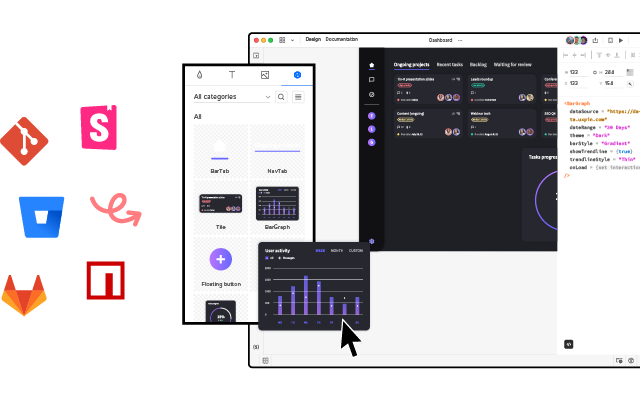
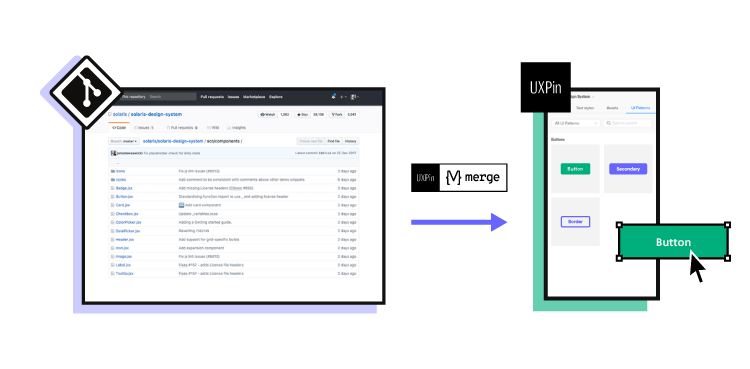
For instance, when your design components and code components share the same version labels, everyone knows exactly which iteration they’re working on. Tools like UXPin take this a step further. With features like code-backed prototyping, UXPin automatically keeps design assets aligned with the development code. If you update a component in your React library, UXPin Merge reflects those changes instantly, maintaining consistency between prototypes and the latest implementation. This eliminates the risk of design-development drift over time.

While versioning individual components can give developers more flexibility to update specific elements, it often adds complexity and makes testing across versions more challenging. Many teams find that whole-library versioning, combined with clear changelog documentation, strikes the right balance between simplicity and control.

To make this process even more effective, align design asset versions with code versions, and encourage your team to understand semantic versioning principles. This shared knowledge helps teams better assess the impact of updates and decide when to adopt them.

Setting Up Team Notifications

Automated notifications play a crucial role in ensuring that changelog updates reach the right people at the right time. They prevent teams from working with outdated information or missing critical changes.

UXPin integrates with Slack to streamline team communication and automatically notify relevant members about design system updates. By connecting your UXPin account to Slack, you can route updates to specific project channels, ensuring everyone stays informed.

For example, developers might need immediate alerts about breaking changes, while designers might prefer weekly summaries highlighting new components or patterns. UXPin offers flexible notification options, including email and Slack alerts. You can even use Slack’s @here feature to notify specific team members or groups about critical updates.

Automating notifications for key events, like new prototypes or project updates, ensures that everyone stays informed without requiring manual intervention. To avoid overwhelming your team, establish clear notification protocols that balance timely updates with preventing notification fatigue.

Centralizing Documentation Access

Centralizing your changelog alongside component documentation and design assets ensures that stakeholders can quickly find the latest updates. When everything is in one place, it reduces the time and effort spent searching for information.

You can achieve this by storing the changelog with your codebase or incorporating it into your documentation site. This way, anyone working with the design system – whether they’re a designer, developer, or product manager – can easily access the information they need.

UXPin supports this centralized approach with features like version history and real-time collaboration tools. For instance, team members can comment directly in Slack channels linked to UXPin projects, enabling quick feedback and streamlined communication. This integration fosters a smooth flow of updates and collaboration across teams.

Consider creating a single source of truth that includes your changelog, component library, design assets, and usage documentation. This could be a dedicated documentation site pulling from multiple sources or a comprehensive platform like UXPin that combines design, prototyping, and documentation in one place.

Centralizing everything reduces friction. Designers can easily check the latest component versions, developers can access implementation details, and product managers can review recent changes – all without navigating multiple platforms. With this setup, your design system becomes a powerful tool that supports the entire organization.

Conclusion: Best Practices for Changelog Success

Creating an effective changelog means balancing detailed documentation with simplicity. The most successful changelogs are well-structured, easy to access, and consistently updated.

Key Points for Building and Maintaining Changelogs

A strong changelog starts with clear standards. Using a consistent format that includes details like the date, author, and version number makes it predictable and easy to follow.

Semantic versioning lays the groundwork for managing changes effectively. It provides a shared language that both designers and developers can understand, ensuring that updates are clear and actionable. When paired with concise explanations of changes and their impacts, teams can make better decisions about adopting updates.

Taking this a step further, integrating your changelog with design tools can significantly boost its value. For example, UXPin offers a seamless way to connect changelogs with code-backed prototypes and real-time updates. This kind of integration creates a "living document" that automatically reflects changes, eliminating the need for manual updates.

Automation is another key practice. It ensures consistency and reduces the time spent manually generating changelog entries or notifications.

Statistics show that a well-maintained changelog can improve productivity and collaboration. By serving as a central communication hub, it keeps everyone in the loop about the evolution of your design system.

Clarity is essential. Use simple, jargon-free language that resonates with designers, developers, and product managers alike. Organizing updates into categories like "added", "changed", "deprecated", and "removed" makes it easier for users to find what they need quickly.

Regular reviews and an "Unreleased" section help keep your changelog accurate and up-to-date.

When integrated with your codebase or documentation platform, a changelog becomes a single source of truth. This reduces confusion, strengthens transparency, and supports smoother collaboration across teams.

Ultimately, treat your changelog as a dynamic communication tool. By weaving it into your workflow and leveraging automation, you not only maintain its relevance but also maximize its value for your team. Clear, automated, and well-organized changelogs are a powerful way to enhance your design system’s governance and usability.

FAQs

How does a changelog improve collaboration between designers, developers, and product managers?

A changelog serves as a powerful tool for teamwork by offering a clear and transparent record of all updates to a design system. It keeps everyone on the same page, ensuring team members are aware of changes, understand why they were made, and can align their work with the current state of the system. This shared understanding strengthens communication and helps create a unified approach.

Beyond keeping everyone informed, a changelog also promotes accountability by showing that the design system is actively maintained. This encourages more deliberate decision-making and smoother collaboration across teams, which can lead to greater efficiency in both design and development workflows.

Why is semantic versioning important for a design system changelog?

Semantic versioning plays a key role in managing a design system changelog, offering a straightforward and consistent way to communicate updates. By organizing changes into major (breaking changes), minor (new features), and patch (bug fixes) categories, teams can immediately grasp how each update might affect their projects.

This structured approach not only keeps things consistent but also ensures backward compatibility when required. It simplifies managing dependencies and makes it easier for teams to plan updates efficiently. Over time, it keeps the design system’s growth well-organized and clear for everyone involved.

How can GitHub Actions help automate and simplify changelog management?

Automation tools like GitHub Actions can take the hassle out of managing changelogs by handling tasks like versioning, updating logs, and creating release notes. Tools such as semantic-release or git-chglog work by generating changelogs automatically from commit messages. This ensures your logs stay accurate and up-to-date with minimal manual effort.

This approach doesn’t just save time – it also cuts down on mistakes. By automating the process, you can maintain a clear and well-organized record of changes. Automated changelogs can even group updates into categories like new features, bug fixes, or enhancements. This makes it easier for teams and users to track a project’s progress and understand its development over time. Plus, it helps improve communication and collaboration among designers, developers, and stakeholders.

Related Blog Posts

Ultimate Guide to Accessible Form Design

71% of users with disabilities leave websites that aren’t accessible. Accessible forms are essential for creating inclusive digital experiences and ensuring compliance with accessibility standards like WCAG. Here’s what you need to know:

  • Why Accessibility Matters: Over 1 billion people globally live with disabilities, including 18.7% of the U.S. population. Accessible forms improve usability for everyone and reduce legal risks.
  • Key Benefits: Better user experience, broader reach, legal compliance, and avoiding costly redesigns (e.g., Target‘s $6M settlement).
  • Core Principles: Follow WCAG guidelines: Perceivable, Operable, Understandable, and Robust.
  • Best Practices:
    • Use clear labels linked to input fields with <label> and id.
    • Ensure keyboard navigation and screen reader compatibility.
    • Provide visible error messages and real-time validation.
    • Maintain strong color contrast and clear focus indicators.
  • Testing: Combine automated tools (axe, WAVE) with manual testing (keyboard navigation, screen readers) to catch all issues.

How to make accessible forms – with lots of examples!

Basic Rules for Accessible Forms

Designing accessible forms involves focusing on three key aspects: clear labeling, seamless keyboard navigation, and effective error handling. These principles form the backbone of user-friendly and inclusive form design, ensuring compliance with HTML and ARIA standards.

Clear Labels and Input Fields

Labels play a vital role in making forms usable, especially for individuals with disabilities. As Uday Shetty, Senior Accessibility Consultant at Deque Systems, explains, "Without visible labels, form controls are not usable to any user, let alone a person with a disability".

Here’s how to design effective form labels:

  • Use the HTML <label> element with matching for and id attributes to link labels to their respective input fields.
  • Place labels close to the associated form controls for easy identification.
  • Avoid relying solely on placeholder text as a substitute for labels – it’s not a reliable alternative.
  • Use <fieldset> and <legend> elements to group related fields, providing clear context for users.

"The first rule for creating a truly accessible form is to use native HTML form controls as much as possible. Most of them are accessible by default with all assistive technologies, and they are semantically correct." – Uday Shetty

Keyboard and Screen Reader Support

Ensuring keyboard accessibility is critical for users who do not rely on a mouse. Forms should be designed to allow smooth navigation and interaction using only a keyboard. Key features to include are:

Requirement Implementation
Tab Navigation Ensure logical movement between form fields.
Focus Indicators Provide visible outlines for the active elements.
Avoid Keyboard Traps Prevent users from getting stuck in a loop within form sections.
Screen Reader Compatibility Use semantic HTML and ARIA attributes for clear communication.

For example, the General Services Administration found that poorly designed forms can trap users in endless navigation loops, rendering them unusable.

Error Handling

Good error handling ensures users can quickly identify and fix mistakes. The Web Accessibility Initiative highlights that error messages should be:

  • Clearly visible and positioned close to the relevant field.
  • Written in straightforward, easy-to-understand language.
  • Programmatically linked to form controls for accessibility.
  • Read aloud by screen readers to assist visually impaired users.

Here’s how to improve error handling in your forms:

  • Use ARIA attributes: Implement aria-invalid="true" for fields with errors and use aria-describedby to link error messages to the corresponding input field.
  • Provide clear instructions: Replace vague error messages like "invalid input" with specific guidance on how to fix the issue.
  • Enable real-time validation: Validate user input as they type, minimizing interruptions and making corrections easier.

"To err is human. To prevent, suggest, and correct are divine." – Raghavendra Peri

HTML and ARIA Best Practices

Combining semantic HTML with thoughtful ARIA usage is key to creating forms that are accessible to all users.

HTML Form Elements

Native HTML form elements come with built-in accessibility features, making them the best starting point. Here’s how to use some of the most common elements effectively:

Element Type Purpose Best Practice
<input> Form fields Use specific type attributes (e.g., text, email, number)
<textarea> Multi-line text Define rows and cols attributes for better usability
<select> Dropdown menus Group related options with <optgroup> for clarity
<button> Form actions Use clear, action-focused text for buttons

When working with form controls, keep these tips in mind:

  • Set the autocomplete attribute to make it easier for users to fill out forms.
  • Use the required attribute for fields that must be completed.
  • Provide meaningful name attributes to ensure proper form processing.
  • Use id attributes to link labels to their corresponding fields.

ARIA Implementation

When HTML alone can’t meet accessibility needs, ARIA attributes can fill the gaps. However, it’s important to use them wisely:

  1. Use ARIA Sparingly Always prioritize native HTML elements. ARIA should only be added when no native solution exists.

    "No ARIA is better than bad ARIA"

  2. Communicate Status Updates ARIA attributes can help convey changes in form status. Here are some key attributes and their uses:
    ARIA Attribute Purpose Example
    aria-invalid Highlights validation errors For fields with incorrect input
    aria-required Marks fields as mandatory Alternative to the HTML required attribute
    aria-describedby Links fields to error messages Connects input fields to descriptive error text
    aria-expanded Indicates dropdown state Useful for custom dropdown menus
  3. Support Dynamic Content For forms with JavaScript-powered features, ARIA can ensure accessibility remains intact:
    • Use aria-live regions to announce updates dynamically.
    • Apply aria-busy to indicate loading states.
    • Implement aria-controls to manage relationships between elements.

"ARIA attributes bridge the gap to address accessibility issues that cannot be managed with native HTML"

Up next, learn how design elements like color contrast and focus indicators play a role in making forms even more accessible.

Design and Interaction Guidelines

Creating accessible forms requires careful attention to both visual and interactive design.

Color Contrast Standards

Color contrast plays a key role in making forms accessible, especially for individuals with visual impairments. Ensuring proper contrast ratios helps users perceive content effectively in different viewing conditions.

Element Type WCAG Level AA WCAG Level AAA
Regular Text 4.5:1 7:1
Large Text (18pt/14pt bold) 3:1 4.5:1
UI Components 3:1 3:1

To meet these standards when designing form elements:

  • Form fields should have a minimum contrast ratio of 3:1 between the border and background.
  • Error messages and key text need a contrast ratio of at least 4.5:1 for clear readability.
  • Interactive elements must include distinct visual states with sufficient contrast.

Since about 1 in 12 men and 1 in 200 women experience some degree of color vision deficiency, it’s important to:

  • Use tools to check color contrast and ensure compliance with WCAG standards.
  • Include secondary indicators like symbols or patterns and test contrast on both light and dark backgrounds.

Once contrast is addressed, the next step is ensuring interactive elements have clear focus indicators.

Focus States and Interactions

Focus indicators are essential for guiding users through form interactions, particularly for those relying on keyboards or assistive technologies. These indicators show which element is active, making navigation easier and more intuitive.

Here are some best practices:

  • Touch-Friendly Design
    Make touch controls large enough and spaced properly for easy use.
  • Keyboard Navigation
    All form elements should be fully accessible via keyboard, following a logical tab order that matches the visual layout. This is critical for the 25% of U.S. adults with disabilities who depend on keyboard navigation.
  • Real-Time Feedback
    Provide immediate visual and programmatic feedback during form interactions. For example, Venture Harbour‘s four-step form saw a 53% conversion rate by incorporating real-time validation feedback.

To implement effective focus states:

  • Ensure focus indicators are highly visible on all backgrounds.
  • Design focus styles that work consistently across different browsers.
  • Use animations sparingly to help users follow focus movement without causing distractions.
  • Maintain consistent focus indicators throughout the form for a unified experience.
sbb-itb-f6354c6

Testing Methods

Effective testing is crucial to ensure accessible forms, especially when you consider that 95.9% of business homepages still have accessibility errors. This highlights just how important thorough testing is in creating inclusive digital experiences.

Automated Testing Tools

Automated tools are a great starting point, capable of detecting 20–40% of accessibility issues. Here are a few tools worth considering:

Tool Key Features Best For
axe DevTools Zero false positives, detailed analysis Development teams
WAVE Clear issue descriptions, API access Content creators
Accessibility Insights Comprehensive checks Designers & developers

To get the most out of automated testing:

  • Integrate checks into your development workflow.
  • Use tools that provide clear remediation guidance.
  • Track and document issues for accountability.
  • Regularly monitor test coverage and prioritize issue severity.

Manual Testing Steps

While automated tools are helpful, manual testing uncovers deeper issues. Here are some key steps:

Keyboard Navigation
Ensure users can navigate the form with a keyboard. Check that the tab order makes sense, focus indicators are visible, and there are no keyboard traps.

Screen Reader Verification
Manually test with a screen reader to confirm:

  • Form control labels are clear and descriptive.
  • Error messages are announced properly.
  • Dynamic content updates are communicated effectively.
  • Instructions for form fields are easy to understand.

Content and Visual Review
Evaluate the visual and content elements by checking:

  • Compatibility with 200% zoom.
  • Proper use of heading levels.
  • Clear and visible error messages.
  • Compliance with color contrast standards.

These manual steps complement automated testing and ensure a more thorough review of your forms.

Testing and Updates

"Automated accessibility testing streamlines your path to accessibility, enabling you to create more inclusive online spaces as well as comply with accessibility regulations."

  • Jeff Curtis, Sr. Content Manager

To maintain high accessibility standards:

  • Conduct regular accessibility audits.
  • Update your testing process as WCAG guidelines evolve.
  • Keep a record of testing results and improvements.

Managing Form Accessibility

Effectively managing form accessibility in large-scale projects requires a solid design system and well-coordinated teamwork. Research indicates that accessibility technology improves navigation for 57% of computer users.

Design System Integration

A well-structured design system ensures uniformity and reduces repetitive efforts.

Your design system should include comprehensive accessibility documentation, such as:

  • Accessibility requirements for specific components
  • WCAG 2.2 compliance checklists
  • Detailed development notes, covering:
    • Accessible names
    • Keyboard focus order
    • HEX codes
    • Landmark roles

For instance, Pinterest’s Gestalt design system incorporated accessibility documentation directly into their design assets in March 2024.

Component Architecture
Design system components should be structured with accessibility in mind:

Element Integration Details
Base Elements ARIA attributes, semantic HTML
Form Controls Built-in validation, error states
Pattern Library Keyboard navigation flows
Documentation Implementation guidelines, testing criteria

Once the design system is established, maintaining consistent adherence to these standards requires collaboration across teams.

Team Coordination

Clear roles and teamwork are essential for managing accessibility effectively.

Role-Based Responsibilities

  • Project Managers
    They should embed accessibility into project requirements, schedule regular audits, and document testing outcomes.
  • Designers
    Designers must apply universal design principles from the beginning, ensuring accessibility is baked into design files and style guides.
  • Developers
    Developers play a key role by:
    • Integrating accessibility linters into their workflow
    • Adding automated testing to CI/CD pipelines
    • Performing regular component-level testing
    • Documenting accessibility features within the code
  • QA Testers
    QA testers should develop thorough testing plans that combine automated and manual methods, while documenting and prioritizing any accessibility issues.

Maintenance Strategy

To sustain high accessibility standards over time:

  • Conduct regular accessibility audits
  • Update documentation to align with international standards
  • Maintain open communication channels
  • Track user feedback and address accessibility concerns
  • Organize periodic team training sessions

Tools like UXPin simplify these efforts by offering built-in accessibility features and seamless design-to-code collaboration.

Summary

Over a billion people worldwide live with disabilities, highlighting the importance of designing accessible forms for inclusive digital experiences. When forms lack accessibility, a staggering 71% of users with disabilities abandon websites, cutting off access to a market with over $13 trillion in annual disposable income.

This underscores two key areas to focus on for accessible form design:

Technical Implementation

  • Use semantic HTML and ARIA attributes.
  • Ensure all form elements have proper labels.
  • Implement effective error handling.
  • Support seamless keyboard navigation.

Design Considerations

  • Use fonts that are at least 16px for readability.
  • Design touch targets to be at least 44x44px.
  • Provide clear visual feedback for interactions.
  • Maintain strong color contrast for visibility.

"Following the best practices above will enable you to create a form that is usable and accessible to all users. And remember, native HTML is the key to creating positive user experiences!" – Uday Shetty, Senior Accessibility Consultant and Coach at Deque Systems

To sustain accessibility, it’s essential to:

  • Conduct regular audits.
  • Train your team on accessibility principles.
  • Gather and act on user feedback.
  • Keep documentation up to date.
  • Continuously monitor compliance.

Beyond meeting compliance standards, accessibility also makes good business sense – 81% of customers are more likely to support companies that prioritize accessibility. By following these guidelines, you can create forms that enhance both inclusivity and business outcomes.

UXPin’s accessibility tools simplify this process, helping you ensure your forms remain inclusive throughout the design and development lifecycle.

FAQs

How can I make my forms accessible and compliant with WCAG guidelines?

To design forms that align with WCAG guidelines, start by ensuring every form field has clear, descriptive labels. Place these labels directly above or near the fields so users can quickly grasp what’s required. Use semantic HTML to properly link labels with their respective fields, making the form more accessible.

It’s also crucial to make all form elements keyboard-friendly. This means users should be able to navigate through the form smoothly using only a keyboard or assistive tools. Avoid creating navigation traps, and include visible focus indicators to show exactly where the user is within the form.

When handling errors, provide straightforward and helpful error messages. These messages should be easy to understand, accessible to screen readers, and guide users on how to correct the issue without adding frustration.

Lastly, ensure the form has a consistent and intuitive design. This enhances usability for everyone, including individuals with disabilities, and creates a more seamless and inclusive experience.

What are the best ways to test forms for accessibility to ensure they work for all users?

To make your forms usable for everyone, it’s important to combine automated tools with manual testing. Automated tools are great for catching common problems like missing labels, incorrect HTML setup, or contrast issues. They offer a strong foundation for ensuring accessibility.

That said, manual testing plays a key role in catching things automated tools might overlook. This involves testing real-life scenarios, like navigating forms using just a keyboard or interacting with them through assistive technologies such as screen readers. By blending these two approaches, you can ensure your forms meet accessibility standards while being genuinely user-friendly for all.

Why should you prioritize native HTML elements instead of ARIA attributes for accessible forms?

Using native HTML elements is key to building accessible forms. These elements come equipped with built-in accessibility features, such as keyboard navigation and semantic roles, which are automatically recognized by assistive technologies. This not only simplifies your coding efforts but also lowers the chances of introducing accessibility issues.

When it comes to ARIA attributes, they should be a fallback option – used only when native elements can’t deliver the required functionality. Improper use of ARIA can create confusion for assistive technologies, potentially making things worse. Sticking to native HTML elements whenever feasible ensures a more seamless and inclusive experience for all users.

Related Blog Posts

How to Choose the Right Survey Tool for UX

Picking the right survey tool is crucial for successful UX research. The tool you choose doesn’t just collect data – it influences the quality of insights, research efficiency, and accessibility for participants. Here’s what you need to know:

  • Data Quality: A poorly designed tool can lead to low-quality responses. Look for features like skip logic and real-time updates to improve data reliability.
  • Efficiency: Advanced tools save time by automating repetitive tasks, helping teams focus on analysis.
  • Accessibility: Ensure the tool complies with WCAG standards and works well on mobile devices to include all users.

Quick Steps to Select the Right Tool:

  1. Set Clear Goals: Define what you want to measure (e.g., user satisfaction, usability issues) and the data types needed (quantitative or qualitative).
  2. Understand Your Audience: Consider their technical skills, preferred devices, and accessibility needs.
  3. Review Features: Look for strong logic options, analysis tools, and integration capabilities.
  4. Check Costs: Compare pricing models (user-based, response-based, or fixed-rate) and account for hidden fees.
  5. Test and Implement: Run test surveys, ensure cross-platform compatibility, and create reusable templates.

Comparison Table for Survey Tool Features

Feature Why It Matters What to Look For
Logic Options Guides users through relevant questions Skip, branch, and interactive logic
Analysis Tools Turns data into actionable insights Automated analysis, dashboards, exports
Accessibility Ensures everyone can participate WCAG compliance, mobile optimization
Integration Fits into your existing workflow API support, UXPin compatibility
Cost Balances features with budget Transparent pricing, no hidden fees

How To Choose The Right Survey Software? – The Friendly Statistician

Step 1: Set Clear UX Research Goals

Defining clear goals is the foundation of effective UX research. These goals will shape every decision you make moving forward.

Outline Your Research Objectives

Your research objectives will determine what features your tools need to have. By prioritizing these objectives, you can address workflow challenges and streamline your processes.

Here are some common objectives to consider:

  • Measuring user satisfaction: Assess the overall user experience and pinpoint areas of frustration.
  • Validating features: Collect feedback on both new and existing features.
  • Uncovering problems: Identify usability issues and sources of user frustration.
  • Gaining behavioral insights: Observe patterns in how users interact with your product.
  • Tracking completion metrics: Analyze survey response rates and abandonment trends.

Identify Your Survey Audience

Understanding your audience is key to choosing the right research methods. As Yuliya Martinavichene, a User Experience Researcher at Zinio, explains:

"In real-life, there is no ‘Oscar-winning’ scenario and the best answer for the eternal question ‘What user experience research method should you use?’ is simply an unsatisfactory ‘It depends!’ Different research pain points call for specific methods and approaches."

To ensure your tools align with your audience’s needs, consider these factors:

Audience Factor Tool Feature to Consider
Technical Proficiency Simplicity or complexity of the interface
Geographic Location Language support and regional settings
Access Method Mobile or desktop optimization
Time Availability Length and flexibility of surveys
Accessibility Needs Compliance with WCAG standards

Choose the Right Data Types

Your research goals will dictate the type of data you need to collect. Quantitative methods typically require larger sample sizes, while qualitative methods can yield valuable insights from just a handful of participants.

  • Quantitative Data:
    • Net Promoter Score (NPS)
    • Customer Satisfaction (CSAT) scores
    • Time-on-task measurements
    • Success rate tracking
  • Qualitative Data:
    • Open-ended response fields
    • Descriptions of user journeys
    • Feature suggestion prompts
    • Problem explanation sections

As Martinavichene notes:

"Very often, the solution is built on mixed methods–less quantitative versus qualitative–and more somewhere in-between the two."

Step 2: Review Key Survey Tool Features

Once you’ve defined your research goals, the next step is to assess the features of potential survey tools. The effectiveness of your survey largely depends on core capabilities like logic, analysis, and accessibility.

Check Question Logic Options

The logic features of a survey tool help you guide respondents through the survey in a way that feels seamless and relevant. Advanced logic options can create personalized experiences, ensuring respondents only see questions that matter to them – reducing frustration and improving the quality of responses.

Logic Type Purpose Best Used For
Skip Logic Skips irrelevant questions Basic user segmentation
Branch Logic Builds custom paths based on answers Complex user journeys
Show/Hide Logic Dynamically displays or hides questions Progressive disclosure
Interactive Logic Updates questions in real-time on the same page Immediate feedback collection

Here are some tips to make the most of question logic:

  • Turn off question numbering to avoid confusion.
  • Avoid misleading progress indicators that might frustrate respondents.
  • Keep branching paths intuitive and easy to follow.
  • Test all logic flows thoroughly before launching your survey.

Once your logic is set, focus on selecting tools that deliver robust analytics to interpret your data effectively.

Compare Analysis Tools

A good survey platform doesn’t just collect data – it helps you make sense of it. Look for analysis features that streamline the process of turning raw responses into actionable insights. As Gabriella Lopes, Product Designer at Maze, puts it:

"The main thing is looking for an innovative tool that saves you time doing mundane work."

Key analysis features to consider include:

  • Automated thematic analysis to identify patterns in open-ended responses.
  • Sentiment analysis to gauge respondent attitudes.
  • Statistical tools for deeper insights into trends and correlations.
  • Custom dashboards for visualizing data in a way that suits your needs.
  • Export options to move data into other tools for additional analysis.

With your analysis tools in place, the final step is ensuring your survey is accessible to everyone.

Check WCAG Compliance

WCAG

Accessibility isn’t just a nice-to-have – it’s essential. Around 16% of the global population lives with significant disabilities, making it critical to design surveys that everyone can use. As Tim Berners-Lee, inventor of the World Wide Web, once said:

"The power of the Web is in its universality. Access by everyone regardless of disability is an essential aspect."

Here are some must-have accessibility features:

Requirement Implementation
Color Contrast Ensure strong contrast between text and background.
Screen Reader Support Use alt text for images and clear, descriptive form labels.
Keyboard Navigation Guarantee full functionality without a mouse.
Error Messages Provide clear and actionable feedback for form errors.
Caption Support Include text alternatives for audio and video content.

Strive for WCAG 2.2 Level AA compliance, the recommended standard for 2024. Regularly test your surveys with assistive technologies to ensure they remain inclusive for all participants. This effort not only broadens your reach but also strengthens the reliability of your data.

Step 3: Review Team and Growth Needs

After analyzing features, it’s time to assess how well your survey tool aligns with your team’s current dynamics and future expansion. A tool that supports collaboration, scales effortlessly, and keeps data secure is key to maintaining efficient UX research workflows.

Team Features

To ensure smooth teamwork, it’s important to define access levels based on roles. A good survey tool should include detailed permission settings and shared workspaces that fit seamlessly into your team’s operations.

Feature Type Purpose Considerations
User Permissions Access Control Role-based access, custom permission levels
Security Features Data Protection SSO integration, password policies
Communication Team Interaction Comment systems, shared dashboards

Beyond these basics, look for customization options tailored to your team’s specific needs. These features help create a tool that evolves alongside your team.

Plan for Team Growth

As your team expands, your survey tool should adapt without requiring a complete system overhaul or complex retraining. Scalability is critical to supporting long-term growth.

Key features to evaluate include:

  • Flexible User Management: Easily add new team members and modify roles as needed.
  • Resource Sharing: Shared template libraries ensure consistency across projects.
  • Integration Capabilities: Connect with popular collaboration tools for streamlined workflows.
  • Custom Dashboards: Role-specific views provide clarity and reduce clutter.

The ideal tool strikes a balance between detailed user permissions and administrative simplicity. This ensures smooth survey creation and analysis without compromising data security or quality.

Make sure your platform also includes:

  • Customizable confidentiality settings to suit different survey types.
  • Automated workflows that cut down on manual tasks and coordination.
  • A consistent user experience for teams of all sizes and roles.
  • Clear audit trails to track survey changes and access, ensuring accountability.
sbb-itb-f6354c6

Step 4: Review Costs and Budget

Taking a close look at costs and budgeting is key to avoiding overspending while ensuring you get the best value for your investment.

Compare Price Models

Survey tools generally fall into three pricing categories, each tailored to different needs:

Pricing Model Best For Considerations
User-based Small teams Pay per user, often ranging from $5,000–$12,000 per year
Response-based Variable usage Costs increase with the number of survey responses
Fixed-rate Consistent research Predictable monthly or annual fees, ideal for steady usage

Watch for Extra Costs

It’s easy to overlook hidden expenses that can quickly add up. Here’s a breakdown of potential additional costs:

Cost Category Typical Range Notes
Data Analysis $5,000–$40,000 Depends on the size and complexity of studies
Dashboard Setup $2,000–$4,500 One-time development fee
Monthly Maintenance $500–$2,500 Recurring costs for upkeep
Email Integration Variable Includes SPF/DKIM setup fees

Other factors to keep in mind:

  • Incentives for participants, like gift cards or rewards
  • Costs for follow-up communications
  • Training and onboarding for your team
  • Security and compliance measures to meet standards

Calculate Cost Benefits

Once you’ve outlined all expenses, weigh them against the potential benefits to see if the investment makes sense. Here’s how:

  1. Set clear goals: Identify your research objectives and define measurable outcomes.
  2. Estimate returns: Look at how the tool can save time and improve efficiency, such as:
    • Cutting down on user testing hours
    • Boosting response rates
    • Accelerating data insights
    • Streamlining team collaboration
  3. Run a sensitivity analysis: Evaluate how changes in survey volume, team size, or tool features could affect overall costs.

Step 5: Check Workflow Integration

Selecting a survey tool that works seamlessly with your UX design workflow can save time and maintain consistent data quality.

Connect with UXPin

UXPin

When assessing survey tools for UX research, it’s crucial to consider how well they integrate with UXPin prototypes, ensuring a smooth design-to-code process.

Integration Feature Benefit Implementation
Prototype Embedding Collect user feedback directly within prototypes Embed survey triggers at specific interaction points
Real-time Analytics Gain immediate insights during usability testing Link survey responses to specific prototype versions
Data Export Effortlessly transfer insights to UXPin Automate survey result exports to refine designs

Additionally, tools with advanced API features can further streamline your workflow.

Check API Options

Look for tools offering robust API capabilities to facilitate seamless data exchange.

  • API Data Integration: Enables two-way data synchronization, custom queries, automated survey distribution, and secure contact updates.
  • Webhook Support: Ensure the tool supports webhooks for real-time data transfer, multiple request types, and automated actions triggered by survey responses.

While integration and API functionality are essential, data security should also be a top priority.

Review Security Features

Security Requirement Details Purpose
Data Encryption HTTPS and SSL certification Safeguards user feedback during transmission
Access Control SAML 2.0 compatibility Provides secure and streamlined team access
Data Storage SOC 2 accredited centers Ensures high protection standards
Input Validation CAPTCHA and upload limits Prevents malicious data entry

Ensure the survey tool adheres to strict data protection practices, such as:

  • Clear and transparent data collection purposes
  • Regular security audits
  • Secure deletion policies
  • Strong password protocols
  • Team training on security measures

Step 6: Test and Implement the Tool

It’s time to put your survey tool through its paces and set it up for long-term success. A solid testing phase and careful implementation are key to ensuring everything runs smoothly.

Run Test Surveys

Before launching your survey tool across your organization, you need to test it thoroughly. This step is all about making sure it works flawlessly and provides a smooth experience for users.

Testing Area Key Checks Purpose
Mobile Compatibility Screen sizes, touch elements, load times Deliver a seamless experience on mobile devices
Survey Logic Conditional branching, skip patterns Ensure questions flow logically and accurately
Data Collection Response recording, export formats Protect data integrity and usability
Cross-platform Browser compatibility, OS support Guarantee access across all platforms

For mobile surveys, prioritize touch-friendly interfaces, minimize text entry fields, and optimize load times to keep the experience user-friendly. Test your surveys on a variety of devices and platforms to confirm they perform consistently. Once you’re confident in your tool’s performance, consider creating reusable templates to save time and maintain consistency.

Create Survey Templates

Templates are your secret weapon for efficiency and consistency. By standardizing survey design, you can streamline the process and ensure your surveys align with your brand.

What to Include in Your Templates:

  • A clear structure with well-thought-out objectives and logical question flow
  • Consistent branding elements like fonts, colors, and logos
  • Built-in connections to automated data visualization tools
  • Mobile-friendly design for easy access on any device
  • Pre-tested and validated question sets

"Re-using questions from the survey Question Bank makes survey design fast and convenient, so you can spend more time putting feedback into action." – Manjeet Singh, ServiceNow Employee

Templates not only save time but also help maintain quality and reliability across your surveys.

Set Up Long-term Use

For your survey tool to remain effective over time, you’ll need a sustainable setup. This includes defining workflows, assigning roles, and establishing security measures.

Key Steps for Long-term Success:

  • Assign user roles and permissions to streamline collaboration
  • Put robust data backup and security protocols in place
  • Automate reporting workflows to save time
  • Develop clear documentation to onboard new team members
  • Schedule regular maintenance to keep everything running smoothly

If you’re integrating your survey tool with design platforms like UXPin, use the API to gather real-time feedback during prototype testing. This can significantly speed up your design iterations and improve the overall process. By putting these systems in place, you’ll ensure your survey tool delivers value for the long haul.

Conclusion: Making Your Final Choice

Selecting the right UX survey tool involves weighing several crucial factors. Begin by assessing how well the tool aligns with your research goals and whether it offers the features necessary for your specific UX research methods. Use the table below as a quick reference to guide your decision-making process:

Selection Criteria Key Considerations Impact on Decision
Research Goals Complexity of questions, data types, audience reach Determines tool capabilities
Team Requirements Collaboration features, user seats, learning curve Influences team adoption and efficiency
Budget Alignment Monthly costs, response limits, feature access Affects financial sustainability
Technical Needs API access, security features, integration options Ensures compatibility with workflows

When reviewing costs, dive into pricing structures and calculate the total cost of ownership to ensure the tool fits your budget.

Before committing, ensure the platform integrates seamlessly into your UX workflow, supports your team’s growth, meets data analysis and security needs, and provides value without adding unnecessary costs. A trial period can help you test the tool in real-world conditions and evaluate its performance before making a long-term investment.

Finally, remember that the priciest tool isn’t always the best fit. Look for a solution that balances your current needs with room for future growth – all while staying within your budget.

FAQs

How can I make sure the survey tool I choose is accessible to everyone, including users with disabilities?

To make sure your survey tool works for everyone, including individuals with disabilities, choose tools that meet established accessibility standards like WCAG 2.0 AA. Key features to look for include proper color contrast, compatibility with screen readers, keyboard-friendly navigation, and text descriptions for images.

When crafting your survey, stick to clear and straightforward language so it’s easy for all users to follow. Arrange questions in a logical order with a well-structured layout to ensure smooth navigation. Steer clear of jargon or overly complicated wording, which can create barriers for people with cognitive disabilities. These steps help create a survey experience that’s inclusive and welcoming for all participants.

What should I consider when choosing the right pricing model for a UX survey tool?

When choosing the right pricing model for a UX survey tool, it’s important to weigh your budget against the tool’s value for money. The goal is to find a plan that fits your financial constraints while still delivering the features you need to conduct effective research.

Think about how often you’ll use the tool. If you rely on it regularly, a subscription plan might be the better choice. On the other hand, if your projects are more sporadic, a pay-per-use model could save you money. Also, keep scalability in mind – your tool should be able to grow with your team and adapt to changing project demands without becoming prohibitively expensive.

Finally, take a close look at the tool’s features and how well they align with your objectives. If certain advanced options, like integrations with design platforms or custom analytics, can significantly improve your workflow, they might be worth the extra cost.

What’s the best way to test and implement a new survey tool for UX research?

To make the most out of a new survey tool, start by clearly defining your UX research goals. Pinpoint the insights you’re aiming to gather, and craft your survey questions to align with those objectives. Use straightforward, neutral language to ensure participants understand the questions and provide accurate responses.

Before launching the survey widely, test it with a small group of participants. This step helps identify any usability issues or confusing questions. Use their feedback to fine-tune both the survey content and the tool’s setup. Ensuring everything runs smoothly will save you headaches later. Also, check that the tool integrates easily into your workflow and meets your needs, whether you’re after qualitative feedback or hard numbers.

Think about how this tool fits into your broader design process. For example, surveys can be great for collecting user feedback in the early stages or for validating decisions as your design takes shape. When chosen and used thoughtfully, a survey tool can provide meaningful insights at every step of your UX journey.

Related Blog Posts

How to Verify UI Consistency Across Platforms

Did you know? Over 75% of brand credibility depends on design. Consistent UI across devices builds trust, simplifies navigation, and improves user satisfaction. Here’s how you can ensure a seamless experience:

  • Build a Design System: Use reusable components, design tokens, and clear guidelines to maintain consistency.
  • Adapt to Platforms: Create variations for platform-specific needs while keeping your brand identity intact.
  • Test Across Devices: Use tools like UXPin to test prototypes on different devices, browsers, and screen sizes.
  • Automate Testing: Integrate UI testing into your CI/CD pipeline for faster feedback and issue resolution.

Focus on these steps to deliver a reliable, user-friendly experience across all platforms.

Building Consistent Cross-Platform Interfaces

Building a Design System

A strong design system is the backbone of consistent UI design across platforms. Studies indicate that design systems streamline development by removing the need to repeatedly create elements from scratch. By defining standardized components and clear guidelines, teams can deliver a seamless user experience, no matter the device or platform. Let’s explore the key elements that make up an effective design system.

Design System Core Elements

The essential parts of a design system work together to establish a unified visual language. These include:

Component Type Purpose Key Considerations
Design Tokens Centralized source for visual traits Colors, typography, spacing, shadows
UI Components Reusable building blocks Buttons, forms, navigation items
Pattern Library Interaction standards Common user flows and behaviors
Style Guidelines Rules for visual consistency Brand identity, accessibility standards

Using tools like UXPin, you can create reusable components that adapt seamlessly to different screen sizes, saving time and ensuring a polished, cohesive design.

Adapting to Platform Guidelines

A successful design system balances platform-specific requirements with maintaining a consistent brand identity.

Here’s how to achieve this:

  • Define Component Variations
    Create versions of components that align with platform-specific conventions while keeping core brand elements intact.
  • Document Implementation Guidelines
    Provide detailed documentation on how components should adjust across platforms. Clear instructions help ensure design principles are applied consistently, enabling teams to deliver uniform digital experiences.
  • Leverage Design Tokens
    Use design tokens to manage platform-specific adjustments, such as spacing for touch-based interfaces, without losing overall consistency.

Setting Up Cross-Platform Testing

Once you’ve established a design system, the next step is ensuring it performs reliably across different platforms. Cross-platform testing plays a crucial role in maintaining a consistent user interface (UI) experience on various devices. This process ensures your design system behaves as expected, no matter where it’s accessed.

Building a Test Device List

Start by creating a comprehensive test device matrix. Use analytics to identify the most common device and platform combinations your users rely on. Here’s a breakdown of what to include:

Testing Category Essential Components Priority Level
Mobile Devices Top 3–5 iOS and Android versions High
Desktop Systems Major operating systems and browsers High
Tablets Popular iPad and Android tablets Medium
Screen Sizes Common resolutions and aspect ratios High
Network Conditions A variety of connection speeds Medium

Whenever possible, test on physical devices to get accurate results and actionable feedback.

Testing Prototypes Across Devices

Tools like UXPin make it easier to test prototypes on various devices. To ensure thorough testing, follow these steps:

  • Develop Test Scenarios
    Create scenarios that cover key aspects of user interaction. Focus on responsive behaviors, touch-based interactions, and features unique to each platform.
  • Set Up Your Testing Environment
    Test across multiple browser versions, screen resolutions, and network speeds. Don’t forget to include platform-specific interactions.
  • Run the Tests
    Check core functionalities, interactive elements, and responsive layouts. Make sure the design adapts well to platform-specific requirements.

With UXPin’s preview mode, you can test designs in real time across different viewport sizes and interact with components directly. This ensures your design system delivers a seamless experience while respecting platform-specific nuances.

sbb-itb-f6354c6

Testing Visual and Interactive Elements

Once your testing environment is ready, it’s time to dive into verifying visual and interactive elements to ensure everything runs smoothly and looks consistent across the user interface.

Running Visual Tests

Using preview modes, you can visually inspect your design in real-time across different screen sizes. This step is essential for catching layout issues early in the development process.

Here’s a handy checklist for visual testing:

  • Layout Verification:
    • Test how the layout responds across various breakpoints:
      • Is the content aligned properly?
      • Are spacing and grid systems consistent?
      • Do margins and paddings look uniform?
      • Is the stacking order of elements correct?
  • Design System Components:
    • Ensure all elements of the design system function as intended:
      • Does typography scale well across devices?
      • Are colors consistent with the design guidelines?
      • Do icons and images render correctly?
      • Are component spacings in line with the established rules?

By systematically addressing these visual elements, you can ensure your design looks polished and adheres to accessibility standards. Once the visuals are in place, it’s time to focus on how the interactive features behave.

Testing Interactive Features

Interactive elements are just as critical as visuals. The table below outlines key interaction types to test and their priorities:

Interaction Type Test Points Priority
Touch Gestures Swipes, taps, pinch-to-zoom High
Click Events Button states, hover effects High
Form Interactions Input validation, error states High
Navigation Menu behavior, transitions Medium
Animations Timing, smoothness, performance Medium

To ensure everything works as intended, simulate real user behaviors. Research highlights how critical visual design and interactivity are for driving engagement and maintaining accessibility.

Here’s what to test:

  • Validate form submissions and check error handling.
  • Confirm touch gestures work consistently across mobile devices.
  • Test all interaction methods, including touch and keyboard navigation.
  • Ensure animations and transitions are smooth and perform well.
  • Verify that interactive states like hover, active, and disabled display correctly.

Adding UI Tests to Development Workflow

Integrating UI testing into your CI pipeline helps catch issues early and ensures a consistent experience across different platforms.

Automated Testing in CI/CD

To make automated UI testing a seamless part of your workflow, follow these steps:

  • Configure Test Triggers: Set your CI/CD pipeline to:
    • Run visual regression tests
    • Test component behavior across various screen sizes
    • Validate interactive elements
    • Generate detailed reports for easy review
  • Establish Testing Environments: Use containerized environments that mimic production settings to avoid the "it works on my machine" problem. This ensures consistent testing results across the team.
  • Implement Parallel Testing: Run tests simultaneously to speed up feedback. This approach saves time, reduces manual effort, and allows for more frequent updates, ultimately improving the user experience.

Once automated tests identify issues, address them quickly using a clear and organized tracking process.

Managing UI Issues

A structured approach to tracking and resolving UI problems can keep your workflow efficient. Tools like UXPin can help with issue management by streamlining the process:

Phase Action Items Outcome
Detection Automated test reports, visual diffs Quick identification of issues
Documentation Screenshots, environment details Clear context for debugging
Assignment Task creation, priority setting Smooth workflow management
Resolution Component updates, regression testing Verified fixes and improvements

IBM notes that "integrating continuous testing into the CI/CD pipeline provides faster bug detection and improved collaboration across teams."

To make issue management even more effective:

  • Set up automated alerts for critical UI failures
  • Define severity levels for different types of inconsistencies
  • Use standardized bug report templates to ensure all necessary details are captured
  • Hold regular review sessions to tackle recurring problems

Jakob Nielsen, Principal of Nielsen Norman Group, advises: "Testing with one user early in the project is better than testing with 50 near the end."

Conclusion: Key Steps for UI Consistency

Achieving UI consistency requires a structured approach that combines a solid design foundation, thorough testing, and a commitment to ongoing refinement. With over half of users abandoning a brand after just one poor experience, maintaining consistency across platforms is not just a design preference – it’s a business necessity.

Here are three essential areas to focus on:

Design System Foundation
Develop a unified design language that includes reusable components, detailed style guides, and clear documentation. Brad Frost highlights the value of this approach:

"A Global Design System would improve the quality and accessibility of the world’s web experiences, save the world’s web designers and developers millions of hours, and make better use of our collective human potential".

Testing and Verification
Incorporate both automated and manual testing to ensure consistent performance across platforms. Tools like UXPin allow teams to create interactive prototypes that closely mimic actual applications, making testing more effective. Research shows that automated testing tools can deliver an impressive ROI of nearly 250% within just six months.

Continuous Improvement
Create a feedback loop that allows for regular updates and refinements. As Binju K O, a QA professional, puts it:

"UI consistency across all platforms is not just about aesthetics – it enhances usability, user satisfaction, and branding".

These strategies not only improve user experience but also align with broader business goals. For example, Beacon Therapeutics raised $170 million in Series B funding in July 2024 by focusing on adaptive design features like automatic button coloring and fluid font sizing. This shows how attention to UI details can directly contribute to a company’s success.

FAQs

What are design tokens, and how do they help ensure UI consistency across platforms?

Design tokens are reusable variables that define essential design elements such as colors, typography, and spacing. They work as a single source of truth, helping teams maintain consistent design choices across various platforms and devices.

When the same token values are applied in multiple environments, updates become much easier to manage. This not only saves time but also ensures a unified look and feel, making collaboration between designers and developers smoother while delivering a seamless experience for users across all platforms.

How can I test UI consistency across devices and platforms without owning every device?

To ensure your UI looks and functions consistently across various devices and platforms – without needing to own them all – you can rely on emulators and simulators. These tools mimic the behavior of different devices, allowing you to test your UI in diverse environments from your own setup.

Another smart option is leveraging remote testing platforms. These services give you access to real devices and browsers, making your tests more accurate and reflective of actual user experiences. Be sure to define clear test scenarios, thoroughly evaluate individual UI components, and adapt your testing strategy regularly based on user feedback. This approach helps maintain a seamless and reliable user experience across all platforms.

Why should UI testing be part of the CI/CD pipeline, and how does it improve the development process?

Integrating UI testing into your CI/CD pipeline is a smart move for ensuring a seamless user experience while keeping development efficient. By automating these tests, teams can catch and fix interface issues quickly with every code change, preventing bugs from slipping into production.

This method doesn’t just lower the chances of releasing broken features – it also gives developers instant feedback. That means faster iterations and a smoother, more flexible workflow. Regular testing across all updates ensures your product stays polished, meets user needs, boosts customer satisfaction, and saves you from costly fixes down the road.

Related Blog Posts

Integrating React Components with Design Patterns

React components, when combined with design patterns, make building web applications easier to manage, scale, and maintain. Here are the key takeaways:

  • React Design Patterns: Use patterns like Higher-Order Components (HOCs), Custom Hooks, Context API, and Component Composition to solve common challenges and improve code organization.
  • Component Architecture: Separate components into Presentational (UI focus) and Container (logic/state focus) for cleaner and scalable code.
  • Design Systems: Leverage tools like design tokens, CSS-in-JS libraries, and UXPin to ensure consistent and reusable components.
  • Performance Optimization: Use memoization (React.memo, useMemo) to prevent unnecessary re-renders and improve app speed.
  • Accessibility: Build components with semantic HTML, ARIA attributes, and proper keyboard navigation to ensure inclusivity.
  • Testing: Combine unit, integration, end-to-end (E2E), and visual regression tests to maintain component reliability.
  • Version Control: Use semantic versioning and tools like Git to track changes and collaborate effectively.

These strategies help teams create scalable, maintainable, and user-friendly React applications while ensuring alignment between design and development.

Design Patterns You NEED for React.js Success: Factory Design Pattern

React

Core React Design Pattern Concepts

React design patterns play a crucial role in structuring code for systems that are both consistent and scalable. By leveraging these patterns, developers can create codebases that are easier to maintain and reuse, all while fostering modularity.

React Component Architecture Basics

At its core, React’s component architecture embraces the principles of functional programming. This means breaking components into smaller, purpose-driven units, each responsible for a specific task. This approach not only simplifies development but also ensures the codebase remains manageable over time.

React components generally fall into two main categories:

Component Type Responsibility Example Use Case
Presentational Focuses on UI rendering and styling A product card displaying an image, title, and price
Container Handles data logic and state A product list fetching and filtering product data

This separation between UI and logic creates a clean boundary, making it easier to scale and maintain the application.

Common React Pattern Types

Over time, developers have identified several effective patterns to address recurring challenges in React development. Here are a few of the most widely used:

Higher-Order Components (HOCs)
HOCs are functions that take a component and return a new component with added functionality. For instance, they can be used to enforce authentication by checking if a user is logged in before rendering the desired component. If the user isn’t authenticated, they might be redirected to a login page.

Custom Hooks
Custom hooks encapsulate reusable logic into functions, making it easier to apply the same functionality across multiple components. For example, a useFetch hook could handle API requests, manage loading states, and process errors, streamlining the code in any component that needs to fetch data.

Context API
The Context API eliminates the need for "prop drilling" (passing props through multiple layers of components). A common example is managing themes:

const ThemeContext = React.createContext(); // Provides theme data to components without excessive prop passing 

Component Composition
This pattern involves assembling smaller components to create more complex UIs. For example, a form builder might combine reusable form, input, and button components to construct various forms.

Platforms like UXPin make it easier to prototype these patterns, allowing teams to validate functionality quickly. The real challenge lies in selecting the right patterns for your team’s unique requirements while keeping the codebase practical and well-organized.

"By using these patterns, you can write cleaner, more organized code that is easier to maintain."

Striking the right balance between pattern usage and maintainability is key to optimizing workflows and achieving better results.

Building React Components for Design Systems

Creating React components for design systems requires a focus on scalability, maintainability, and consistency. By leveraging design tokens and modern styling tools, developers can establish a strong foundation for a cohesive design system.

Using Design Tokens in Components

Design tokens play a key role in ensuring visual consistency across React components. These tokens store design attributes such as colors, spacing, and typography, replacing hardcoded values with a centralized, reusable system.

// Before: Hardcoded values const Button = styled.button`   background-color: #0066cc;   padding: 12px 24px;   font-size: 16px; `;  // After: Using design tokens const Button = styled.button`   background-color: var(--color-primary);   padding: var(--spacing-md) var(--spacing-lg);   font-size: var(--font-size-base); `; 

For example, in January 2024, Treatwell‘s team developed a UI library using design tokens implemented as CSS custom properties. These were distributed as a versioned NPM package through Style Dictionary, significantly improving consistency across the frontend.

"Design tokens are the visual design atoms of the design system – specifically, they are named entities that store visual design attributes. We use them in place of hard-coded values (such as hex values for color or pixel values for spacing) in order to maintain a scalable and consistent visual system for UI development." – Salesforce’s Design System team
Component Theming with CSS-in-JS

CSS-in-JS libraries like Styled-Components and Emotion offer robust theming capabilities for React components. These tools allow developers to apply dynamic styles that adapt to both component states and broader design system requirements.

const theme = {   colors: {     primary: '#0066cc',     secondary: '#6c757d',     success: '#28a745'   },   spacing: {     small: '8px',     medium: '16px',     large: '24px'   } };  const StyledButton = styled.button`   background-color: ${props =>     props.variant === 'primary' ? props.theme.colors.primary : props.theme.colors.secondary};   padding: ${props => props.theme.spacing.medium}; `; 

This approach ensures that theming remains flexible and scalable, enabling developers to maintain a consistent look and feel while accommodating various use cases.

React Component Prototyping in UXPin

UXPin

UXPin simplifies the process of designing and testing React components for design systems. Its code-backed prototyping tools allow teams to work directly with real React components instead of static visuals, bridging the gap between design and development.

Larry Sawyer, Lead UX Designer, noted that using UXPin Merge led to a 50% reduction in engineering time. This efficiency stems from the ability to prototype with production-ready components, eliminating redundant work.

"We synced our Microsoft Fluent design system with UXPin’s design editor via Merge technology. It was so efficient that our 3 designers were able to support 60 internal products and over 1000 developers." – Erica Rider, UX Architect and Design Leader

When working with React components in UXPin, teams can:

  • Build interactive prototypes using existing React libraries
  • Test component behavior in real time
  • Ensure alignment between design and development
  • Validate functionality before implementation
  • Share functional prototypes with stakeholders

This integration strengthens collaboration between designers and developers, paving the way for more advanced React component techniques in the next section.

sbb-itb-f6354c6

Advanced React Pattern Techniques

Take your React skills to the next level by mastering advanced patterns that enhance functionality, performance, and accessibility. These techniques ensure components integrate smoothly into design systems while delivering a seamless user experience.

Component Conditional Rendering

Conditional rendering lets components adjust their output dynamically based on specific criteria, making your UI responsive to user interactions and data changes.

// Using a ternary operator for simple conditions const UserGreeting = ({ isLoggedIn, username }) => (   <div>     {isLoggedIn ? (       <h1>Welcome back, {username}</h1>     ) : (       <h1>Please log in</h1>     )}   </div> );  // Using a switch statement for multiple conditions const ContentView = ({ userRole }) => {   switch (userRole) {     case 'admin':       return <AdminDashboard />;     case 'editor':       return <EditorTools />;     default:       return <UserContent />;   } }; 

"Conditional rendering is a fundamental concept in React that allows us to display different UI elements based on specific conditions. It’s an essential tool for building interactive and responsive applications that adapt to user actions and data changes."

Next, let’s look at how to boost performance with memoization.

Component Performance with Memoization

Memoization techniques are a lifesaver when dealing with large-scale design systems. They help prevent unnecessary re-renders, ensuring your application runs efficiently.

// Optimizing components with React.memo const ExpensiveComponent = React.memo(({ data }) => {   // Component logic   return <div>{/* Rendered content */}</div>; }, (prevProps, nextProps) => {   return prevProps.data.id === nextProps.data.id; });  // Reducing expensive calculations with useMemo const MemoizedCalculation = ({ numbers }) => {   const sum = useMemo(() => {     return numbers.reduce((acc, curr) => acc + curr, 0);   }, [numbers]);    return <div>Total: {sum}</div>; }; 

"Reducing unnecessary re-renders optimizes performance of your React applications. By minimizing the number of times components are re-rendered, you can reduce the load on the browser and improve the speed and responsiveness of your application."

While performance is key, accessibility should never take a backseat.

Building Accessible Components

Once your components are optimized for speed and responsiveness, the next step is ensuring they’re accessible to all users, regardless of their abilities.

const AccessibleDropdown = ({ options, label }) => {   const [isOpen, setIsOpen] = useState(false);   const [selectedOption, setSelectedOption] = useState(null);    return (     <div role="combobox" aria-expanded={isOpen} aria-haspopup="listbox">       <button         aria-label={label}         onClick={() => setIsOpen(!isOpen)}         onKeyDown={(e) => {           if (e.key === 'Enter' || e.key === ' ') {             setIsOpen(!isOpen);           }         }}       >         {selectedOption || 'Select an option'}       </button>        {isOpen && (         <ul role="listbox" tabIndex="-1">           {options.map(option => (             <li               key={option.id}               role="option"               aria-selected={selectedOption === option.value}               onClick={() => setSelectedOption(option.value)}             >               {option.label}             </li>           ))}         </ul>       )}     </div>   ); }; 

To ensure accessibility, focus on these key areas:

  • Semantic HTML: Use meaningful elements to structure your content.
  • ARIA attributes: Apply roles and states to enhance screen reader compatibility.
  • Keyboard navigation: Ensure users can interact with all features without a mouse.
  • Focus management: Keep focus order logical and provide visual indicators.
  • Screen reader support: Announce state changes clearly for assistive technologies.

Testing is crucial – combine automated tools with manual testing to confirm your components meet accessibility standards. This approach ensures your design system is inclusive, efficient, and user-friendly for everyone.

Managing Growing React Design Systems

Once you’ve built optimized and accessible components, the next challenge is managing the growth of your React design system. This involves rigorous testing, version control, and fostering collaborative workflows. As your system expands, sticking to proven strategies will help maintain quality and keep your team aligned.

Component Testing Methods

A solid testing strategy is crucial for ensuring your components remain reliable as your design system evolves. Combining different testing types helps identify issues early and ensures your components stay stable.

Here’s an example of a unit test using Jest and React Testing Library:

// Unit test example using Jest and React Testing Library import { render, fireEvent } from '@testing-library/react'; import Button from './Button';  describe('Button Component', () => {   test('calls onClick handler when clicked', () => {     const handleClick = jest.fn();     const { getByRole } = render(       <Button onClick={handleClick}>Click Me</Button>     );      fireEvent.click(getByRole('button'));     expect(handleClick).toHaveBeenCalledTimes(1);   });    test('renders disabled state correctly', () => {     const { getByRole } = render(       <Button disabled>Disabled Button</Button>     );      const button = getByRole('button');     expect(button).toHaveAttribute('disabled');   }); }); 

Testing isn’t one-size-fits-all. Each type of test serves a unique purpose, and using them together ensures your design system remains robust:

Test Type Purpose Tools Key Focus Areas
Unit Tests Test individual components Jest, React Testing Library Component behavior, props, state
Integration Tests Verify component interactions Enzyme Component relationships, data flow
E2E Tests Test user workflows Cypress, TestCafé User journeys, critical paths
Visual Regression Detect UI changes Chromatic, Percy Design consistency, layout issues

By combining these methods, you can catch bugs early and ensure your components work as intended.

Design System Version Control

Keeping track of component changes is essential, and version control tools like Git make this process seamless. They not only help track the evolution of your design system but also enhance team collaboration.

Here’s an example of semantic versioning in a package.json file:

// Example package.json versioning {   "name": "design-system",   "version": "2.5.0",   "dependencies": {     "react": "^18.2.0",     "styled-components": "^5.3.5"   } } 

To keep your repository organized and your workflow smooth, follow these tips:

  • Make focused, meaningful commits.
  • Use semantic versioning (MAJOR.MINOR.PATCH) to communicate updates clearly.
  • Maintain detailed changelogs for transparency.
  • Implement branch protection to prevent errors.
  • Require code reviews for quality assurance.

When done right, version control becomes the backbone of efficient teamwork.

Team Collaboration in UXPin

Tools like UXPin simplify collaboration between designers and developers by offering a unified platform to work with React components. With code-backed prototyping, design and development stay synchronized.

Some of UXPin’s key features include:

  • Real-time previews for instant feedback
  • Automated documentation for clarity
  • Interactive prototypes to visualize functionality
  • Version history tracking to monitor changes
  • Integrated feedback to streamline communication

"When I used UXPin Merge, our engineering time was reduced by around 50%. Imagine how much money that saves across an enterprise-level organization with dozens of designers and hundreds of engineers." – Larry Sawyer, Lead UX Designer

Conclusion: Best Practices for React Components and Design Patterns

When working with React, sticking to straightforward, maintainable, and scalable practices is key to effectively integrating components with design patterns.

"Design patterns serve as blueprints for solving common development problems. They streamline the development process by providing standardized solutions while adhering to best practices. Incorporating design patterns in React applications not only saves time but also ensures code maintainability and readability." – Adarsh Rai

To build reliable and efficient systems, focus on these essential practices:

Key Practices Implementation Strategy Impact
Modular Architecture Break down applications into small, focused components Makes scaling easier and simplifies maintenance
Immutable Data Structures Use immutable patterns for state management Improves predictability and simplifies debugging
Consistent Naming Use CamelCase for variables, PascalCase for components Enhances code readability and team collaboration
Component Testing Apply thorough testing strategies Ensures reliability and stability

Tools like UXPin can help bring these practices to life by offering real-time prototyping and collaboration features. With AI-powered component generation and direct access to React libraries, teams can stay consistent while speeding up their development process.

React’s ecosystem is constantly evolving. For instance, custom hooks have largely replaced traditional Higher-Order Components (HOCs) in many use cases. This shift highlights the importance of keeping up with new practices while prioritizing simplicity and clarity in implementation.

FAQs

How do design patterns like Higher-Order Components and Custom Hooks make React code more reusable and easier to maintain?

Design patterns like Higher-Order Components (HOCs) and Custom Hooks are excellent for making your React code more reusable and easier to manage.

Higher-Order Components (HOCs) work by wrapping one component with another to share common functionality. This means you can reuse logic across multiple components without altering their original structure. The result? A cleaner codebase and a clearer separation of concerns, which makes scaling and managing your application much simpler.

Custom Hooks allow you to pull out reusable stateful logic into separate functions. This approach not only cuts down on duplicated code but also simplifies complex logic, making your components more modular and easier to test. Using these patterns ensures your applications are better organized, easier to maintain, and more straightforward to understand.

How do design tokens ensure consistent styling across React components, and what’s the best way to use them?

Design tokens are essentially reusable variables that hold key design attributes like colors, typography, and spacing. They help maintain a consistent appearance across React components. Acting as a single source of truth, they make updates seamless – any adjustment to a token is instantly reflected wherever it’s used.

To get the most out of design tokens, define them clearly and weave them into your styling process. Tools like CSS-in-JS libraries (such as Styled Components) or theme providers in React can help with this integration. This not only streamlines maintenance but also improves collaboration between designers and developers by providing a unified structure for design decisions.

How does UXPin improve collaboration between designers and developers using React components?

UXPin makes teamwork between designers and developers easier by integrating real React components directly into the design process. Thanks to its Merge technology, teams can access a shared library of React components, which helps maintain consistency and eliminates gaps between design and development.

By allowing designers to create prototypes using production-ready components, this method not only saves time but also reduces potential errors. With real-time collaboration, designers and developers stay perfectly in sync throughout the entire product development journey.

Related Blog Posts

How No-Code Export Tools Simplify Design-to-Code Workflows

Manually converting designs into code is slow, error-prone, and often inconsistent. No-code export tools solve this by automating the process, saving time, reducing errors, and ensuring design consistency. Tools like UXPin allow designers to generate production-ready React code in minutes, cutting development time by up to 50%.

Key Benefits:

  • Faster Code Generation: Designs convert into clean, semantic code instantly.
  • Better Collaboration: Designers and developers work together in real-time.
  • Lower Costs: Reduces repetitive tasks and engineering hours by 30–50%.
  • Consistent Results: Maintains design quality and responsiveness across devices.

No-code tools like UXPin are transforming workflows by bridging the gap between design and development, making projects faster, more efficient, and easier to manage.

Can I EXPORT CODE from Bubble, Webflow, No-Code Tools?

Bubble

No-Code Export Tool Basics

No-code export tools are designed to transform visual designs into production-ready code automatically. By removing the need for manual coding, these tools save time while ensuring consistent, high-quality code output.

Design-to-Code Conversion Process

UXPin simplifies the process of turning designs into code with a straightforward, step-by-step approach. It begins by importing design files into the platform, where the tool analyzes the design’s components, elements, and their relationships. From there, it maps these visual elements to the appropriate code structures, producing clean HTML, CSS, and React components.

One standout feature of this automated process is its ability to handle responsive design seamlessly. The tool includes:

This automation dramatically cuts development time from days to mere minutes, all while maintaining exceptional quality.

Core Export Tool Functions

Today’s no-code export tools come equipped with several key features that enhance the design-to-code workflow:

Function Purpose Impact
Component Mapping Links design elements to code components Ensures consistent implementation across projects
Design Token Support Applies design tokens in the code Simplifies theming and ensures visual consistency
Code Generation Produces clean, semantic code Delivers developer-friendly and maintainable output
Integration Support Connects with development tools Enables smooth incorporation into existing workflows

The use of design tokens plays a critical role in maintaining uniformity. UXPin automatically identifies and applies tokens for typography, colors, spacing, shadows, and component variants. These tokens are translated into code variables, preserving the design system throughout the process. Additionally, UXPin generates documentation for these tokens, making it easier for developers to understand and implement the design system.

Another major advantage is the ability to generate framework-specific code, such as React components. This ensures compatibility with modern development practices, including:

  • Component-based architecture
  • State management
  • Interactive behaviors
  • Responsive layouts
  • Theme customization

These features integrate effortlessly into UXPin’s workflow, simplifying the design-to-code process and ensuring a smooth transition from design to development.

Using UXPin to Export Designs to Code

UXPin

Design Import Steps

Start by importing your design files into UXPin to ensure the hierarchy, grouping, and naming conventions remain intact.

  • Access the Import Feature: Open your UXPin dashboard and click on "Import Design."
  • Choose Import Source: Connect your design source account or upload files directly to bring in your designs.
  • Verify Components: Double-check the imported elements to ensure everything is accurate before moving forward with the code export process.

Once your designs are imported, it’s time to configure design tokens to maintain styling consistency.

Design Token Configuration

Design tokens are key to keeping your styling consistent in the exported code. In fact, PayPal‘s design team showed how proper token configuration could cut design handoff-to-implementation time by half in 2022, saving significant time and effort.

Token Type Configuration Options Impact on Export
Colors Primary, secondary, and accent palettes Creates CSS variables and theme constants
Typography Font families, sizes, and weights Produces reusable text styles
Spacing Margins, padding, and grid units Ensures consistent layout measurements
Interactive States Hover, active, and focus styles Generates state-based CSS classes

With your design tokens set up, you’re ready to move on to the code export phase.

Code Export Process

The final step is exporting production-ready React components. Here’s how it works:

  • Component Selection and Accessibility: Pick the elements you want to export. UXPin automatically generates semantic HTML, complete with ARIA labels for accessibility.
  • Code Generation: Customize your export settings, including component architecture, file structure, styling preferences (like CSS-in-JS or separate stylesheets), and interactive behavior.

PayPal’s design team leveraged UXPin Merge to streamline this process, cutting their design-to-implementation timeline by 50%, which translated to saving about four weeks in product development. The exported code retains all design tokens, interactive states, and component relationships, making it ready for immediate integration into development workflows.

sbb-itb-f6354c6

Team and Business Impact of No-Code Export

Building on the idea of simplifying the design-to-code process, no-code tools are changing the game for workflows and outcomes. Beyond just improving technical tasks, these tools bring clear, measurable benefits to businesses.

Designer-Developer Workflow Updates

No-code tools bridge the gap between design and development by using shared, code-ready components. This alignment helps eliminate misunderstandings and ensures designs stay consistent throughout the entire development process.

"As a full stack design team, UXPin Merge is our primary tool when designing user experiences. We have fully integrated our custom-built React Design System and can design with our coded components. It has increased our productivity, quality, and consistency, streamlining our testing of layouts and the developer handoff process."

This kind of collaboration doesn’t just improve communication – it speeds up project delivery.

Project Timeline Reduction

One of the standout advantages of no-code tools is how much they shorten development timelines. By automatically converting design files into developer-ready code, teams can drastically cut the time spent on development.

"What used to take days to gather feedback now takes hours. Add in the time we’ve saved from not emailing back-and-forth and manually redlining, and we’ve probably cut months from development."

Design System Management

Managing design systems becomes far more efficient with no-code tools. Teams can ensure consistency by creating and updating UI components and design tokens that sync automatically across multiple projects.

Some of the key perks include:

  • Standardized Components: Everyone uses the same coded elements, reducing inconsistencies.
  • Automated Updates: Changes to design tokens automatically apply across the entire system.
  • Quality Assurance: Accessibility standards and interaction patterns are consistently implemented.

This organized approach allows teams to scale their work while ensuring a seamless, high-quality user experience across all their products.

Conclusion: The Future of Design-to-Code Tools

The landscape of digital product development is being reshaped by no-code export tools, which simplify the often-complicated process of turning designs into functional code. With AI-driven features, these tools are not only improving collaboration but also enabling more streamlined and automated workflows.

Today’s tools go a step further by producing clean, framework-specific code. Features like automatic responsiveness and dynamic component generation are becoming the norm, making it easier for teams to tackle complex design-to-code tasks with less technical effort.

"When I used UXPin Merge, our engineering time was reduced by around 50%. Imagine how much money that saves across an enterprise-level organization with dozens of designers and hundreds of engineers."

The numbers back up this shift. The no-code development platform market is expected to grow at a compound annual growth rate (CAGR) of over 28% between 2023 and 2030.

Looking ahead, AI advancements promise to add even more capabilities, including:

  • Handling complex interactions intelligently without needing explicit instructions
  • Automating performance optimization
  • Improving accessibility compliance
  • Generating data-driven components with greater sophistication

These tools are also breaking down barriers for non-technical team members. By making digital product development more accessible, they allow for faster iteration and more creative problem-solving. Instead of getting bogged down by technical details, teams can focus on innovation and delivering exceptional user experiences.

The future of design-to-code tools lies in their ability to seamlessly integrate design and development. With ongoing progress in automated code generation and design token management, these tools are set to dissolve traditional boundaries between disciplines, paving the way for even more efficient and imaginative solutions.

FAQs

How do no-code export tools, like UXPin, help ensure the code is ready for production and stays true to the original design?

No-code export tools like UXPin make it easier to create production-ready code by allowing designers to work directly with the same reusable UI components that developers rely on. Since these components are built with actual code, the design aligns perfectly with the final product, cutting out the need for manual handoffs.

With a shared library of components, UXPin ensures consistency across designs while minimizing mistakes. This efficient workflow lets teams produce polished, developer-ready results without needing coding skills, saving time and effort throughout the product development process.

What are design tokens, and how do they help ensure consistency between design and development?

Design tokens are reusable, standardized building blocks like colors, typography, spacing, and shadows that connect design and code. They serve as a shared reference point, ensuring designers and developers work with the same values throughout a project.

By centralizing these elements, design tokens help maintain a consistent look and feel across your product. They also make updates a breeze – adjusting a token updates every instance where it’s applied, saving time and cutting down on mistakes. This system not only keeps your workflows more efficient but also strengthens collaboration between design and development teams.

How do no-code export tools improve collaboration between designers and developers?

No-code export tools make collaboration between designers and developers much easier by creating a shared foundation for their work. These tools simplify the handoff process, reducing misunderstandings and ensuring that designs are accurately transformed into code.

Take UXPin, for example. This platform allows teams to incorporate interactive, code-based components directly into their workflows. By eliminating the need for manual conversions, it speeds up feedback cycles, aligns teams more effectively, and helps move product development along faster – all while improving teamwork and communication.

Related Blog Posts

WCAG 2.1.1 Keyboard Accessibility Explained

Keyboard accessibility ensures everyone can navigate websites and apps using just a keyboard. This is vital for users with motor disabilities, visual impairments, or temporary injuries. WCAG 2.1.1 requires all interactive elements to work seamlessly with a keyboard, avoiding traps and providing visible focus indicators. Here’s what you need to know:

  • Key Features:
    • Full keyboard control: Use Tab, Shift+Tab, Enter, and Arrow keys for navigation.
    • No timing constraints: Users shouldn’t feel rushed.
    • Avoid keyboard traps: Ensure users can exit modals, dropdowns, or widgets easily.
    • Clear focus indicators: Use high-contrast outlines to show active elements.
  • Why It Matters:
    • Helps users relying on keyboards or assistive devices.
    • Critical for compliance with U.S. laws like ADA Title III and Section 508.
  • Tips for Implementation:
    • Use semantic HTML for built-in keyboard support.
    • Add ARIA attributes for custom components.
    • Test navigation thoroughly with tools like Axe or WAVE.

Keyboard accessibility isn’t just a guideline – it’s essential for creating inclusive digital experiences. Let’s explore how to meet WCAG 2.1.1 standards effectively.

WCAG – 2.1.1 Keyboard – ADA Tutorial # 10

ADA

Core Requirements of WCAG 2.1.1

To meet WCAG 2.1.1 standards, it’s all about ensuring your website or application is fully navigable and functional using a keyboard. Here’s a closer look at the key areas to focus on for compliance.

Basic Keyboard Controls

Keyboard navigation should be straightforward and intuitive. The Tab key moves the focus forward through interactive elements, while Shift+Tab moves it backward. Here are some essential keystrokes to keep in mind:

  • Enter/Return: Activates buttons, links, and form controls.
  • Space: Toggles checkboxes and activates buttons.
  • Arrow keys: Navigate within dropdown menus, radio buttons, and sliders.
  • Escape: Closes modals, popups, and expanded menus.

To ensure smooth navigation, arrange elements in a logical order – typically top-to-bottom and left-to-right. This way, users can predictably move through the interface without confusion or frustration.

Preventing Navigation Blocks

Beyond basic controls, it’s crucial to address potential traps that disrupt keyboard navigation. These "keyboard traps" can make it impossible for users to exit certain interactive elements, violating WCAG 2.1.1 guidelines. Here’s how to avoid them:

  • Modal Windows: Always allow users to close modals with the Escape key.
  • Focus Management: When opening overlays or popups, trap focus within them until they are closed.
  • Custom Widgets: Provide clear keyboard shortcuts to exit custom elements.
  • Skip Links: Offer skip links to help users bypass repetitive navigation sections.

For more complex interfaces, implement a focus management system that keeps navigation logical and seamless across all interactive components.

Focus State Design

Visible focus states are non-negotiable under WCAG 2.1.1. These indicators help users understand which element is currently active. To get this right, follow these best practices:

  • Contrast Ratio: Ensure a minimum 3:1 contrast ratio between focused and unfocused states.
  • Multiple Indicators: Use a combination of visual cues like color changes, outlines, or underlines.
  • Consistent Styling: Apply the same focus indicators to similar elements throughout the interface.
  • Size and Spacing: Make focus indicators prominent and easy to see, such as a border width of at least 2px.

For example, here’s a CSS snippet that creates a clear and accessible focus indicator:

:focus {   outline: 3px solid #1E90FF;   outline-offset: 2px;   box-shadow: 0 0 0 2px rgba(30, 144, 255, 0.3); } 

This ensures your focus indicators are not only visible but also consistent across your design, making navigation easier for all users.

Implementation Guide

Creating keyboard-accessible interfaces requires a combination of semantic HTML, custom controls, and ARIA attributes to align with WCAG 2.1.1 standards. This builds on earlier discussions about keyboard operations and managing focus effectively.

HTML Best Practices

Start with semantic HTML to ensure built-in keyboard functionality:

<!-- Good: Native button with inherent keyboard support --> <button type="button" onclick="toggleMenu()">     Open Menu </button>  <!-- Bad: Div that needs custom keyboard handling --> <div role="button" onclick="toggleMenu()">     Open Menu </div> 

Make use of these native elements whenever possible:

  • <button>: For actions like clicks
  • <a>: For navigation links
  • <input>, <select>, <textarea>: For form fields
  • <details> and <summary>: For collapsible sections

Native elements often come with built-in keyboard support, simplifying implementation. For non-standard functionality, supplement with custom event handlers.

Custom Keyboard Controls

For more complex components, add JavaScript to handle keyboard interactions:

element.addEventListener('keydown', (event) => {   switch(event.key) {     case 'ArrowDown':       // Navigate dropdown items       event.preventDefault();       focusNextItem();       break;     case 'Escape':       // Close dropdown menu       event.preventDefault();       closeDropdown();       break;   } }); 

For custom widgets like carousels or sliders, include these key interactions:

  • Left/Right arrows: Navigate horizontally
  • Up/Down arrows: Navigate vertically
  • Home/End keys: Jump to the first or last item
  • Page Up/Down: Move in larger increments

These interactions ensure users can navigate and interact with complex components efficiently.

ARIA for Complex Elements

ARIA attributes are essential for making advanced components accessible. Here’s an example:

<div    role="combobox"   aria-expanded="false"   aria-controls="dropdown-list"   aria-haspopup="listbox"   tabindex="0">   <span id="selected-value">Select an option</span>   <ul      id="dropdown-list"     role="listbox"     aria-hidden="true">     <!-- List items here -->   </ul> </div> 

Key ARIA attributes to consider:

  • aria-expanded: Indicates whether an element is expanded or collapsed
  • aria-selected: Highlights selected items in a list
  • aria-controls: Links the element to a related control
  • aria-live: Announces updates to dynamic content
  • role: Defines the expected behavior of a component

When using ARIA attributes, ensure they reflect the actual state of the component. For example, if a dropdown is open, aria-expanded should switch to true. Keeping these attributes in sync with the visual and functional state of the element is critical for a smooth user experience across various input methods.

sbb-itb-f6354c6

Testing Methods

Testing keyboard accessibility involves a mix of hands-on evaluation and automated tools to meet WCAG 2.1.1 standards. A structured process ensures that keyboard-only users can navigate and interact with content without barriers.

Manual Testing Steps

Start by setting aside the mouse to simulate keyboard-only navigation. Here’s how to test effectively:

  • Navigation Testing
    Check these key interactions:
    • Use Tab and Shift+Tab to move forward and backward.
    • Test Enter and Space for activating buttons or links.
    • Verify Arrow keys for navigating menus or composite widgets.
    • Confirm Escape closes overlays like modals.
    • Use Home and End for navigating lists.
  • Focus Management
    Ensure focus indicators are visible and logical:
    • All interactive elements should show a clear focus outline.
    • Tab order should follow the visual flow of the page.
    • Focus should move seamlessly into and out of dynamic content.
    • After closing a modal, focus should return to a logical position.
  • Avoiding Keyboard Traps
    Make sure users can freely navigate:
    • Test opening and closing modals without being stuck.
    • Verify dropdowns and complex widgets allow focus to escape.
    • Ensure no element traps the focus permanently.

The ICT Testing Baseline Portfolio advises: "Use the Tab key to navigate through all interactive interface components in the content. Verify that the focus indicator is visible and that all functionality is available through keyboard commands. Then, check that you can navigate away from all components using only the keyboard."

These manual steps lay the groundwork for transitioning into tool-based testing.

Testing Tools

Pair manual checks with tools to catch issues that might be missed otherwise. Here are some tools and their strengths:

Tool Name Primary Features Best Used For
Axe Automated scans and real-time issue detection Spotting keyboard functionality gaps
WAVE Visual feedback with detailed reports Checking focus indicators
Lighthouse Audits for performance and accessibility Ensuring overall compliance
NVDA/JAWS Screen reader testing for compatibility Simulating assistive technology

Focus on these key areas:

  • Automated Scanning
    Identify:
    • Missing keyboard functionality.
    • Issues with focus management.
    • Errors in ARIA implementation.
    • Navigation barriers.
  • Screen Reader Testing
    Check:
    • Elements are announced correctly.
    • Focus states are clearly communicated.
    • Dynamic content updates are announced promptly.
    • Interactive elements have proper labels.

Log all issues in your project tracking system, including reproduction steps, severity, and potential fixes. This ensures a thorough evaluation of WCAG 2.1.1 compliance and provides a roadmap for resolving accessibility challenges.

Building Accessible Prototypes in UXPin

UXPin

Creating accessible prototypes in UXPin ties design and development together, ensuring your designs meet the needs of all users. By leveraging tools that align with WCAG 2.1.1 standards, UXPin simplifies the process of building prototypes that are fully keyboard-accessible, making it easier to test and refine designs.

Using Merge Technology

Merge technology allows teams to work with production-ready components that include built-in keyboard accessibility. This approach integrates accessibility directly into the design process, reflecting best practices for focus state design.

Here’s why Merge stands out:

  • Keyboard Accessibility Included: Libraries like MUI and Tailwind UI come with pre-configured keyboard support.
  • Custom Components: Sync your own Git-based component libraries, complete with pre-set keyboard interactions.
  • Interactive Customization: Designers can adjust focus states and keyboard behaviors directly within the design interface.

"When I used UXPin Merge, our engineering time was reduced by around 50%. Imagine how much money that saves across an enterprise-level organization with dozens of designers and hundreds of engineers."
– Larry Sawyer, Lead UX Designer

Focus State Testing

UXPin offers tools that make focus management testing straightforward:

  • Real-Time Previews: See how interactive states function as you design.
  • Custom Focus States: Set and test specific focus behaviors.
  • Navigation Flow Verification: Ensure proper tab order and focus trapping, especially in modal dialogs.
  • Dynamic Content Checks: Test keyboard accessibility for elements that appear conditionally.

Accessibility Components

UXPin’s features and integrations support the creation of accessible components, making it easier to meet accessibility standards. Here’s a quick breakdown:

Component Type Accessibility Features Implementation Benefits
Navigation Menus Arrow key support, focus management Consistent keyboard navigation across designs
Modal Dialogs Focus trapping, escape key handling Ensures compliant interaction patterns
Form Elements Label association, keyboard operation Built-in ARIA support for better usability
Custom Widgets Configurable keyboard shortcuts Extendable features for tailored accessibility

"As a full stack design team, UXPin Merge is our primary tool when designing user experiences. We have fully integrated our custom-built React Design System and can design with our coded components. It has increased our productivity, quality, and consistency, streamlining our testing of layouts and the developer handoff process."
– Brian Demchak, Sr. UX Designer at AAA Digital & Creative Services

Summary

WCAG 2.1.1 keyboard accessibility plays a crucial role in creating digital experiences that work for everyone. This section emphasizes earlier points while showcasing how these guidelines influence design and development in practical terms.

Achieving success requires a deep understanding of both the technical standards and the needs of real users. As Benjamin Michel, UX Designer at Bottomline Technologies, puts it:

"I think UXPin is an underrated powerhouse of design and prototyping that allows complex applications to design low, medium, and high-fidelity designs to communicate complex interactions all in one place quickly and effectively"

Here are a few key elements involved in implementing WCAG 2.1.1 effectively:

Aspect Implementation Approach Impact
Design System Integration Incorporating keyboard support into coded components Ensures accessibility consistency across products
Focus Management Using clear visual cues and logical tab order Simplifies navigation for keyboard users
Interactive Elements Adding ARIA attributes to custom controls Boosts compatibility with assistive tools
Testing Protocol Verifying keyboard navigation thoroughly Minimizes accessibility issues before release

FAQs

What are the benefits of keyboard accessibility for users with disabilities, and what challenges can arise without it?

Keyboard accessibility is crucial for users who can’t use a mouse, including those with motor disabilities, vision impairments, or even temporary injuries. It ensures that digital content remains accessible through keyboard inputs, assistive tools like screen readers, or specialized devices.

When keyboard accessibility is overlooked, users may struggle to interact with key elements like buttons, forms, or menus. This creates unnecessary barriers, leading to frustration and exclusion from important information or services. Following WCAG 2.1.1 guidelines helps designers and developers build digital experiences that are more inclusive for everyone.

How can developers ensure their web applications meet WCAG 2.1.1 keyboard accessibility standards?

To meet the WCAG 2.1.1 standards for keyboard accessibility, developers need to ensure their web applications can be fully navigated using just a keyboard. This means users should be able to interact with all key elements – like links, buttons, and form fields – without needing a mouse or touch input.

Here are some essential practices to follow:

  • Maintain a logical focus order: Make sure the navigation flow follows a clear and intuitive path, aligning with the visual structure of the page.
  • Use visible focus indicators: Highlight the currently focused element so users can easily see where they are on the page.
  • Prevent keyboard traps: Design components so users can move in and out of them freely using only the keyboard.
  • Conduct regular testing: Use a keyboard exclusively to navigate your application and identify any areas that need improvement.

By following these steps, developers can create web experiences that are more accessible for users who depend on keyboard navigation.

What are the best ways for designers to test keyboard accessibility and ensure all interactive elements are easy to use?

To ensure keyboard accessibility, designers should try navigating their designs using only a keyboard. Check if all interactive elements – like buttons, links, and form fields – can be accessed in a logical sequence by pressing the Tab key. It’s also important to confirm that focus indicators are clearly visible and that users can interact with every element without needing a mouse.

For a deeper evaluation, simulate real-world conditions by incorporating screen readers or accessibility testing tools to uncover potential problems. Platforms like UXPin can be particularly useful, allowing designers to build and test interactive components while aligning with WCAG 2.1.1 guidelines for keyboard accessibility.

Related Blog Posts

How to Build Reusable React Components

Reusable React components save time, reduce errors, and make your apps easier to maintain. They allow you to build once and use across projects, ensuring consistency and faster development. Here’s how to get started:

  • Keep Components Modular: Focus on single-purpose components that are easy to manage and reuse.
  • Use Props for Flexibility: Pass data and callbacks to customize components for different use cases.
  • Separate Logic and UI: Use custom hooks, container/presenter patterns, or higher-order components to simplify maintenance.
  • Adopt Atomic Design: Organize components into atoms, molecules, organisms, templates, and pages for better structure.
  • Validate Props: Use TypeScript or PropTypes to catch errors early and improve reliability.
  • Style Components Efficiently: Choose CSS Modules, Styled Components, or utility-first CSS for scoped, consistent styling.
  • Document Everything: Include usage examples, prop details, and visual states to make components easy for teams to use.

Quick Tip: Tools like UXPin can help bridge design and development by syncing React libraries, enabling interactive testing, and exporting production-ready code.

Reusable components are the backbone of scalable React apps. Start small, follow best practices, and watch your productivity soar.

Creating Reusable Components…That Are Actually Reusable – Cory House – React Rally 2023

React

Key Principles of React Component Design

To create reusable React components that work seamlessly across projects, it’s essential to focus on three core principles: modularity, maintainability, and flexibility. These guide the structure and functionality of components, ensuring they remain adaptable and easy to manage.

Working with Props for Component Flexibility

Props are the lifeblood of flexible and reusable components. They allow you to pass data and callbacks, tailoring components to meet specific needs. When working with props, keep these key points in mind:

  • Use clear, descriptive names to make props self-explanatory.
  • Set default values for props to handle cases where they’re not provided.
  • Leverage type checking with tools like PropTypes or TypeScript to catch errors early.

Here’s an example of a button component designed with flexibility in mind:

const Button = ({   variant = 'primary',   size = 'medium',   onClick,   children,   disabled = false }) => {   return (     <button        className={`btn btn-${variant} btn-${size}`}       onClick={onClick}       disabled={disabled}     >       {children}     </button>   ); }; 

This component uses props to define its appearance and behavior, making it adaptable for various use cases.

State Management in Components

State management is what makes components dynamic. Choosing the right type of state depends on the scope of your component’s functionality:

  • Local state is ideal for changes that affect only a single component, like toggling a dropdown.
  • Lifted state is shared between multiple components, often managed by a common parent.
  • Global state is used for app-wide data, typically handled with tools like Redux or Context API.

Understanding when to use each type ensures that your components remain efficient and easy to debug.

Separating Logic from Display

Keeping logic and display separate makes components easier to reuse and maintain. This separation can be achieved through:

  • Custom hooks to encapsulate reusable logic.
  • The Container/Presenter pattern, where one component handles logic and another handles UI.
  • Higher-Order Components (HOCs) to wrap and enhance functionality.

By following these practices, your components become:

  • Single-purpose: Each component focuses on one task.
  • Self-contained: Components manage their own functionality without unnecessary dependencies.
  • Well-documented: Clear documentation ensures others can easily use and modify your components.

These principles provide a solid foundation for crafting React components that are both powerful and reusable.

Building React Components Step by Step

Creating reusable React components involves following thoughtful design practices and leveraging established patterns. Here’s how you can build robust components step by step.

Using Atomic Design for Components

Atomic Design is a methodology that organizes UI components into a hierarchy of building blocks. This structure ensures consistency and makes components easier to reuse across your application.

The hierarchy includes five levels:

  • Atoms: These are the smallest elements, like buttons, inputs, or labels.
  • Molecules: Groups of atoms that work together, such as a search bar combining an input field and a button.
  • Organisms: Larger structures made up of multiple molecules, like a navigation bar.
  • Templates: Page layouts that define the arrangement of components without specific content.
  • Pages: Fully fleshed-out templates with real content.

Here’s an example of a search component built using Atomic Design principles:

// Atom: Input field const SearchInput = ({ value, onChange }) => (   <input      type="text"     value={value}     onChange={onChange}     className="search-input"     placeholder="Search..."   /> );  // Atom: Button const SearchButton = ({ onClick }) => (   <button      onClick={onClick}     className="search-button"   >     Search   </button> );  // Molecule: Search Bar const SearchBar = () => {   const [query, setQuery] = useState('');    return (     <div className="search-bar">       <SearchInput          value={query}         onChange={(e) => setQuery(e.target.value)}       />       <SearchButton          onClick={() => handleSearch(query)}       />     </div>   ); }; 

Building Multi-Part Components

Multi-part components are a great way to group related functionality while keeping each part modular. This approach simplifies testing and boosts reusability.

const Card = ({ children }) => (   <div className="card">{children}</div> );  Card.Header = ({ title }) => (   <div className="card-header">{title}</div> );  Card.Body = ({ content }) => (   <div className="card-body">{content}</div> );  Card.Footer = ({ actions }) => (   <div className="card-footer">{actions}</div> );  // Usage const ProductCard = () => (   <Card>     <Card.Header title="Product Name" />     <Card.Body content="Product description..." />     <Card.Footer actions={<button>Buy Now</button>} />   </Card> ); 

Custom Hooks for Code Reuse

Custom hooks are a powerful way to share logic between components, helping you keep your code DRY (Don’t Repeat Yourself). By isolating logic into hooks, you can simplify your components and improve maintainability.

// Custom hook for form validation const useFormValidation = (initialState) => {   const [values, setValues] = useState(initialState);   const [errors, setErrors] = useState({});    const validate = () => {     const newErrors = {};     // Validation logic here     setErrors(newErrors);     return Object.keys(newErrors).length === 0;   };    const handleChange = (e) => {     setValues({       ...values,       [e.target.name]: e.target.value     });   };    return { values, errors, handleChange, validate }; };  // Usage in a component const SignupForm = () => {   const { values, errors, handleChange, validate } = useFormValidation({     email: '',     password: ''   });    const handleSubmit = (e) => {     e.preventDefault();     if (validate()) {       // Submit form     }   };    return (     <form onSubmit={handleSubmit}>       {/* Form fields */}     </form>   ); }; 
sbb-itb-f6354c6

Component Development Standards

Component development standards build on design principles to ensure consistency, maintainability, and usability. By adhering to strict guidelines, you can reinforce the core principles of modularity and adaptability, making your components more efficient and easier to work with.

Props Validation Methods

Validating props is a crucial step to catch errors early and make components more dependable. Two popular methods for validation are TypeScript and PropTypes. TypeScript offers static type checking during development, while PropTypes provides runtime validation for JavaScript projects.

Here’s a quick comparison of both approaches:

// Using PropTypes import PropTypes from 'prop-types';  const Button = ({ label, onClick, variant }) => (   <button      className={`btn btn-${variant}`}     onClick={onClick}   >     {label}   </button> );  Button.propTypes = {   label: PropTypes.string.isRequired,   onClick: PropTypes.func.isRequired,   variant: PropTypes.oneOf(['primary', 'secondary', 'danger']) };  // Using TypeScript type ButtonProps = {   label: string;   onClick: () => void;   variant: 'primary' | 'secondary' | 'danger'; };  const Button = ({ label, onClick, variant }: ButtonProps) => {   // Component implementation }; 

Both methods improve reliability, but TypeScript is especially preferred for larger projects due to its robust type-checking capabilities.

Component Style Management

Styling components efficiently is another critical aspect of development. Different approaches can be used depending on the project’s needs:

Styling Approach Best Used For Benefits
CSS Modules Large applications Scoped styles that prevent naming conflicts
Styled Components Dynamic styling JavaScript-based styling with props-driven variants
Utility-first CSS Rapid development Quick iterations with consistent design tokens

For example, when using tools like UXPin, you can integrate coded libraries such as MUI or Tailwind UI to ensure styling consistency throughout your project. These libraries not only streamline the process but also help maintain a cohesive design system. Don’t forget to document your styling approach clearly to improve team collaboration.

Component Documentation Tools

Good documentation is the backbone of reusable and efficient components. Platforms like UXPin allow designers and developers to collaborate on the same component library while syncing with a Git repository for seamless updates.

When documenting components, make sure to include the following:

  • Purpose and Usage Examples: Explain the role of the component and provide use cases.
  • Props Details: List all props with their types, default values, and descriptions.
  • Visual Examples: Showcase different states and variants of the component.
  • Integration Guidelines: Provide instructions for adding the component to a project.
  • Performance Notes: Highlight any limitations or considerations for optimal performance.

Here’s an example of a well-documented component:

// Example of a well-documented component /**  * @component Button  * @description Primary button component with multiple variants  * @param {string} label - Button text  * @param {function} onClick - Click handler  * @param {string} variant - Visual style variant  */ 

Comprehensive documentation not only makes components easier to reuse but also ensures that team members can quickly understand and implement them without confusion.

Using UXPin for Component Design

UXPin

Creating reusable React components becomes more efficient with tools designed to bridge the gap between design and development. UXPin simplifies the process of building, testing, and deploying code-backed React components. It lays the groundwork for integrating libraries, interactive testing, and smooth collaboration between design and development teams.

React Libraries in UXPin

UXPin makes working with React libraries straightforward by providing direct access to popular options. Designers and developers can utilize built-in libraries like MUI and Tailwind UI or sync their custom libraries through Git. This ensures that designs remain consistent with production environments.

Here’s how UXPin enhances React library usage:

Feature Benefit Implementation
Built-in Libraries Access production-ready components Use pre-configured MUI or Tailwind UI components
Git Sync Work with custom component libraries Connect your Git repository for real-time updates
Component Properties Control component behavior Adjust props directly in the design interface

With these tools, UXPin ensures that your components are not only visually aligned but also functionally prepared for real-world use.

Testing Components in UXPin

Testing in UXPin allows you to simulate how components will behave in production. The platform supports advanced interactions, dynamic updates, and conditional logic, making it easy to identify potential issues early in the process.

Here are some key testing features:

  • Advanced Interactions: Add behaviors like state changes and complex interactions.
  • Variables: Enable dynamic content updates to simulate real-world scenarios.
  • Conditional Logic: Test various component states and variations.

This robust testing environment minimizes the risk of errors. Larry Sawyer, Lead UX Designer, shared, "When I used UXPin Merge, our engineering time was reduced by around 50%. Imagine how much money that saves across an enterprise-level organization with dozens of designers and hundreds of engineers."

After testing, UXPin’s design-to-development workflow ensures smooth integration.

From Design to Development in UXPin

UXPin simplifies the handoff between design and development with its code export capabilities. Designers can create functional prototypes and export React code that’s ready for production, complete with dependencies. AAA Digital & Creative Services reported a noticeable boost in productivity and consistency after adopting UXPin’s custom React Design System integration.

The typical workflow includes:

  • Design and Testing: Build and validate components interactively.
  • Property Configuration: Define component props and behaviors.
  • Code Export: Generate production-ready React code.
  • Development Integration: Use the exported code in platforms like StackBlitz or integrate it directly into your project.

This process ensures that what designers create is exactly what developers implement, reducing handoff issues and cutting down on development iterations. By aligning design and development, UXPin helps teams save time and maintain consistency throughout the project.

Conclusion

Building reusable React components requires a clear focus on maintainability, performance, and scalability. To achieve this, some key practices include separating presentation from logic, validating props with tools like TypeScript or PropTypes, and adopting an atomic design approach.

For example, GeekyAnts‘ implementation of React Server Components led to a 60% reduction in JavaScript payload and cut interaction speeds from 380 ms to 175 ms. Similarly, a U.S. retailer using atomic components with TypeScript validation reported a 40% decrease in development time and a 65% drop in UI bugs.

To evaluate the effectiveness of your components, consider these metrics:

Metric Target Benchmark Impact
Component Reuse Rate >60% Cuts down on code duplication
Design System Adoption 75%+ Promotes consistency
Style Conflict Reduction 78% Enhances maintainability

These benchmarks highlight the measurable advantages of adopting disciplined component practices.

Here’s a quick recap of the best practices:

  • Use strict component API contracts with TypeScript or PropTypes.
  • Isolate styles using CSS-in-JS techniques.
  • Automate accessibility testing to ensure inclusivity.
  • Document components thoroughly for better team collaboration.

As React development continues to evolve, trends like server-side rendering and optimized component architecture will play an even bigger role. By sticking to these strategies and leveraging modern tools like UXPin, development teams can create scalable, efficient component libraries that boost productivity and improve application performance.

FAQs

How can using Atomic Design principles enhance the structure and reusability of React components?

Adopting Atomic Design principles allows you to build a more organized and scalable React component library by breaking your user interface into smaller, reusable pieces. These principles group components into categories such as atoms, molecules, organisms, templates, and pages. This structure simplifies maintaining and expanding your codebase.

With its modular approach, Atomic Design makes components more predictable, easier to test, and reusable across your application. It also boosts collaboration between designers and developers by encouraging consistency and reusability in your UI elements, ultimately streamlining the development process.

Why should you use TypeScript instead of PropTypes for validating props in React components?

Using TypeScript to validate props in React components brings several key benefits compared to relying on PropTypes:

  • Static Type Checking: TypeScript checks types during compile time, catching potential issues before your code even runs. PropTypes, on the other hand, only validates during runtime.
  • Improved Developer Experience: With TypeScript, you get features like IntelliSense, autocompletion, and more descriptive error messages in your IDE. These tools make handling complex components easier and contribute to writing cleaner, more maintainable code.
  • Robust Type System: TypeScript supports advanced features like interfaces, unions, and generics, making it a better fit for larger, more intricate applications where scalability is key.

While PropTypes is quicker to set up, TypeScript provides a more powerful and reliable framework for building and maintaining extensive codebases.

How do custom hooks improve the reusability and maintainability of React component logic?

Custom hooks in React are a fantastic way to streamline your code by pulling out reusable logic into standalone functions. This keeps your components focused on their primary job – rendering the UI – while the heavy lifting of managing state or handling side effects happens elsewhere.

For instance, if several components in your app need to manage the same type of state or perform similar side effects, you can centralize that functionality in a custom hook. This approach not only cuts down on repetitive code but also makes your application easier to work with. Testing and debugging become simpler since the logic is neatly separated from the component structure.

Related Blog Posts

React Components with AI Animation-to-Code Tools

React developers: Tired of spending hours coding animations? AI tools now simplify the process by converting design animations into production-ready React code. These tools save time, improve collaboration, and integrate seamlessly with popular libraries like MUI and Tailwind UI. Here’s what you need to know:

  • UXPin: Syncs with Git repositories, uses AI to generate React components, and exports clean, production-ready code.
  • Framer Motion with AI: Automates animations with 92% accuracy, supports accessibility standards, and boosts performance metrics like First Contentful Paint.
  • AutoAnimate: Lightweight library for animating DOM changes, with zero dependencies and excellent performance for large-scale applications.

Quick Comparison

Tool Key Features Best For
UXPin AI-generated components, Git sync, built-in libraries, real-time previews Enterprise teams, design systems
Framer Motion AI-driven animations, WCAG compliance, optimized performance Complex animations, responsiveness
AutoAnimate Lightweight, automatic DOM animations, 99.8% crash-free rate Simple, lightweight animations

These tools streamline workflows, reduce errors, and make animations faster and easier to implement. Dive into the full article for detailed insights.

Generate cool React components using AI! Trying out v0 by Vercel!

1. UXPin

UXPin

UXPin stands out by combining production-ready React components with AI-powered design workflows, creating a seamless connection between design and development. This approach simplifies and speeds up the entire development process.

The platform offers two ways to integrate components:

  • Built-in libraries: Includes popular options like MUI, Tailwind UI, and Ant Design.
  • Custom Git repository sync: Allows teams to use their own proprietary component libraries.

One of UXPin’s standout features is its AI Component Creator, which uses models like OpenAI or Claude to turn natural language prompts into fully functional React components. These components come complete with animations and interactions, making it easy to transform text-based ideas into working designs.

"As a full stack design team, UXPin Merge is our primary tool when designing user experiences. We have fully integrated our custom-built React Design System and can design with our coded components. It has increased our productivity, quality, and consistency, streamlining our testing of layouts and the developer handoff process." – Brian Demchak, Sr. UX Designer at AAA Digital & Creative Services

The platform has proven its ability to boost efficiency. For example, AAA Digital & Creative Services used UXPin Merge to integrate their custom React Design System. This improved their layout testing process and made developer handoffs much smoother. Plus, UXPin generates code that can be exported directly to development platforms like StackBlitz.

Key Features

  • Code-Backed Components: Design using real React components that are ready for production.
  • AI-Powered Creation: Generate layouts and animations from simple text prompts.
  • Production-Ready Code: Export clean React code with all necessary dependencies.
  • Real-Time Previews: Instantly test animations and interactions within the platform.

2. Framer Motion with AI Tools

Framer Motion now leverages AI to simplify React animations. By analyzing design layers, it achieves a 92% accuracy rate for hover effects, according to Framer’s 2024 developer survey.

A 2024 Smashing Magazine study highlighted the platform’s accuracy across various animation types:

Animation Type AI Accuracy Rate
Layout Transitions 97%
Material Design M3 83%
Responsive Animations 89%

The AI also supports reduced motion preferences and ARIA attributes, ensuring a 94% compliance rate with WCAG 2.2 standards.

"The AI-generated staggered animations we implemented at Toolify.ai achieved 50% faster page load times compared to traditional CSS animations. The optimization through hardware acceleration was remarkable." – UX team lead, Toolify.ai (December 2023)

Framer Motion enhances performance through techniques like component memoization and state batching. Key improvements include:

  • 18% faster First Contentful Paint compared to CSS-in-JS solutions
  • 35% lower CPU usage during complex animations
  • 0.12-second faster interaction response times
  • 40% better scores in Chrome DevTools audits via layout optimizations
  • 60 FPS for complex animations, outperforming traditional CSS’s 45 FPS

The platform automatically generates viewport-specific animation variants, handling 89% of resize scenarios without needing extra media queries.

All AI-generated code undergoes strict sanitization. Snyk audits confirm zero critical vulnerabilities with React 18+, and the debug overlay (Ctrl+Shift+D) offers real-time insights into animation performance. These measures ensure Framer Motion delivers secure, production-ready code while integrating smoothly into modern React workflows.

sbb-itb-f6354c6

3. AutoAnimate

AutoAnimate

AutoAnimate simplifies adding animations to React applications by automatically animating DOM changes. With a lightweight design (just 9.2kB gzipped) and zero dependencies, it works seamlessly with React 18+ and delivers a 99.8% crash-free session rate, even when handling over 10,000 animated elements simultaneously.

Performance data from the 2024 Shopify app benchmark highlights its strengths:

Metric Performance Impact
Render Time Improvement 40% faster than traditional methods
FPS Maintenance Sustains 60 FPS with component trees of 150+ nodes
Bundle Size Reduction Cuts client bundle size by 40% with Next.js App Router
Layout Consistency Achieves a perfect 100% Lighthouse CLS score

To achieve these results, AutoAnimate uses smart batching via requestAnimationFrame and the FLIP technique for efficient updates. It also employs MutationObserver to ensure smooth transitions across different screen sizes, supporting responsive design.

The library has passed OWASP ASVS validation without any critical vulnerabilities since 2023. Its Content Security Policy (CSP)-compatible setup requires minimal configuration, using the directive: style-src 'self' 'unsafe-inline'.

Key Features and Benefits

Feature Impact
Code Reduction Cuts code by 70% compared to manual GSAP setups
Production Reliability Maintains a 99.8% crash-free session rate
Browser Compatibility Fully compatible with React 18+
Animation Types Built-in support for 4 core animation types

Additionally, AutoAnimate’s integration with React server components has proven to reduce Largest Contentful Paint (LCP) by 220ms in real-world use cases.

For debugging, it offers tools like React DevTools integration, performance overlays, and error boundaries, giving developers clear insights into animation performance and behavior.

With its performance, reliability, and ease of use, AutoAnimate continues to enhance workflows, especially in AI-driven animation-to-code processes.

Tool Comparison Results

When looking at AI animation-to-code tools for React component libraries, one major consideration is how easily they integrate with existing codebases. UXPin stands out by allowing you to sync custom Git component repositories or use built-in libraries like MUI and Tailwind UI for creating interactive prototypes. It also exports React code that’s ready for production, complete with all necessary dependencies. This makes the design-to-code process seamless, with components that are fully integrated and backed by code.

In contrast, tools like Framer Motion with AI and AutoAnimate require more manual setup to work with React. For teams aiming to build scalable, enterprise-level design systems, UXPin’s approach to integration offers a clear edge.

Recommendations by Use Case

Based on our analysis, UXPin stands out in various scenarios, offering tailored solutions for specific needs.

For enterprise-level applications that require smooth React integration, UXPin provides a solid option. AAA Digital & Creative Services highlighted how UXPin Merge enhances productivity and simplifies developer handoffs. By working directly with existing React component libraries and producing production-ready code, it’s a strong fit for large teams handling complex workflows.

For quick prototyping and startup projects, UXPin’s AI Component Creator and built-in libraries like MUI and Tailwind UI are game changers. The AI Component Creator significantly cuts down on engineering time while ensuring code quality, making it a practical choice for teams looking to move fast without compromising results.

For developing complex applications with intricate interactions and states, UXPin excels with its advanced prototyping features. Benjamin Michel, UX Designer at Bottomline Technologies, shares:

"I think UXPin is an underrated powerhouse of design and prototyping that allows complex applications to design low, medium, and high-fidelity designs to communicate complex interactions all in one place quickly and effectively." – Benjamin Michel, UX Designer at Bottomline Technologies

If maintaining design consistency and integrating seamlessly with React is important for your workflow, UXPin is a tool worth considering.

FAQs

How do AI animation-to-code tools like UXPin improve React component development?

AI animation-to-code tools, like UXPin, simplify and accelerate React component development by bridging the gap between design and code. These tools allow designers and developers to work with interactive, code-backed prototypes, ensuring components are functional and ready for production.

With features like reusable UI components and seamless design-to-code workflows, UXPin helps teams reduce repetitive tasks, improve collaboration, and deliver products faster. By integrating directly with React libraries, it streamlines the entire development process while maintaining design consistency.

How can using Framer Motion with AI enhance accessibility and performance in React animations?

Using Framer Motion with AI can significantly improve both accessibility and performance in React animations. Framer Motion’s declarative API makes it easier to create smooth, dynamic animations while maintaining clean and readable code. When paired with AI-powered tools, developers can automate repetitive tasks, optimize animation sequences, and ensure they meet accessibility standards, such as proper focus management and screen reader compatibility.

AI can also analyze performance metrics to fine-tune animations for faster load times and seamless user experiences. This combination allows teams to build interactive, visually appealing designs without compromising accessibility or performance, ensuring a better experience for all users.

How do AI animation-to-code tools ensure smooth performance when managing many animated elements in React applications?

AI animation-to-code tools optimize performance in React applications by leveraging efficient rendering techniques and smart updates. These tools often use algorithms to minimize unnecessary re-renders, ensuring that only the components affected by changes are updated. Additionally, they take advantage of React’s virtual DOM to handle large-scale animations seamlessly.

For developers working with React component libraries, using tools that integrate well with frameworks like React can simplify workflows and maintain high reliability, even with complex animations. This ensures a balance between performance and visual quality, making it easier to build engaging, interactive user experiences.

Related Blog Posts

10 Annotation Examples for Clear Developer Handoff

Annotations help designers communicate their ideas clearly to developers, reducing errors, saving time, and ensuring consistent implementation. This guide covers 10 practical examples of how to annotate designs effectively for a smooth developer handoff:

  • Buttons and Links: Document states (default, hover, active, disabled), link behavior, and technical details like typography, spacing, and accessibility.
  • Reusable Components: Define base properties, variants, states, and interactions for consistency across your design system.
  • State Changes and Interactions: Specify hover, focus, active, and loading states, including triggers and transition details.
  • Responsive Design: Annotate breakpoints, layout adjustments, and component behaviors for different screen sizes.
  • Layout and Spacing: Use a structured spacing system (e.g., 4px increments) and document grid layouts, margins, and component relationships.
  • Typography: Set clear rules for font families, sizes, weights, line heights, and responsive adjustments.
  • Colors and Styles: Define color systems, gradients, shadows, and component-specific styles with precise values.
  • Accessibility: Include ARIA attributes, keyboard navigation, contrast ratios, and alternative text requirements.
  • Animations and Transitions: Document timing, easing functions, and state transitions for smooth motion effects.
  • UXPin Features: Leverage UXPin for annotations, real-time collaboration, and detailed specs for developers.

Why It Matters:

Clear annotations save time, reduce misunderstandings, and improve collaboration between designers and developers. They ensure accurate implementation, cut down on revisions, and streamline the entire workflow.

By following these examples, you can improve the handoff process and deliver better results faster.

Bridging the Gap: Designing with Annotations | Figma

Accurate annotation of buttons and links is key to avoiding mistakes and ensuring consistent functionality and design.

Button State Details

Clearly document the states of buttons to define their interaction flow:

  • Default state: Appearance in its standard form, including colors, typography, padding, and borders.
  • Hover state: Visual changes when the button is hovered over.
  • Active/Pressed state: How the button looks when it is clicked or active.
  • Disabled state: Styling for buttons that are inactive or non-functional.

When documenting links, include:

  • The target destination (whether it’s an internal page or an external URL).
  • Opening behavior (does it open in the same window or a new tab?).
  • Indicators for external links (such as icons or labels).
  • Download behavior for file links.
  • Expectations for handling errors, like broken links or unavailable resources.

Brian Demchak, Sr. UX Designer at AAA Digital & Creative Services, highlights the importance of consistency in design tools:

"As a full stack design team, UXPin Merge is our primary tool when designing user experiences. We have fully integrated our custom-built React Design System and can design with our coded components. It has increased our productivity, quality, and consistency, streamlining our testing of layouts and the developer handoff process."

Technical Details to Include

Aspect Key Details
Visual States Colors, shadows, opacity values
Typography Font family, size, weight, line height
Spacing Padding, margins, border radius
Interactions Transition timing, animation effects
Accessibility ARIA labels, keyboard focus states

David Snodgrass, Design Leader, shares his thoughts on the efficiency of modern design tools:

"Been a fan. The deeper interactions, the removal of artboard clutter creates a better focus on interaction rather than single screen visual interaction, a real and true UX platform that also eliminates so many handoff headaches."

Leveraging code-backed components in your design system ensures consistent button and link behaviors while minimizing gaps between design and development. Next, learn how to annotate reusable components to make the developer handoff even smoother.

2. Documenting Reusable Components

Thorough documentation of reusable components helps maintain consistency in your design system, while also cutting down on development time and reducing errors.

Component Properties Documentation

When documenting components, clearly define:

  • Base properties: Include default styles, dimensions, and behaviors.
  • Variants: List all variations of the component.
  • States: Describe how the component behaves in different states.
  • Interactions: Detail expected user responses and interactions.

Organizing Your Component Library

A well-structured documentation system is key to outlining how components relate to each other and their inheritance. Benjamin Michel, UX Designer at Bottomline Technologies, highlights the importance of robust documentation:

"I think UXPin is an underrated powerhouse of design and prototyping that allows complex applications to design low, medium, and high-fidelity designs to communicate complex interactions all in one place quickly and effectively."

For added clarity, use a matrix to break down each component’s state details.

Component States Matrix

State Required Documentation Visual Indicators
Default Base styling, spacing rules Normal appearance
Interactive Hover, focus, active states State-specific styling
Error Error messaging, validation Error indicators
Loading Loading behavior, animations Loading indicators
Disabled Inactive styling Disabled appearance

Advanced Component Properties

For each component, also document:

  • Responsive behavior: Define how the component adapts across breakpoints.
  • Theme variations: Include styling options for different themes.
  • Content rules: Specify guidelines for text and image usage.
  • Performance considerations: Note any optimization details.
  • Accessibility: Include ARIA labels and other accessibility requirements.

3. Specifying State Changes and Interactions

Clear and detailed documentation of state changes is crucial for ensuring consistent behavior across components.

State Change Documentation

When documenting state changes, include precise details for each interactive element:

State Type Required Documentation Visual Indicators
Hover States Color values, timing, transitions Highlight changes, cursor style
Focus States Outline properties, keyboard navigation Focus ring, accessibility markers
Active States Color shifts, visual feedback Click/tap responses
Loading States Progress indicators, timing Spinners, skeleton screens
Success/Error Feedback messages, validation rules Status icons, color coding

Interaction Specifications

For every interaction, make sure to define:

  • Transition durations and easing functions with exact values.
  • Conditional logic for when and how states should change.
  • Event triggers, listing all user actions that initiate state changes.

This level of detail ensures both designers and developers are on the same page when implementing interactions.

Advanced Interaction Documentation

For more complex interactions, go beyond basic state changes and include:

1. Micro-interactions

Detail small-scale animations and behaviors, like button animations, form validations, or tooltips. Specify timing, transitions, and triggers.

2. State Dependencies

Explain how different states interact. For instance, describe how a disabled state impacts hover effects or how a loading state modifies click behavior.

3. Cross-component Communication

Outline how the state of one component influences related UI elements. For example, a dropdown menu’s state might control the visibility of a linked tooltip.

Interactive Prototypes

Interactive prototypes are a powerful way to illustrate these documented behaviors. They help developers visualize and understand the intended design. Benjamin Michel from Bottomline Technologies highlights the value of tools like UXPin:

"I think UXPin is an underrated powerhouse of design and prototyping that allows complex applications to design low, medium, and high-fidelity designs to communicate complex interactions all in one place quickly and effectively."

4. Marking Responsive Design Requirements

Breakpoint Documentation

Clearly outline how the design should behave across various screen sizes. Provide detailed annotations for key breakpoints, including exact pixel ranges and layout modifications. Additionally, describe how individual UI components adjust to different screen widths.

Breakpoint Screen Width Layout Requirements
Mobile 320px – 767px Single-column, stacked elements
Tablet 768px – 1023px Two-column grid, flexible spacing
Desktop 1024px and above Multi-column layout, fixed margins

Component-Level Annotations

Each component’s behavior needs to be documented for responsive adjustments:

  • Spacing: Define padding and margin changes for each breakpoint.
  • Typography: Specify font size and line height variations.
  • Images: Include details on aspect ratio and maximum dimensions.
  • Grid: Explain column count and width changes.
  • Navigation: Describe menu transformations, such as when to switch to a hamburger menu.

Layout Shift Prevention

To ensure a smooth user experience, document strategies for avoiding layout shifts. Include guidelines for:

  • Patterns to manage content reflow.
  • Preserving image aspect ratios.
  • Setting minimum and maximum container widths.
  • Managing whitespace distribution.
  • Adjusting the stacking order of elements.

Advanced Responsive Annotations

For more intricate layouts, include these additional details:

1. Conditional Content Display

Define which elements should appear, disappear, or change at specific breakpoints. Provide clear visibility rules and any alternative content options.

2. Interactive Element Adaptations

Describe how interactive components should function on different screens, including touch-friendly targets and hover behavior.

3. Performance Considerations

Highlight special requirements for optimizing performance, such as asset loading, image compression, or lazy loading for components at various breakpoints.

Testing Requirements

List the scenarios that need to be tested to ensure flawless responsive behavior:

  • Compatibility across different browsers.
  • Specific requirements for various devices.
  • Handling orientation changes (portrait vs. landscape).
  • Adapting input methods (touch, mouse, keyboard).
  • Ensuring compatibility with screen readers.

5. Adding Layout and Spacing Details

Clear Spacing Guidelines

Accurate spacing documentation is key to maintaining design consistency. Use a spacing system with fixed increments like 4px, 8px, 16px, 24px, and 32px to create predictable and uniform patterns.

Spacing Rules for Components

Define and document the spacing relationships between components using these core measurements:

Spacing Type Purpose Example Value
Outer Margin Edges of containers 24px
Inner Padding Buffer for content 16px
Element Gap Space between items 8px
Component Stack Vertical spacing 32px

Annotating Layout Grids

When documenting layout grids, make sure to include:

  • The number of grid columns and their widths
  • Gutter sizes
  • Margin dimensions
  • Rules for aligning components
  • Column spanning behaviors
  • Nesting requirements for components

Defining Spatial Relationships

Explain how components are positioned relative to one another using these key principles:

  1. Hierarchy Indicators

Set spacing rules that reflect the content’s hierarchy. For instance, related elements should be closer together (8-16px), while separate sections need more distance (24-32px or more).

  1. Consistency in Patterns

Create repeatable spacing patterns that developers can apply across similar layouts and components. These rules ensure uniformity and simplify the process for handling more intricate layouts.

Advanced Layout Documentation

For more complex layouts, provide detailed annotations that cover:

  • Nested component relationships
  • When to use flexible versus fixed spacing
  • Adjustments based on content size
  • Spacing changes during different component states
  • How layouts adapt dynamically to varying conditions
sbb-itb-f6354c6

6. Specifying Typography Rules

After addressing layout and spacing, setting clear typography rules ensures a consistent design.

Key Typography Details

Here’s how to define typography elements:

Typography Element Description Example Specification
Font Family Primary and fallback fonts "SF Pro Text, -apple-system, Arial"
Base Font Size Root text size 16px (1rem)
Scale Ratio Size progression 1.25 (Major Third)
Line Height Default leading 1.5 (24px)
Letter Spacing Character spacing -0.015em

Responsive Typography Guidelines

  • Mobile (320px–767px):
    Headings range between 20px and 28px, body text at 16px, secondary text at 14px, with a line height of 1.4–1.6.
  • Tablet (768px–1023px):
    Headings increase to 24px–32px, body text remains 16px, secondary text stays 14px, with a line height of 1.5–1.7.
  • Desktop (1024px+):
    Headings expand to 28px–40px, body text holds at 16px, secondary text at 14px, with a line height of 1.5–1.8.

Text Formatting Requirements

Styles and Weights

  • Alignment: Body text is left-aligned, hero headings are center-aligned, and multi-column text should be justified with proper hyphenation.
  • Font Weights:
    • Regular (400) for body text
    • Medium (500) for subheadings
    • Semi-bold (600) for primary headings
    • Bold (700) for CTAs

Special Formatting

  • Use italics sparingly for emphasis or proper nouns.
  • Replace straight quotes with typographic quotes.
  • Apply Title Case to headings.
  • Set link underlines to 1px weight with 70% opacity.

Dynamic Typography Annotations

For interactive elements, extend typography rules to include:

  • Hover States: Adjust color, weight, or decoration.
  • Focus States: Ensure accessibility through clear visual changes.
  • Active/Pressed States: Define modifications for active elements.
  • Transitions: Use smooth timing, such as 0.2s ease-in-out, for changes.

7. Documenting Colors and Styles

After establishing layout and typography, defining clear color and style guidelines ensures consistency across your designs.

Color System Documentation

Outline your color system with precise values and usage details:

Color Type Format Example Specification
Primary Colors HEX, RGB, HSL #0066FF, rgb(0, 102, 255), hsl(217, 100%, 50%)
Secondary Colors Color + Opacity rgba(0, 102, 255, 0.8)
State Colors Named + Value Error: #FF3B30, Success: #34C759
Neutral Scale 10-step scale Gray-100: #F5F5F5 to Gray-900: #212121

Shadow Specifications

Define shadows using the following properties:

box-shadow: [x-offset] [y-offset] [blur] [spread] [color]; 

Examples:

  • Subtle Surface: 0 2px 4px rgba(0, 0, 0, 0.05)
  • Floating Elements: 0 4px 8px rgba(0, 0, 0, 0.12)
  • Modal Overlays: 0 8px 16px rgba(0, 0, 0, 0.15)

Gradient Documentation

For gradients, include:

  • Direction (angle or keywords)
  • Colors at each stop
  • Stop positions (percentages)
  • Opacity levels when applicable
background: linear-gradient(45deg, #0066FF 0%, #5B8DEF 100%); 

Visual Effects Guidelines

Border Treatments

  • Standard Border: 1px solid rgba(0, 0, 0, 0.12)
  • Focus State: 2px solid #0066FF
  • Error State: 2px solid #FF3B30

Overlay Effects

  • Modal: rgba(0, 0, 0, 0.5)
  • Toasts: rgba(0, 0, 0, 0.8)
  • Hover States: rgba(255, 255, 255, 0.1)

Component-Specific Styles

Clearly document unique style rules for different component states:

/* Button States */ default: solid #0066FF; hover: darken(#0066FF, 10%); active: darken(#0066FF, 15%); disabled: desaturate(#0066FF, 50%); 

Style Version Control

Track changes in style guidelines by noting:

  • Version number
  • Date of implementation
  • Affected components
  • Details of property changes and the reasoning behind them

8. Including Accessibility Requirements

Make sure to document accessibility specifications so that features are functional for everyone. Combine accessibility details with visual and interaction specs to ensure a smooth handoff process.

ARIA Attributes Documentation

Provide clear annotations for ARIA labels and roles using a consistent format, like this:

<!-- Button Component --> aria-label="Submit Form" role="button" aria-pressed="false" aria-disabled="false" 

Screen Reader Announcements

Define how screen readers should handle dynamic content. Use the table below for guidance:

Element Type Screen Reader Announcement Note
Loading States "Loading content, please wait" Use aria-busy="true"
Success Messages "Form submitted successfully" Use role="alert"
Error Feedback "3 form fields contain errors" Use role="alertdialog"
Modal Windows "Dialog: Edit Profile" Use role="dialog"

Keyboard Navigation Requirements

Ensure the interface supports keyboard navigation by covering these elements and interactions:

  • Elements: Main navigation, search fields, primary action buttons, form fields, secondary actions.
  • Key Interactions:
    • ESC: Close modals or dialogs
    • Enter/Space: Activate buttons
    • Arrow keys: Navigate through menu items

Color Contrast Specifications

Document the required contrast ratios to meet accessibility standards:

Element Type Minimum Ratio Example
Body Text 4.5:1 Black (#000000) on White (#FFFFFF)
Large Text 3:1 Primary Blue (#0066FF) on Light Gray (#F5F5F5)
Interactive Elements 3:1 Focus indicators, Button borders

State Change Annotations

Clearly define how interactive elements should indicate state changes:

/* Focus States */ :focus {   outline: 2px solid #0066FF;   outline-offset: 2px; }  /* Selected States */ [aria-selected="true"] {   background: #E6F0FF;   font-weight: bold; } 

Alternative Text Requirements

Outline specific guidelines for non-text content to ensure clarity:

  • Images:
    • Decorative: aria-hidden="true"
    • Informative: alt="[describe image purpose]"
    • Complex: Use aria-describedby="detailed-description-id"
  • Icons:
    • With accompanying text: aria-hidden="true"
    • Standalone: aria-label="[action description]"

9. Describing Animations and Transitions

Animation guidelines ensure developers create smooth and consistent motion across the user interface.

Timing Specifications

Define exact durations for animations based on their type:

Animation Type Duration Examples
Micro-interactions 100-200ms Button hover, form focus
Page transitions 300-400ms Route changes, modal open/close
Complex animations 500-800ms Menu expansions, data visualizations
Loading states 1,500ms Infinite rotation, progress bars

Motion Behavior Documentation

Document specific CSS properties for animations to maintain consistency:

/* Modal Animation */ .modal {   transform-origin: center;   transition: opacity 300ms cubic-bezier(0.4, 0, 0.2, 1),               transform 300ms cubic-bezier(0.4, 0, 0.2, 1); }  .modal--entering {   opacity: 1;   transform: scale(1); }  .modal--exiting {   opacity: 0;   transform: scale(0.95); } 

These properties ensure animations are clear and visually smooth.

Performance Considerations

To achieve smooth animations, focus on these performance factors:

  • Frame Rate: Aim for 60fps to avoid choppy motion.
  • CSS Properties: Use transform and opacity instead of properties that trigger layout recalculations.
  • Will-change: Declare when GPU acceleration is required for better performance.
  • Reduced Motion: Provide alternative animations for users who prefer less motion.

State Transition Matrix

Map out component state transitions for clarity:

From State To State Animation Trigger
Default Hover Scale 1.02x Mouse enter
Hover Active Scale 0.98x Mouse down
Default Loading Fade + Spinner Form submit
Error Success Shake + Color shift Validation pass

This matrix ensures all transitions are predictable and easy to implement.

Mobile-Specific Annotations

Adjust animations for touch devices to provide faster, more responsive feedback:

/* Touch Feedback */ @media (hover: none) {   .button {     transition: background-color 150ms ease;   }    .button:active {     background-color: rgba(0, 0, 0, 0.1);     transition-duration: 75ms;   } } 

These adjustments improve usability on mobile devices.

Easing Function Library

Standardize easing functions for consistent motion effects:

Easing Name Function Examples
Standard cubic-bezier(0.4, 0, 0.2, 1) General transitions
Decelerate cubic-bezier(0, 0, 0.2, 1) Entering elements
Accelerate cubic-bezier(0.4, 0, 1, 1) Exiting elements
Sharp cubic-bezier(0.4, 0, 0.6, 1) Quick transitions

Using consistent easing functions helps create a polished and cohesive user experience.

10. Using UXPin‘s Annotation Features

UXPin

UXPin’s annotation tools simplify the handoff process by improving communication and minimizing mistakes.

Component-Level Annotations

With UXPin, you can document components in detail, including their properties, interaction states, accessibility specifics, and even code snippets.

Interactive Specification Export

UXPin automatically creates detailed specs for developers, ensuring everything they need is easy to access:

Specification Type Details Included Developer Benefit
Component Props States, variants, behaviors Ensures accurate builds
Style Properties Colors, typography, spacing Keeps styling consistent
Interaction Logic Conditions, variables, states Guarantees proper functionality
Code Snippets React components, CSS Allows direct implementation

Real-Time Collaboration

Annotations in UXPin allow team members to give feedback and clarify details instantly, keeping everyone on the same page.

Saving Development Time

By using this annotation system, teams can work more efficiently, cutting down on development time.

Integration with Design Systems

UXPin’s annotation features work seamlessly with design systems, improving productivity and maintaining consistency across projects.

Detailed Interaction Documentation

The platform captures complex interaction details, such as:

  • Conditional logic
  • State transitions
  • Variable relationships
  • Event-handling specifics

Version Control and History

Annotations are tied to version control, making it easy to:

  • Track changes in specifications
  • Refer back to earlier documentation
  • Maintain a history of annotations
  • Compare notes across versions for clarity

This setup helps ensure designs are implemented accurately. The next section will wrap up how these features streamline the handoff process.

Clear Design Annotations: Why They Matter

Clear design annotations can make a big difference in how teams work together and how quickly projects get done. They simplify the design handoff process and can even cut engineering time in half.

"Eliminating endless emails and manual redlining has shaved months off timelines."

The key to success lies in documenting components, interaction details, style guidelines, and responsive design needs clearly. Using advanced annotation tools can take collaboration to the next level, streamlining workflows and improving results.

Here’s how proper annotation practices can benefit your team:

Benefit What It Means
Development Accuracy Fewer errors and less need for revisions
Team Communication Better understanding between designers and developers
Project Timeline Engineering time cut by as much as 50%
Quality Assurance Designs are implemented more consistently
Annotation Version Control Easier tracking of design history and updates

FAQs

How do design annotations improve collaboration between designers and developers?

Design annotations play a crucial role in streamlining collaboration between designers and developers. By clearly explaining design elements, behaviors, and interactions, annotations minimize confusion and ensure everyone is on the same page during the handoff process.

Effective annotations provide detailed context, such as specifications for spacing, typography, or functionality, making it easier for developers to translate designs into code accurately. This reduces errors, saves time, and fosters smoother communication, ultimately leading to a more efficient development workflow.

What essential details should be included in design annotations for a smooth developer handoff?

To ensure a seamless developer handoff, it’s crucial to document key details in your design annotations. These should include:

  • Component specifications: Clearly define sizes, dimensions, spacing, and alignment for UI elements.
  • Interaction details: Describe how elements behave, such as hover effects, animations, and transitions.
  • States and variations: Include all possible states (e.g., default, hover, active, disabled) for components.
  • Content guidelines: Provide character limits, placeholder text, and examples of dynamic content.
  • Platform-specific notes: Highlight any differences for responsive designs or platform-specific adaptations.

By providing these details, you minimize confusion, reduce back-and-forth communication, and help developers accurately translate your designs into code.

How can annotations support accessibility in design projects?

Annotations play a crucial role in creating accessible designs by clearly outlining how elements should meet WCAG standards. They provide essential details, such as text alternatives for images, focus order, and keyboard navigation guidelines, ensuring developers implement accessibility features correctly.

Using tools like contrast checkers and simulators during the design process can further validate that prototypes are inclusive and user-friendly for everyone. Thoughtful annotations bridge the gap between design intent and development, making accessibility a seamless part of the workflow.

Related Blog Posts

Ultimate Guide to Typography Accessibility Testing

Typography accessibility ensures text is readable for everyone, including individuals with visual impairments, dyslexia, or cognitive challenges. Here’s what you need to know:

  • Why It Matters: Accessible typography improves user experience and prevents legal issues related to non-compliance with standards like WCAG.
  • Key Standards:
    • Contrast Ratios: Minimum 4.5:1 for normal text, 3:1 for large text.
    • Text Scaling: Content must remain functional at 200% zoom.
    • Spacing: Line height of 1.5× font size, paragraph spacing of 2× font size.
  • Best Practices:
    • Use sans-serif fonts like Arial or Verdana for readability.
    • Ensure font size is at least 16px for body text.
    • Test color contrast and scaling with tools like WebAIM and Chrome DevTools.
  • Tools for Testing: Use WAVE, ANDI, or UXPin for automated checks and real-time adjustments.

Accessible typography isn’t just about compliance – it’s about creating content that’s easy to read for everyone. Start by following WCAG guidelines, testing regularly, and using design tools that prioritize accessibility.

Quick accessibility test: Typography

Typography Accessibility Basics

Following WCAG guidelines, typography accessibility involves practical decisions around font styles, sizes, spacing, and contrast to ensure readability for all users.

Choosing Readable Fonts

Selecting the right font is crucial for readability, especially for users with visual impairments or dyslexia. Sans-serif fonts like Arial, Helvetica, and Verdana are ideal for screens because of their clean, straightforward design. Avoid using decorative or script fonts, as these can make text harder to read.

In UXPin, the built-in font management system helps enforce accessibility standards and ensures design consistency.

Key factors to consider when choosing fonts:

  • Character clarity: Letters like "l", "I", and "1" should be easy to tell apart.
  • x-height: Fonts with larger x-heights improve readability, especially at smaller sizes.
  • Stroke consistency: Opt for fonts with uniform stroke widths for a cleaner appearance.

Text Size and Spacing Rules

Proper text sizing and spacing are essential for readability across devices. For body text, a minimum font size of 16px is recommended.

Element Minimum Requirement Recommended Value
Body Text Size 16px 16–18px
Line Height 1.5× font size 1.5–1.8× font size
Paragraph Spacing 2× font size 2–2.5× font size
Letter Spacing 0.12× font size 0.12–0.16× font size

Text and Background Contrast

WCAG standards emphasize the importance of contrast between text and background to ensure readability, particularly for users with low vision or color blindness.

  • Use black (#000000) or dark gray text on light backgrounds.
  • Use white (#FFFFFF) or light gray text on dark backgrounds.
  • Test all color combinations with contrast-checking tools to ensure compliance.

In UXPin, teams can create consistent, WCAG-compliant color palettes. Remember, contrast isn’t limited to black and white – every color pairing, including text over images or gradients, must meet minimum contrast ratios to maintain readability.

Testing Tools for Typography

Specialized tools can help ensure typography meets accessibility standards, from checking color contrast to running automated scans, all while aligning with WCAG guidelines.

Color Contrast Tools

Color contrast tools check if text meets WCAG contrast standards. For example, the WebAIM Contrast Checker gives instant feedback on contrast ratios and compliance levels. Simply input text and background colors to see if they meet the required contrast ratios (at least 4.5:1 for regular text and 3:1 for large text).

Designers using UXPin can take advantage of built-in contrast checking features. These allow real-time adjustments to ensure components in the design system meet accessibility requirements.

Text Scaling Tools

Testing typographic scaling is just as important as color contrast. Tools like Chrome DevTools’ zoom function let you test text scaling across a range of sizes, from 50% to 200%. This ensures readability for users with different text-size settings.

Key scaling points to evaluate include:

  • 100%: Default view
  • 200%: Minimum WCAG requirement
  • 400%: Maximum zoom for testing

These checkpoints help ensure text remains clear and accessible at various zoom levels.

Automated Testing Tools

Automated tools can identify typography-related accessibility issues by scanning designs and providing detailed reports with actionable suggestions.

WAVE (Web Accessibility Evaluation Tool) offers features like:

  • Contrast analysis
  • Font size checks
  • Heading structure reviews
  • Spacing evaluations

ANDI (Accessible Name & Description Inspector) focuses on:

  • Verifying text alternatives
  • Assessing reading order
  • Analyzing typography hierarchy

Using a combination of these tools can provide a more thorough evaluation of typography accessibility. Regular testing throughout the design process helps identify and address issues early, saving time and effort later on.

sbb-itb-f6354c6

Implementing Typography Accessibility

Integrating accessibility into typography requires attention from the design phase all the way through development. Here’s how to ensure accessible typography is part of your workflow.

Planning for Accessibility

Set typography accessibility requirements early to avoid expensive revisions later. A well-thought-out checklist can guide your process, including:

  • Font size ranges and scaling needs
  • Minimum contrast ratios for various text elements
  • Line and character spacing guidelines
  • Responsive typography breakpoints
  • Text alternatives for non-text elements

By addressing these factors upfront, you establish a strong foundation for accessible design.

Design Systems for Typography

After defining your requirements, use design systems to apply these standards consistently. Tools like UXPin’s code-backed components help maintain alignment between design and development.

Benefits of code-backed components include:

  • Ensured consistency across teams
  • Pre-configured settings for accessible typography
  • Real-time previews of text scaling
  • Built-in tools for checking contrast

These features simplify the process of creating and maintaining accessible typography.

Designer-Developer Workflow

Collaboration between designers and developers is essential. Code-backed components provide a shared framework that makes the process smoother.

"When I used UXPin Merge, our engineering time was reduced by around 50%. Imagine how much money that saves across an enterprise-level organization with dozens of designers and hundreds of engineers." – Larry Sawyer, Lead UX Designer

To improve your workflow:

  • Use coded libraries like MUI or Tailwind UI to export production-ready React code
  • Centralize typography standards for easy reference
  • Continuously test for accessibility during development

Strong communication and tools that bridge the gap between design and development ensure accessibility is built into your product from start to finish.

Next Steps

To refine accessibility outcomes, focus on monitoring and improving key areas. Use these metrics to track progress:

  • Color contrast ratios: Ensure compliance with WCAG 2.1 standards (4.5:1 for regular text, 3:1 for large text).
  • Font size consistency: Maintain minimum text sizes across different screen sizes.
  • Spacing measurements: Check line height and letter spacing for readability.
  • User feedback scores: Analyze results from accessibility testing sessions.

Set clear and measurable goals, such as achieving full WCAG 2.1 AA compliance within three months or scheduling quarterly reviews.

Incorporate these practices into your workflow:

  • Conduct manual screen reader audits every month.
  • Use automated accessibility tools during development cycles.
  • Document improvements in your design system.
  • Collect and act on user feedback to implement effective solutions.

FAQs

How can I make sure my typography is accessible for people with dyslexia or visual impairments?

To create accessible typography for users with dyslexia or visual impairments, focus on a few key principles:

  • Choose readable fonts: Opt for clean, sans-serif fonts like Arial or Open Sans, which are easier to read.
  • Adjust spacing: Use generous line height and letter spacing to improve text clarity and reduce visual clutter.
  • Ensure strong contrast: Maintain a high contrast ratio between text and background colors for better visibility.
  • Allow text resizing: Make sure users can adjust text size to suit their needs.

You can also test your designs using accessibility tools to verify compliance with standards and identify areas for improvement.

What are the best tools for testing typography accessibility, and how can they help improve designs?

There are several effective tools available to test typography accessibility and ensure your designs are inclusive for all users. These tools help evaluate aspects like font size, contrast ratios, line spacing, and readability.

  • Contrast Checkers: Tools like contrast analyzers assess the color contrast between text and its background to meet accessibility standards.
  • Screen Readers: These simulate how visually impaired users experience your typography, ensuring text is legible and properly structured.
  • Browser Accessibility Features: Built-in developer tools in browsers can help test font scaling and responsiveness.

By incorporating these tools into your workflow, you can identify and address potential accessibility issues early in the design process, creating a more user-friendly experience for everyone.

What are the most common typography accessibility mistakes designers should avoid?

Designers often overlook key aspects of typography accessibility, which can create barriers for users with visual or cognitive impairments. Here are some common mistakes to watch out for:

  • Insufficient contrast: Text that doesn’t contrast enough with its background can be difficult to read, especially for users with low vision. Always check color contrast ratios to meet accessibility standards.
  • Tiny font sizes: Text that is too small can strain users’ eyes. Aim for a minimum font size of 16px for body text and ensure it’s scalable.
  • Overly decorative fonts: Fancy or overly stylized fonts can hinder readability. Stick to clean, simple, and legible typefaces.
  • Improper line spacing: Inadequate line height (leading) can make paragraphs feel cramped, while excessive spacing can disrupt flow. A general guideline is to use 1.4 to 1.6 times the font size for line height.

By addressing these issues, designers can create more inclusive and user-friendly experiences for everyone.

Related Blog Posts

7 Principles of Inclusive Design for UX Teams

Inclusive design helps create digital products that work for everyone, regardless of ability, age, or background. It’s not just about accessibility – it’s about designing for the full range of human diversity. This approach leads to better user experiences, faster feedback, and lower development costs.

Key Takeaways:

  • Understand Barriers: Identify physical, cognitive, and situational challenges users may face.
  • Research Broadly: Include diverse user groups in your research to uncover overlooked issues.
  • Ensure Equal Access: Make interfaces functional across devices and platforms with features like screen readers and proper navigation.
  • Support Input Variety: Design for touch, voice, keyboard, and other input methods.
  • Simplify Designs: Use clear layouts and straightforward navigation to reduce mental effort.
  • Provide User Controls: Allow users to customize text size, contrast, and interaction timing.
  • Build Accessibility Early: Incorporate accessibility features from the start to avoid costly fixes later.

By following these principles, UX teams can create products that are easier to use, more efficient to develop, and accessible to a wider audience.

Inclusive Design Principles / Henny Swan #id24 2021

7 Key Design Principles Overview

Designing for inclusivity means creating digital experiences that work for everyone. To achieve this, it’s essential to follow a clear set of principles that address diverse user needs while keeping usability at the forefront. Start by identifying potential challenges users may face.

Look into physical, cognitive, and situational barriers that might make it harder for people to use your product.

Go beyond the usual user segments. Research should include people with varying abilities, cultural backgrounds, and levels of technical know-how. Gathering insights from a broad range of users helps shape a more inclusive design.

Equal access is crucial. Interfaces should function smoothly across different devices and platforms. This includes features like multiple navigation options, text alternatives for images, and color choices that consider users with color vision differences.

Supporting multiple input methods is another key consideration. Whether users interact via touch, voice, keyboard, or other tools, designs should accommodate these preferences to meet various needs.

Keep designs simple. Clear, straightforward layouts reduce mental effort, making it easier for everyone to navigate complex systems.

Give users control over their experience. Features like adjustable text sizes, contrast settings, and flexible interaction timing allow people to customize interfaces to suit their preferences.

Make accessibility a priority from the start. By integrating it into the design process early on, inclusivity becomes a fundamental part of the product, rather than an afterthought. This approach not only improves the user experience but can also streamline development.

To put these principles into action, teams should focus on the following:

  • Conduct research with a diverse range of users
  • Incorporate accessibility checks throughout the design process
  • Test prototypes with varied user groups
  • Document design decisions for transparency
  • Continuously review and refine based on user feedback

Core Design Principles in Detail

Each principle addresses specific challenges to inclusivity, ensuring designs are centered around user needs.

1. Identify User Barriers

Start by conducting accessibility audits to pinpoint issues like inadequate color contrast, small touch targets, or overly complex navigation.

When assessing barriers, focus on three main categories:

  • Physical barriers: Small buttons, touch sensitivity issues, or complicated gestures.
  • Cognitive barriers: Overwhelming layouts, vague instructions, or excessive information.
  • Situational barriers: Factors like noisy environments, device limitations, or time restrictions.

2. Research Different User Groups

Gather insights by consulting diverse user panels that include individuals of varying abilities, ages, and tech familiarity. This approach helps reveal challenges that might be overlooked by your core team.

Leverage tools like UXPin for prototyping to test designs with these groups early in the process. Collect feedback and make adjustments before moving into development.

3. Create Equal Access

Ensure your design works seamlessly across both desktop and mobile platforms. Pay special attention to:

  • Screen readers: Use proper heading structures and ARIA labels.
  • Keyboard navigation: Establish logical tab orders and visible focus indicators.
  • Touch interfaces: Design buttons and touch targets at least 44×44 pixels in size.

4. Support Multiple Input Methods

Design for compatibility with various input methods, including:

  • Keyboard navigation
  • Touch input
  • Voice commands
  • Mouse interaction
  • Screen readers

5. Keep Design Simple

Simplify your designs by using straightforward language, consistent navigation patterns, and a clear hierarchy. This reduces mental effort for users.

6. Add User Controls

Give users the ability to customize their experience. Include features like:

  • Adjustable text size
  • Contrast settings
  • Controls for animation speed
  • Audio and video playback options
  • Timing preferences for interface interactions

7. Build in Accessibility

Incorporate accessibility features directly into your design process to ensure inclusivity from the start.

Use tools like UXPin’s component libraries to maintain consistency and meet accessibility standards. Focus on:

  • Proper heading structures
  • Adding alternative text for images
  • ARIA labels and landmarks
  • Managing keyboard focus
  • Ensuring adequate color contrast compliance
sbb-itb-f6354c6

Adding These Principles to Your Work

To truly embrace these principles, weave them into your workflow. Ensuring accessibility requires the right tools and a structured approach to maintain consistency across all projects.

Design Tools and Systems

Choose tools that naturally align with accessibility goals. For example, UXPin offers features like code-backed prototyping, which helps teams maintain consistent standards while focusing on user experience.

Here are some features that make a difference:

  • Code-backed components: Ensure accessibility across all projects.
  • Advanced interactions: Test for keyboard navigation and screen reader compatibility.
  • Conditional logic: Build interfaces that adapt to different user needs.
  • Theme management: Systematically meet color contrast requirements.

By leveraging these tools, you can streamline your design process and focus on creating user-friendly experiences.

Testing and Team Learning

Incorporate regular testing and ongoing learning into your workflow to strengthen accessibility efforts. Set priorities like:

  • Weekly accessibility audits
  • Monthly user testing with diverse groups
  • Quarterly reviews to ensure compliance with accessibility standards

Encourage team growth by:

  • Hosting bi-weekly accessibility workshops
  • Keeping detailed documentation of best practices
  • Conducting cross-functional reviews with developers

"When I used UXPin Merge, our engineering time was reduced by around 50%. Imagine how much money that saves across an enterprise-level organization with dozens of designers and hundreds of engineers." – Larry Sawyer, Lead UX Designer

Results and Common Issues

Organizations often see noticeable improvements in both efficiency and delivery speed when they adopt inclusive design practices.

For instance, T. Rowe Price has significantly shortened feedback cycles, turning what once took days into hours. Similarly, engineering teams have seen time savings of nearly 50% thanks to tools like UXPin Merge. These time reductions translate into substantial cost savings for large organizations.

Key Benefits Overview:

Benefit Description
Faster Feedback Feedback collection now takes hours instead of days
Improved Engineering Efficiency Engineering time reduced by nearly 50%
Better Quality Boosted productivity and consistency in testing and handoffs

Teams that work with code-backed components report smoother workflows. Brian Demchak, Sr. UX Designer at AAA Digital & Creative Services, highlights this in his experience:

"We have fully integrated our custom-built React Design System and can design with our coded components. It has increased our productivity, quality, and consistency, streamlining our testing of layouts and the developer handoff process".

These results highlight how inclusive design can transform UX workflows and set the stage for ongoing improvements.

Summary

Inclusive design has a direct impact on improving UX workflows, increasing both efficiency and user satisfaction. Teams leveraging code-backed components and inclusive design practices often see major time and cost savings. Larry Sawyer, Lead UX Designer, shared his experience:

"When I used UXPin Merge, our engineering time was reduced by around 50%. Imagine how much money that saves across an enterprise-level organization with dozens of designers and hundreds of engineers."

This reduction in engineering time highlights how inclusive design can streamline workflows and improve collaboration. These practices not only enhance product quality but also make products more accessible to a diverse range of users.

Beyond benefiting end users, inclusive design principles transform the way teams work. By applying these principles, organizations can create more accessible products while improving efficiency and team productivity throughout the development process.

FAQs

How can UX teams identify and address different user barriers to create more inclusive designs?

To effectively identify and address user barriers, UX teams should adopt inclusive design principles throughout the design process. Start by conducting thorough user research to understand the diverse needs, abilities, and challenges of your audience. This includes engaging with individuals from various backgrounds and incorporating their feedback into your designs.

Focus on creating flexible, adaptable interfaces that work for a wide range of users. Use tools like prototyping platforms to test designs iteratively and ensure accessibility standards are met. Regularly evaluate your designs for usability and accessibility to identify areas for improvement. By prioritizing inclusivity, UX teams can deliver products that are accessible, user-friendly, and impactful for everyone.

How can UX teams effectively gather and use diverse user feedback during the design and testing phases?

Incorporating diverse user feedback is essential for creating inclusive and user-friendly designs. To achieve this, engage a broad range of users early in the design process by conducting surveys, interviews, or usability tests with individuals from different backgrounds, abilities, and perspectives. This helps uncover unique needs and challenges.

During testing, ensure your prototypes are accessible to all users by including features like keyboard navigation, screen reader compatibility, and customizable interface options. Platforms like UXPin can help you create interactive prototypes that are easy to test with a wide audience. Finally, continuously iterate based on feedback to refine your designs and address any accessibility gaps identified during testing.

Why is it essential to include accessibility features early in the design process, and what challenges might arise if this step is overlooked?

Including accessibility features early in the design process ensures your product is usable by all individuals, regardless of their abilities. Starting with accessibility in mind helps create consistent, user-friendly designs while streamlining collaboration between design and development teams.

Neglecting accessibility from the outset can lead to costly redesigns, delays, and a poor user experience. It may also make the design-to-development workflow more complex, increasing the risk of inconsistencies and missed deadlines. Prioritizing accessibility from the beginning saves time, reduces effort, and ensures a more inclusive product for everyone.

Related Blog Posts

Important SEO Factors for Responsive Web Design

Ever visited a site from your phone, where half of the content is offscreen and the buttons are the size of the eye of a mosquito? Annoying? Terrible for business, that is. You cannot rely on it simply being good-looking. UX has to work on every screen, for every visitor, and most of all for – search engines. That’s where you need responsive web design.

The synergy between responsive web design and SEO is no longer a secret. The lack of proper SEO on a sleek design may be invisible but harms your business. Making strong SEO efforts without a user-friendly layout could turn visitors away. 

This article explores the SEO benefits of responsive web design, why it’s critical for visibility, and how you can optimize your site for both humans and algorithms.

What Is a Responsive Web Design?

Responsive web design (RWD) is a web design trend that allows websites to alter view formats to fit different screens, from smartphones to desktop computer screens. A responsive website uses flexible grids, fluid layouts, responsive images, and CSS media queries. They create an automatic change in the structure and design depending on the user’s devices.

Why not just use adaptive instead? Adaptive designs are tricky because they require support for several versions of your site for multiple devices. This makes everything complex and raises the probability of inconsistencies and content duplication. UXPin does an excellent job explaining why RWD is a usually smarter design.

Meanwhile, in 2025, 90% of all websites, totaling 1.71 billion, have implemented responsive design.

Key SEO Factors for Responsive Web Design

Now, let’s see how responsiveness plays a part in the website’s search rankings performance.

1. Mobile Friendliness

It’s no longer optional for businesses to make their websites mobile-optimized. As of September 2024, mobile device users contribute to 63.38% of all website traffic. Now, mobile accounts for the majority of web access, and that’s what led Google to introduce mobile-first indexing

Responsive web design is good for SEO since it guarantees that your site is optimized for all devices from the very bottom up. Below are steps you can take to make your site mobile-friendly:

  • Optimize images for mobile screens
  • Use a font with a readable size, even on low-resolution screens
  • Set different text for portrait and landscape
  • Videos, images, and all content should be fully visible on small screens
  • Use titles that are short and structure text using H1–H4 headers.

Google’s Mobile-Friendly Test is a free tool for testing your site’s mobile performance. It also makes it easy to identify areas for improvement.

Want deeper insights? PageSpeed Insights from Google will allow you to analyze all the mobile and desktop performance metrics and provide possible suggestions.

2. Core Web Vitals

Google’s Core Web Vitals are performance signals that pass both the performance check and cover the quality of user experience. These metrics evaluate:

  • Largest Contentful Paint (LCP) – Loading performance
  • Interaction To Next Paint (INP) – Responsiveness
  • Cumulative Layout Shift (CLS) – Visual stability

All three of them greatly influence your website’s responsiveness and load speed.

Tools such as Google Lighthouse or Google Search Console can be used to monitor these metrics. But for deeper audits covering responsive SEO for mobile websites, conduct a site audit with SE Ranking’s tool. It reports exact problems and provides solutions for how to fix them.

3. Page Speed

If your site loads in 3 seconds or more, over 50% of mobile users will leave. A faster website keeps users happy, while a slow website is a definite turn-off. And Google knows this. 

Since page load time is a major ranking factor that directly impacts bounce rates, engagement, and conversions, you should improve it:

  • Choose a fast, reliable hosting provider to reduce server response time.
  • Enabled browser caching to save static resources in the users’ browsers.
  • Compress images with TinyPNG or WebP to reduce their sizes without losing quality.
Core Web Vitals tool to find areas for improvement – PageSpeed Insights
Source: SEL

4. Readability

SEO strategy does not always pay attention to readability, but it is a key factor in making your project stand out. For responsive design SEO success, collaborate across departments:

  • Writers should use short paragraphs, use simple sentences, and add headings (H1 through H4)
  • Designers should focus on readability, enough white space, and high-contrast color schemes.

These principles were designed to help users skim and digest the content more easily, especially on mobile devices. The user will be engaged longer, while the bounce rate will be reduced. 

Most websites have a primary goal of conversion. This is why all calls to action (CTAs) must be obvious and easy to interact with on all devices. Finger taps are not as precise as mouse clicks, and more so, mobile users scroll fast.

Design tips for mobile-optimized CTAs:

  • Create visual distinctiveness of the buttons
  • Place them so that they can be easily reached (i.e., in the middle of the screen)
  • Use short action-oriented text like Book Now or Get Started.

Polypane.app is also a tool that allows you to easily see how your CTAs are nested on different screen sizes and can always be easily interacted with.

5. Accessibility

Accessibility is not a direct ranking signal, but it will affect user experience, which is well-known as an SEO signal. Accessible websites widen your audience and perform better in search engines. Consider these Google-endorsed accessibility tips:

  • Alt text for images makes the content readable for screen readers
  • High-contrast colors improve readability for users with visual impairments
  • The minimum font size should be 16px, and the text should be aligned left.

Google Lighthouse and EqualWeb are tools that can help you determine your site’s accessibility and suggest improvements to you.

6. Intuitive Website Structure

Both the user experience and the search engine crawling of your website are affected by how it is built. A well-organized, responsive website structure groups content logically, which:

  • Makes navigation easier for users
  • Facilitates Google to crawl and index your site effectively
  • Improves link equity through internal linking.

The hierarchy makes it easier for the users and bots to understand the context of your content. Implement breadcrumb navigation for extra clarity, helping the user remain oriented and cutting the bounce rate.

SEO-friendly website structure example
Source: Impression Digital

Alt: SEO-friendly website structure example

Example of SEO-friendly structure:

  • site.com
  • site.com/category
  • site.com/category/sub-category
  • site.com/category/sub-category/topic

7. Easy Navigation

Navigation is one of the most essential parts of a great user experience and, therefore, great SEO. Visitors should land on your site and find what they need with ease. In case they are unable to, they will bounce, affecting your SEO negatively.

A website should be easy to navigate on any device (desktop or mobile). Logical navigation structures help sites become usable. On smaller screens, menus should be able to be collapsed, and CTA buttons should be thumb-friendly. On top of it, breadcrumb navigation is also a great help for users to understand where they are and navigate between sections smoothly.

SEO Benefits of Responsive Design

The design that is being created is not merely beautiful – it is functional and visible. From an SEO perspective, it is vital to make sure all devices have a great chance of ranking your website and giving the best user experience. When implemented correctly, responsive web design and SEO work hand-in-hand to drive organic traffic, increase engagement, and boost conversions.

Let’s break down the main SEO benefits of responsive web design and explore how they improve your overall site performance and search visibility.

Improved Search Rankings

Mobile friendliness is a key ranking factor. This is especially so after Google’s final launch of the mobile-first index, meaning that Google crawls and ranks the responsive version first. If your site is responsive, it will certainly satisfy these expectations.

The impact of responsive web design on SEO rankings is significant – when your website provides a consistent experience across all devices, Google can crawl your content more effectively, which often leads to better places in search results.

Enhanced User Experience

Responsive SEO for mobile websites is about delivering content that looks great and functions smoothly on any screen. If a user has a poor mobile experience, they quickly switch away. If users don’t need to awkwardly zoom or scroll, then they’re more likely to stay engaged, explore more pages, and convert. Responsive web design fixes all of that, which Google rewards by including your resource at the top of search results.

Fewer Problems with Duplicate Content

Staging two separate versions of a site for desktop and mobile platforms became standard. When search engines face confusion, it breaks their ability to assess rankings while reducing site value. Through responsive web design, users from all devices reach a single URL, which displays the same HTML code. The unified site version receives all search engine ranking signals – responsive design eliminates duplicate content through simplified content management.

Summary

The web demands more than visual appeal to be successful. A smart website with search optimization features that function on mobile devices is your platform. SEO perfectly connects with responsive web design to create powerful digital solutions.

Here’s why responsive web design is good for SEO:

  • Your website page load speed improves, making your site perform better in UX and ranking performance metrics.
  • The format optimizes accessibility and readability across all devices.
  • Content management is straightforward since duplicated content is eliminated.
  • The application supports major SEO requirements for Core Web Vitals and mobile-first indexing.

The combination significantly enhances user experience, which represents one major ranking factor group during modern search engine rankings.

Build a responsive web design as your fundamental starting point for running your SEO strategy when launching a new website or redesigning an existing one. 


What Is Context-Aware Personalization in Interfaces?

Context-aware personalization is all about creating interfaces that adjust in real-time to your situation, preferences, and behavior. This means apps or systems can change based on things like your location, device, or even the time of day. Imagine a mobile app switching to dark mode when you’re in a dim room or making buttons larger if you’re walking.

Key Benefits:

  • Better Usability: Interfaces adapt to fit your current needs.
  • Less Friction: Predicts what you need and removes obstacles.
  • Personalized Experience: Delivers content and features that match your preferences.

How It Works:

  • Uses data from your device (like location or time).
  • AI analyzes patterns to predict and meet your needs.
  • Updates interfaces in real-time for seamless use.

By focusing on user behavior and ensuring transparency about data use, context-aware systems make digital interactions smoother and more relevant while respecting your privacy.

Key Principles of Context-Aware Design

Putting Users First

Context-aware design revolves around understanding each user’s needs and preferences. This involves analyzing behavior, device interactions, and environmental factors to create tailored experiences. For instance, interfaces can be designed to adjust based on factors like time of day, device capabilities, location, past interactions, and accessibility requirements. The aim is to have interfaces adapt naturally to changing conditions while still allowing users to make manual adjustments if needed. These systems should respond quickly and seamlessly as contexts shift.

Real-Time Interface Updates

Interfaces should adapt immediately when conditions change, ensuring a smooth user experience. For example, if a user moves from a bright area to a dimly lit one, the interface should gradually adjust its brightness to match the new setting without causing any disruption. This type of real-time responsiveness enhances usability and keeps interactions seamless.

Privacy and User Trust

To maintain trust, transparency about data use is essential. Users need to know what data is being collected, how it will be used, where it’s stored, and who has access to it. Clear consent options and detailed privacy controls empower users to decide what information they share. By prioritizing transparency and user control, designers can create personalized interfaces that respect privacy and build trust.

Advantages of Context-Aware Systems

Better Content Relevance

Context-aware systems excel at delivering content that aligns with user needs. By analyzing factors like user behavior, device capabilities, and surroundings, these systems can predict and provide the most relevant content at the perfect time. This minimizes distractions from irrelevant material and ensures interactions are both productive and meaningful.

For example, during work hours, these systems might prioritize professional tools, while in the evening, they could highlight entertainment or personal features. This precise content delivery creates a seamless experience, making interactions more efficient and satisfying.

Higher User Satisfaction

These systems go beyond delivering relevant content – they create a highly personalized experience that resonates with users. By adapting automatically, they foster deeper engagement and make users feel understood and valued. As David Snodgrass, Design Leader, puts it:

"Been a fan. The deeper interactions, the removal of artboard clutter creates a better focus on interaction rather than single screen visual interaction, a real and true UX platform that also eliminates so many handoff headaches."

This ability to anticipate needs and respond accordingly enhances the overall user experience.

Faster Task Completion

Efficiency is another key benefit of context-aware systems. By predicting user needs and removing unnecessary steps, these systems help users complete tasks more quickly. Mark Figueiredo, Sr. UX Team Lead at T.RowePrice, highlights this advantage:

"What used to take days to gather feedback now takes hours. Add in the time we’ve saved from not emailing back-and-forth and manually redlining, and we’ve probably shaved months off timelines." [2]

Larry Sawyer, Lead UX Designer, shares a similar experience:

"When I used UXPin Merge, our engineering time was reduced by around 50%. Imagine how much money that saves across an enterprise-level organization with dozens of designers and hundreds of engineers." [3]

Building Context-Aware Features

Using Device Data

Modern devices come equipped with sensors and system data that can enhance user experiences by providing valuable contextual information. These inputs allow apps and systems to adapt dynamically to user needs.

Some key sources of device data include:

  • Location data: Tailor content or features based on the user’s physical location.
  • Time signals: Adjust functionality or notifications based on the time of day or user schedule.
  • Device capabilities: Optimize performance for screen size, hardware, or available sensors.
  • Usage patterns: Learn from how users interact and adapt accordingly.

AI-Powered Personalization

Device data provides the raw context, but AI takes it a step further by analyzing and predicting user needs. By processing multiple signals, AI enables personalized experiences that feel intuitive.

Key components of AI-driven personalization:

  • Pattern recognition: Understand user behavior and preferences across various situations.
  • Predictive modeling: Use historical and real-time data to anticipate what users might need next.
  • Dynamic adaptation: Automatically adjust interface elements to align with predicted user behavior.

Creating Prototypes in UXPin

UXPin

Prototyping is essential for testing and refining context-aware designs. UXPin offers a comprehensive platform for building and validating these interactions, ensuring they work seamlessly in real-world scenarios.

With UXPin, designers can:

  • Build dynamic prototypes using integrated React libraries.
  • Add advanced interactions and set up conditional logic.
  • Simulate different contextual scenarios efficiently.
  • Export production-ready React code for development teams.

"I think UXPin is an underrated powerhouse of design and prototyping that allows complex applications to design low, medium, and high-fidelity designs to communicate complex interactions all in one place quickly and effectively." – Benjamin Michel, UX Designer at Bottomline Technologies

For even faster prototyping, UXPin’s AI Component Creator enables designers to craft code-backed layouts using tools like OpenAI or Claude models. This streamlines the process of designing and testing various contextual interface elements, saving time and effort.

sbb-itb-f6354c6

Tips for Context-Aware Design

Understanding User Behavior

Designing with context in mind starts with studying how users behave. Use methods like contextual inquiries, behavioral analytics, and usability testing to gather insights.

Focus on these areas when analyzing behavior:

  • Track when and how users interact with your product.
  • Account for location, device type, and network conditions.
  • Understand user navigation across different scenarios.
  • Pinpoint where users face challenges in specific contexts.

To make this data actionable, create user journey maps that reflect varying situations. These maps help you see how user needs shift based on their environment and circumstances, giving you a clearer picture for designing better experiences.

Clear Data Usage Policies

Being upfront about data collection and usage is essential to earning user trust. Offer privacy settings that are easy to understand and allow users to control their data while still benefiting from personalization.

Here’s what clear data policies should include:

  • Consent options: Provide simple opt-in and opt-out choices for data collection.
  • Privacy settings: Make it easy for users to access and manage their data.
  • Data usage explanations: Clearly explain how collected data enhances their experience.
  • Security details: Outline the steps you take to protect their information.

Use progressive disclosure techniques to explain data usage at relevant points in the user journey. Show users how their data improves their experience while ensuring transparency. Once your data policies are clear, test them thoroughly across different scenarios.

Testing in Multiple Scenarios

To ensure context-aware features work seamlessly, they must be tested in a variety of real-world situations. Build a testing framework that covers different user contexts and edge cases.

Key testing areas to focus on:

  • Test on multiple screen sizes, operating systems, and devices.
  • Check performance in varying connectivity conditions.
  • Verify how the interface adjusts to different times of day and user states.
  • Test location-based features across diverse geographic areas.

If you’re prototyping in UXPin, take advantage of its conditional logic to simulate different user scenarios. This allows you to see how your design reacts to various contexts before it’s released.

Testing Phase Focus Areas Key Metrics
Initial Testing Basic functionality, UI adaptation Response time, error rates
Scenario Testing User contexts, edge cases Task completion rates, accuracy
Performance Testing Load times, resource usage System performance, battery impact
User Validation Real-world usage User satisfaction, engagement

Designing a Proactive Context-Aware AI Chatbot for People’s …

Summary

Context-aware personalization is reshaping interface design by making digital interactions more intuitive. These systems adjust in real-time based on user behavior and device data, delivering experiences that feel more relevant and engaging.

By focusing on user needs and preferences, context-aware systems not only improve usability but also make design processes more efficient. These interfaces help boost productivity without losing sight of what users actually want.

Here are three key factors that drive successful context-aware personalization:

  • User-Centric Design: Tailoring interfaces based on user behavior and needs across various situations leads to more meaningful interactions.
  • Data Transparency: Being upfront about how data is collected and used fosters trust while still allowing for personalization.
  • Thorough Testing: Validating systems in diverse scenarios ensures they perform reliably in practical, everyday use.

The future of interface design lies in creating systems that adapt intelligently to users’ needs while safeguarding privacy. By using data responsibly, context-aware personalization strikes a balance between delivering tailored experiences and respecting user trust.

FAQs

How does context-aware personalization improve user privacy while using personal data?

Context-aware personalization enhances user privacy by tailoring experiences based on situational factors, such as location, time, or device usage, rather than solely relying on sensitive personal data. This approach minimizes the need to collect and store excessive user information, reducing potential privacy risks.

By processing data locally or using anonymized insights, context-aware systems can provide personalized interactions while safeguarding user identities and maintaining compliance with privacy regulations. This balance ensures a secure and user-friendly experience.

What are some real-world examples of context-aware personalization in digital interfaces?

Context-aware personalization tailors digital experiences to individual users based on their specific situation or preferences. Here are a few practical examples:

  • E-commerce platforms: Online stores recommend products based on your browsing history, location, or past purchases. For example, showing seasonal clothing relevant to your local weather.
  • Streaming services: Apps like music or video platforms suggest content based on your viewing or listening habits, the time of day, or even your device type.
  • Navigation apps: These apps adjust routes in real-time based on traffic conditions, weather, or your usual commuting patterns.

This type of personalization enhances user experiences by making interactions more intuitive and relevant, ultimately saving time and effort.

How can designers effectively test context-aware interfaces in different scenarios?

To ensure context-aware interfaces perform well across various scenarios, designers should conduct comprehensive usability testing that mimics real-world conditions. This includes testing interfaces in different environments, devices, and user contexts to identify potential issues and optimize functionality.

Key strategies include:

  • Simulating real-world conditions: Test the interface in scenarios that reflect how users will interact with it, such as varying lighting, network speeds, or device orientations.
  • Diverse user testing: Include participants from different demographics, locations, and accessibility needs to gather a wide range of feedback.
  • Iterative testing: Continuously refine the interface based on test results to ensure it adapts seamlessly to user needs.

By prioritizing realistic testing conditions and diverse feedback, designers can create more intuitive and adaptable experiences for users.

Related Blog Posts

How Real-Time Design Fits Agile Processes

Real-time design saves time and boosts collaboration in Agile workflows. It lets teams see updates instantly, cutting feedback delays from days to hours. Paired with Agile’s fast-paced sprints, this approach speeds up product development and improves teamwork.

Key Benefits:

  • Faster Design Cycles: Immediate updates reduce feedback loops and engineering time by up to 50%.
  • Better Team Alignment: Shared workspaces keep designers, developers, and stakeholders on the same page.
  • Improved Feedback: Quick iterations allow for live testing and immediate adjustments.

Quick Overview:

  • Tools: Code-backed design systems like UXPin Merge.
  • Integration: Syncs design and development through shared components.
  • User Testing: Incorporates live prototypes into sprints for rapid validation.

By combining real-time design with Agile, teams save time, improve quality, and deliver better products.

Main Advantages of Real-Time Design

Speeding Up Design Cycles

Real-time design streamlines agile workflows by eliminating delays and enabling immediate adjustments. Teams can make changes on the spot and see the results right away, skipping the need for lengthy review processes. Tools with built-in component libraries and code-backed designs make iterations faster and more efficient.

"When I used UXPin Merge, our engineering time was reduced by around 50%." – Larry Sawyer, Lead UX Designer

By starting with production-ready components, teams avoid redundant work and ensure designs are both practical and ready for development. This approach not only speeds up the process but also strengthens collaboration across teams.

Keeping Teams in Sync

Real-time design creates a shared workspace where designers, developers, and other team members can collaborate effortlessly. Using the same components and seeing updates in real time ensures everyone stays aligned throughout the sprint. Stakeholders, product owners, and QA teams can also access the latest designs, reducing miscommunication.

"As a full stack design team, UXPin Merge is our primary tool when designing user experiences. We have fully integrated our custom-built React Design System and can design with our coded components. It has increased our productivity, quality, and consistency, streamlining our testing of layouts and the developer handoff process." – Brian Demchak, Sr. UX Designer at AAA Digital & Creative Services

This shared approach naturally leads to more effective collaboration and timely feedback.

Getting Better Feedback

With faster cycles and synchronized teams, real-time design improves feedback loops. Instant updates make it easier to gather and act on input quickly.

"Been a fan. The deeper interactions, the removal of artboard clutter creates a better focus on interaction rather than single screen visual interaction, a real and true UX platform that also eliminates so many handoff headaches." – Design Leader David Snodgrass

These quick feedback cycles allow teams to:

  • Conduct design reviews directly in sprint meetings.
  • Make immediate changes based on stakeholder input.
  • Test interactions and flows live with users.
  • Validate decisions quickly with development teams.

This process ensures smoother collaboration and better results.

How to Add Real-Time Design to Agile Projects

Creating Team Design Spaces

Set up efficient design spaces to make real-time collaboration easier. By using code-backed design tools, teams can work on projects simultaneously while keeping version control intact. These tools often include component libraries or allow teams to sync their own Git repositories, ensuring designs and development stay consistent. This method has significantly cut down feedback loops and eliminated manual steps, saving teams months on project timelines.

Connecting Design and Development

Bringing design and development together through code-backed components helps remove inconsistencies. When teams use the same foundational elements, productivity improves, and handoffs become smoother. AAA Digital & Creative Services offers a great example:

"As a full stack design team, UXPin Merge is our primary tool when designing user experiences. We have fully integrated our custom-built React Design System and can design with our coded components. It has increased our productivity, quality, and consistency, streamlining our testing of layouts and the developer handoff process." – Brian Demchak, Sr. UX Designer at AAA Digital & Creative Services

Once design and development are aligned, the next step is testing these designs with users during sprints.

Adding User Testing to Sprints

"I think UXPin is an underrated powerhouse of design and prototyping that allows complex applications to design low, medium, and high-fidelity designs to communicate complex interactions all in one place quickly and effectively." – Benjamin Michel, UX Designer at Bottomline Technologies

To make user testing a part of your sprints:

  • Create interactive prototypes for testing in real time.
  • Gather user feedback and apply it immediately.
  • Test designs on different devices and platforms to ensure reliability.

Common Problems and Solutions

Fixing Team Communication

Communication gaps can slow down design workflows significantly. Mark Figueiredo explains:

"What used to take days to gather feedback now takes hours. Add in the time we’ve saved from not emailing back-and-forth and manually redlining, and we’ve probably shaved months off timelines."

To address communication issues:

  • Centralize Design Feedback: Use code-backed design tools to create a single source of truth. This ensures smoother feedback loops and handoffs.
  • Define Clear Design Standards: Document and share consistent design guidelines to avoid confusion and ensure alignment.

By improving communication, teams can shift their focus to enhancing workflows.

Making Work Flow Better

Streamlined workflows are key to maintaining agility. Design Leader David Snodgrass highlights this:

"Been a fan. The deeper interactions, the removal of artboard clutter creates a better focus on interaction rather than single screen visual interaction, a real and true UX platform that also eliminates so many handoff headaches."

As workflows evolve, the transition from older methods to real-time approaches becomes essential to understand.

Old vs. New Design Methods

Aspect Traditional Method Real-Time Design
Feedback Cycles Days to weeks Hours to days
Design-Dev Handoff Manual file transfers Automated code sync
Component Management Static design files Code-backed components
Team Collaboration Sequential workflows Parallel development
Design System Usage Manual recreation Direct code integration

This comparison underscores how real-time design can revolutionize the development process, making it faster and more collaborative.

sbb-itb-f6354c6

Tips for Success

Using Design Components

Design components can make your workflow faster and more efficient. By using code-backed components, teams can streamline design processes in agile environments. Here’s how they help:

  • Use production-ready components from built-in libraries or custom design systems.
  • Keep designs consistent with Git-synced component libraries and version control.
  • Speed up prototyping with customizable properties and themes.

Matching Design and Dev Schedules

Keeping design and development schedules aligned ensures smoother workflows and faster delivery. This approach reduces engineering time and cuts development costs. Here’s how to make it work:

  • Run parallel workflows where design and development happen simultaneously.
  • Save time by using code-backed components to eliminate translation steps.
  • Incorporate continuous feedback into sprint cycles to stay on track.

Picking the Right Tools

Choosing the right tools can significantly improve team productivity. When selecting design platforms, focus on features like:

Using these tools ensures a smoother agile workflow, setting the stage for seamless integration and future steps.

Wrap-Up

Main Points

Real-time design has become a game-changer for agile teams, driving better productivity and teamwork. Here’s what it achieves:

  • Cuts engineering time by 50%
  • Speeds up feedback loops
  • Simplifies testing and handoffs
  • Sharpens the focus on interaction design

These improvements make it easier to bring real-time design into your processes.

Getting Started

Ready to introduce real-time design into your agile workflow? Follow these steps to get started:

  • Use code-backed components to ensure alignment between design and development.
  • Leverage advanced prototyping tools that offer features like:
    • Direct code export
    • Git-integrated libraries
    • Real-time collaboration
    • AI-powered assistance

"I think UXPin is an underrated powerhouse of design and prototyping that allows complex applications to design low, medium, and high-fidelity designs to communicate complex interactions all in one place quickly and effectively." – Benjamin Michel, UX Designer at Bottomline Technologies

Better designer-developer collaboration for an agile world …

FAQs

How does real-time design enhance Agile workflows?

Real-time design enhances Agile workflows by enabling seamless collaboration between designers and developers. Teams can work with shared components, create interactive prototypes, and generate production-ready code directly from the design process.

This approach reduces handoff delays, minimizes inconsistencies, and ensures that designs align closely with development. By integrating real-time design into Agile, teams can iterate faster, maintain better alignment, and deliver high-quality products more efficiently.

How can teams integrate real-time design workflows into Agile processes effectively?

Integrating real-time design into Agile processes requires the right tools and strategies to ensure seamless collaboration and efficiency. UXPin is a powerful design and prototyping platform that simplifies this integration by enabling teams to create interactive, code-backed prototypes using built-in or custom React component libraries.

With features like advanced interactions, reusable UI components, and AI-powered design tools, UXPin helps bridge the gap between design and development. Its seamless design-to-code workflows streamline product development, making it easier to align real-time design with Agile practices for faster iteration and delivery.

How can teams seamlessly integrate user testing into Agile sprints with real-time design?

To effectively incorporate user testing into Agile sprints using real-time design, teams should focus on embedding testing as a continuous and collaborative process. Start by identifying key user scenarios early in the sprint and create interactive prototypes that reflect these workflows. Real-time design tools, like those that support collaborative prototyping, allow designers and developers to iterate quickly based on feedback.

By conducting lightweight usability tests on prototypes during the sprint, teams can gather actionable insights without delaying development. This iterative approach ensures that user feedback directly informs design decisions, enhancing the product’s usability and alignment with user needs.

Related Blog Posts